Have you ever wondered what the Bible Belt means and why this term is used when talking about religion and culture in the United States? The Bible Belt is an informal term commonly used for a region of the Southern United States where Protestant Christianity has historically had a strong cultural and religious influence.
The area is generally associated with states such as Alabama, Arkansas, Georgia, Mississippi, Tennessee, and parts of several neighboring states, although there is no official boundary for the region.
Churches, religious traditions, and Christian beliefs have played an important role in the social history of many communities within the Bible Belt. However, the region is diverse, and religious beliefs and practices vary among individuals and communities.
What Is the Bible Belt Meaning? A Quick Definition
At its core, the Bible Belt refers to a region of the United States mostly in the South and parts of the Midwest where evangelical Protestant Christianity plays a dominant role in everyday culture, politics, and social life. It’s not an official geographic boundary like a state line. Instead, it’s a cultural and religious label used to describe areas where church attendance is high, conservative Christian values shape public life, and religion visibly influences everything from local politics to school schedules.
So when someone asks about the bible belt meaning, the simplest answer is this: it’s a nickname for the part of America where Christianity particularly conservative Protestant denominations like Baptist, Methodist, and Pentecostal churches has an outsized presence and influence compared to the rest of the country.
It’s important to note that the Bible Belt isn’t a legal or administrative region. You won’t find it marked on an official U.S. map. Instead, it’s more like how people refer to the “Rust Belt” or the “Corn Belt” a descriptive term based on shared characteristics rather than fixed borders.
Where Did the Term “Bible Belt” Come From?
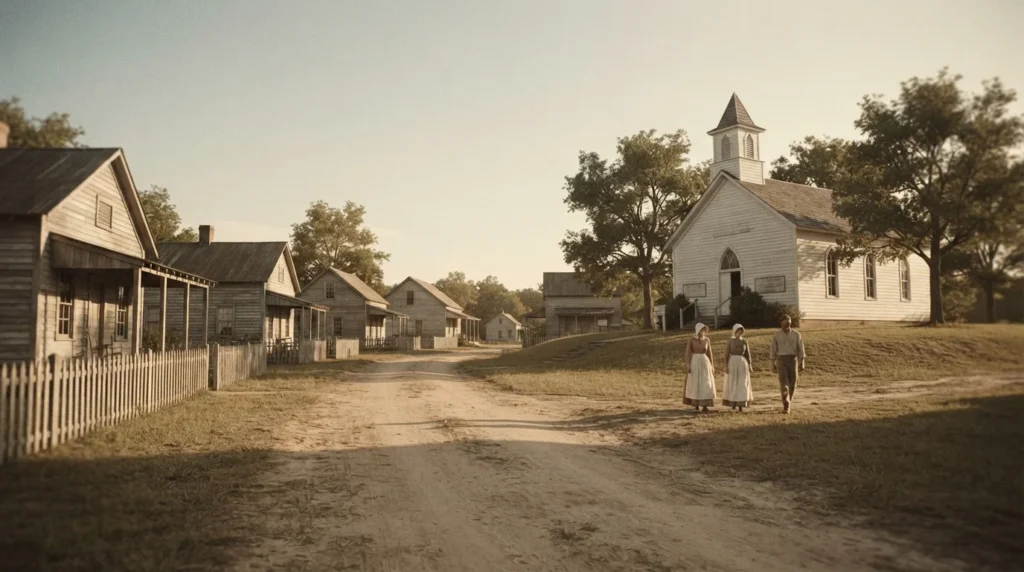
Understanding the bible belt meaning requires a quick trip back in time. The phrase is widely credited to American journalist and social critic H.L. Mencken, who first used it in the 1920s. Mencken, known for his sharp wit and often biting commentary, used the term somewhat mockingly to describe the rural South, where he observed strong religious fervor, conservative values, and skepticism toward modern scientific ideas.
The term gained massive attention during the famous Scopes “Monkey” Trial of 1925 in Dayton, Tennessee. This trial centered on a schoolteacher, John Scopes, who was charged with violating state law by teaching evolution in public school. Mencken covered the trial extensively and used “Bible Belt” to describe the cultural climate of the region one where religious tradition often clashed with modern scientific thinking.
Originally, the phrase carried a slightly negative or condescending tone, painting the region as backward or resistant to progress. Over time, however, the term evolved. Today, it’s used far more neutrally and sometimes even with pride by people both inside and outside the region to describe a place where faith is central to community identity.
Which States Make Up the Bible Belt?
One of the most common questions tied to the bible belt meaning is: which states actually belong to it? Since there’s no official boundary, different sources draw the map slightly differently. However, most researchers and cultural commentators agree on a core group of states.
Core Bible Belt States
These states are almost universally included in any definition of the Bible Belt:
- Alabama
- Mississippi
- Tennessee
- Arkansas
- Georgia
- South Carolina
- North Carolina
- Louisiana
- Oklahoma
States Sometimes Included
Depending on the source, these states are often added to the list because they show similarly high levels of religious observance:
- Texas
- Kentucky
- Missouri
- Kansas
- West Virginia
- Virginia
- Florida (particularly northern and rural areas)
How Researchers Define the Boundaries
Sociologists and pollsters typically use data like church membership rates, weekly worship attendance, and self-identified religiosity to determine which areas qualify. The Pew Research Center and Gallup, for example, regularly publish surveys measuring how important religion is to Americans by state.
Why Is It Called the Bible Belt? The Reasons Behind the Name
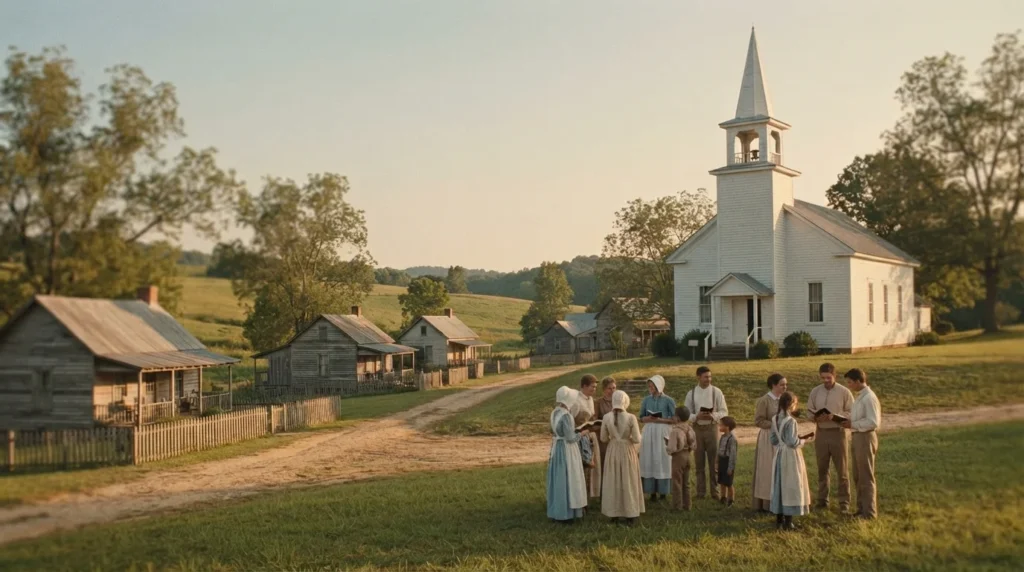
To really grasp the bible belt meaning, it helps to understand why this particular region earned such a distinct religious identity in the first place. Several historical and cultural factors contributed to it.
1. The Great Awakenings
The First and Second Great Awakenings waves of religious revival that swept through America in the 18th and 19th centuries had an especially strong impact on the South. Traveling preachers held massive outdoor revivals, and evangelical Protestantism took deep root in rural communities, particularly Baptist and Methodist traditions.
2. Rural, Agrarian Lifestyle
Historically, the South and parts of the Midwest remained more rural and agricultural for longer than the industrializing North. Close-knit farming communities often centered social life around the local church, reinforcing religious identity generation after generation.
3. Slower Urbanization
Because these regions urbanized later than the Northeast or West Coast, traditional values and religious customs stayed more intact. Urban centers tend to diversify faster in terms of religion and culture, while rural areas often preserve traditional norms longer.
4. Strong Denominational Roots
The Southern Baptist Convention, founded in 1845, became and remains the largest Protestant denomination in the United States, with its stronghold firmly in the South. This deep denominational presence reinforced the region’s religious identity over generations.
What Life Looks Like in the Bible Belt
Understanding the bible belt meaning isn’t just about history and geography it’s also about everyday life. If you’ve ever visited or lived in this region, you’ve probably noticed some distinct cultural patterns.
Common Characteristics of Bible Belt Culture
- High church attendance Weekly or even multiple-times-a-week church attendance is common and socially expected in many communities.
- Sunday closures Some smaller towns still have businesses that close on Sundays out of religious observance, a practice known as “blue laws.”
- Religious references in public life Prayer before school sporting events, religious phrases in political speeches, and Bible verses displayed in public or business spaces are more common here than in other parts of the country.
- Strong community ties through church Churches often serve as the center of social life, hosting everything from potlucks to youth groups to charity drives.
- Faith-based education Private Christian schools and homeschooling co-ops are more prevalent in Bible Belt states compared to national averages.
A Real-Life Example
Picture a small town in rural Alabama on a Sunday morning. Nearly every parking lot downtown is empty except for the ones surrounding churches, which are packed. Families dress up, attend service together, and often head to a local diner afterward that’s been serving “Sunday lunch” to churchgoers for decades. This kind of scene, repeated across thousands of small towns, is exactly what shaped the cultural reputation behind the bible belt meaning.
The Bible Belt’s Influence on Politics
Religion and politics are deeply intertwined in this region, and it’s a major part of understanding the bible belt meaning in a modern context.
- Voting patterns Bible Belt states have historically leaned conservative in national elections, with religious and moral values often cited as key factors influencing voter decisions.
- Policy influence Issues like abortion, same-sex marriage, and school prayer have historically seen stronger opposition or support (depending on the issue) in Bible Belt states compared to national averages.
- Faith-based political mobilization Churches in this region often play an active role in encouraging civic participation, voter registration drives, and community organizing around moral and social issues.
Is the Bible Belt Changing? Modern Trends Worth Knowing
While the historical bible belt meaning still holds true in many ways, the region isn’t frozen in time. Several trends are reshaping its religious and cultural landscape.
Declining Church Attendance Nationally
Across the U.S., including in Bible Belt states, church attendance has been gradually declining for decades. Younger generations, in particular, are less likely to identify with organized religion compared to their parents and grandparents.
Rise of Nondenominational Megachurches
Traditional denominational churches (Southern Baptist, Methodist, etc.) are seeing some decline, while large nondenominational “megachurches” have grown significantly in popularity across the Bible Belt, often blending contemporary worship styles with traditional evangelical values.
Increased Religious Diversity
Immigration and demographic shifts have introduced growing Catholic, Muslim, Hindu, and secular populations into cities throughout the Bible Belt, gradually diversifying the religious makeup of what was once an overwhelmingly Protestant region.
Despite these shifts, rural and smaller communities throughout the Bible Belt largely continue to reflect the traditional religious culture the term was originally coined to describe.
Bible Belt vs. Other U.S. Cultural Regions
It helps to compare the Bible Belt to other well-known American cultural “belts” to fully understand its place in the country’s broader identity.
| Region | Defining Characteristic |
| Bible Belt | High religiosity, evangelical Protestant influence |
| Rust Belt | Former industrial/manufacturing decline (Midwest/Northeast) |
| Sun Belt | Warm climate, rapid population growth (South/Southwest) |
| Corn Belt | Agricultural region focused on corn production (Midwest) |
Why Understanding the Bible Belt Meaning Matters
You might be wondering why any of this matters beyond satisfying curiosity. Here’s why grasping the bible belt meaning is genuinely useful:
- For travelers Knowing the cultural context helps visitors understand local customs, business hours, and social expectations.
- For businesses Companies expanding into Bible Belt states often adjust marketing, advertising, and even product offerings to align with regional values.
- For writers and journalists Accurately using the term avoids stereotyping while still conveying meaningful cultural context.
- For students of American culture The Bible Belt offers a fascinating case study in how religion, geography, and identity intersect in a modern, diverse nation.
Common Misconceptions About the Bible Belt
Let’s clear up a few myths that often come up alongside the bible belt meaning:
- Myth: Everyone in the Bible Belt is deeply religious. Reality: While religiosity is higher on average, plenty of residents are non-religious, non-practicing, or hold entirely different belief systems.
- Myth: The Bible Belt is all rural and uneducated. Reality: The region includes major metropolitan areas, top universities, and thriving economic hubs like Atlanta, Nashville, and Charlotte.
- Myth: The Bible Belt has fixed, official borders. Reality: As we’ve covered, it’s a cultural label based on shared characteristics, not a legally defined region.
Final Thought
So, what’s the real takeaway here? The bible belt meaning boils down to a cultural and religious identity shared by a cluster of Southern and Midwestern U.S. states where evangelical Christianity has historically shaped and continues to influence daily life, politics, and community values. Born from H.L. Mencken’s sharp observations in the 1920s, the term has evolved from a somewhat mocking label into a widely recognized descriptor that many residents now embrace as part of their regional identity.
FAQs About Bible Belt Meaning
1. What does “Bible Belt” mean in simple terms?
It’s a nickname for the region of the U.S. mostly the South and parts of the Midwest where evangelical Christianity strongly influences culture, politics, and everyday life.
2. Who coined the term “Bible Belt”?
Journalist H.L. Mencken is widely credited with coining the term in the 1920s, particularly during his coverage of the Scopes “Monkey” Trial in 1925.
3. What states are considered part of the Bible Belt?
Core states usually include Alabama, Mississippi, Tennessee, Arkansas, Georgia, South Carolina, North Carolina, Louisiana, and Oklahoma, with Texas, Kentucky, and Missouri often included as well.
4. Is the Bible Belt an official geographic region?
No. It’s a cultural and religious label, not an official or legally defined boundary like a state or county line.
5. Why is religion so influential in the Bible Belt?
Historical factors like the Great Awakenings, rural agrarian lifestyles, slower urbanization, and strong Baptist and Methodist roots all contributed to the region’s lasting religious identity.
6. Is the Bible Belt becoming less religious over time?
Yes, to some extent. Church attendance is declining nationally, and growing urban centers within the Bible Belt are becoming more religiously and culturally diverse, though rural areas largely retain traditional patterns.
7. Is calling someone from the Bible Belt an insult?
Not anymore, generally. While the term originally carried a critical tone, most people today use it as a neutral or even positive descriptor of a region’s strong faith-based culture.

Jack Harrison is a passionate writer and researcher at TruthVarse.com, dedicated to creating clear, helpful, and engaging content for curious readers. He enjoys exploring topics related to biblical meanings, spirituality, symbolism, and everyday questions, turning complex ideas into simple and easy-to-understand information.
Through careful research and a reader-first approach, Jack aims to provide content that is informative, practical, and enjoyable to read. His goal is simple: to help readers discover meaningful insights while making every article easy to understand and useful.