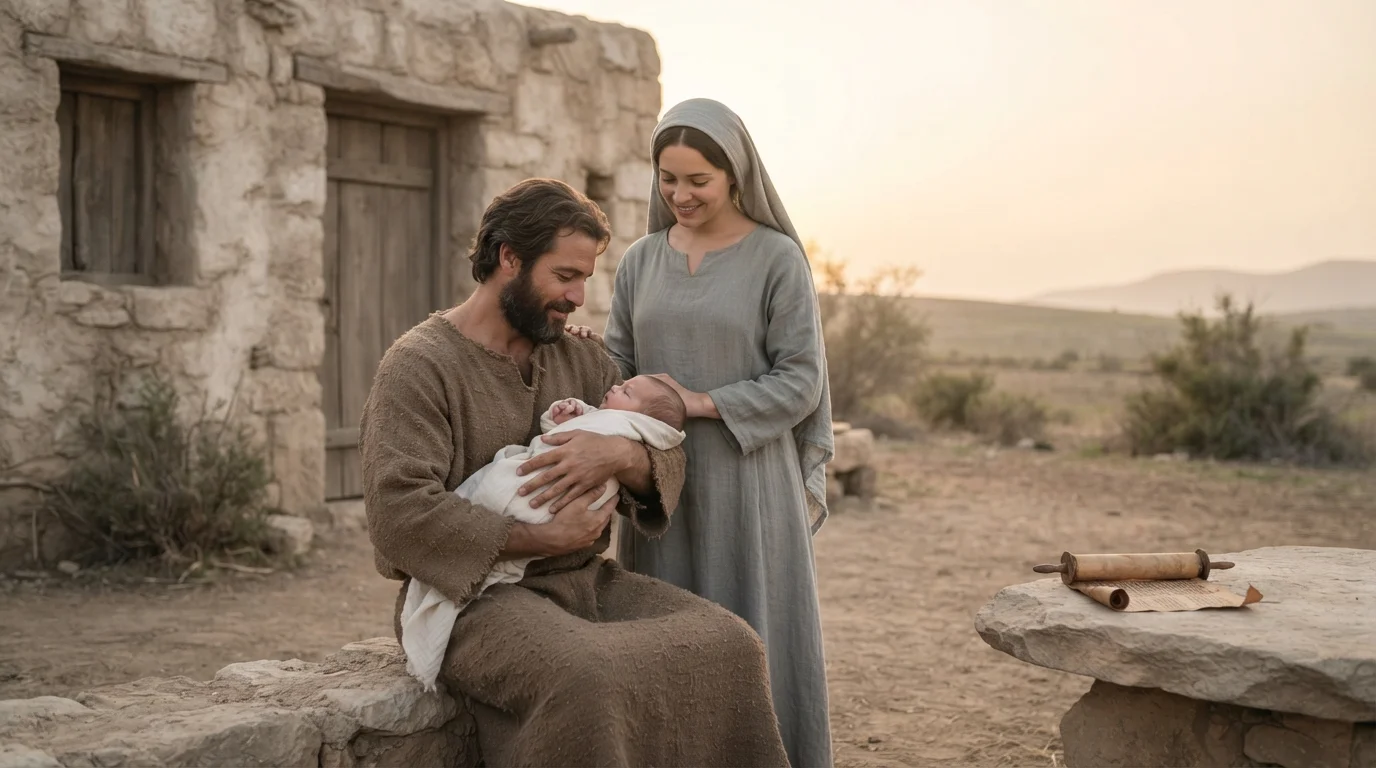
Have you ever wondered what circumcision means in the Bible and why it was important to God’s people? Circumcision is the removal of the foreskin from the male sexual organ and was established as a sign of God’s covenant with Abraham and his descendants.
In Genesis 17, God commanded Abraham and his household to practice circumcision as a lasting covenant sign. Throughout the Old Testament, it became an important part of Israel’s identity and relationship with God.
The Bible also uses circumcision in a spiritual sense, especially through the idea of the “circumcision of the heart,” which points to inner faith, obedience, and devotion to God.
What Is Circumcision in the Bible? A Quick Overview
At its core, biblical circumcision refers to the surgical removal of the foreskin, performed as a physical sign of the covenant between God and Abraham. This practice is first introduced in Genesis 17, when God establishes an everlasting covenant with Abraham and commands that every male in his household and every male child born afterward be circumcised on the eighth day of life.
But the circumcision meaning in the Bible goes far beyond a physical procedure. It represents:
- A covenant sign visible proof of belonging to God’s chosen people
- A mark of obedience a tangible act of faith and submission to God’s commands
- A symbol of separation setting Israel apart from surrounding nations
- A spiritual metaphor later used to describe a transformed, devoted heart
Understanding these layers of meaning helps explain why circumcision became such a hotly debated topic in the early church, and why it still carries theological weight today.
The Origins of Circumcision: Genesis 17 and the Abrahamic Covenant

God’s Covenant with Abraham
The story begins in Genesis 17, when Abram is 99 years old. God appears to him, changes his name to Abraham (“father of many nations”), and promises to make him exceedingly fruitful, giving him and his descendants the land of Canaan as an everlasting possession. As part of this covenant, God gives a specific and unusual instruction: every male must be circumcised as a physical sign of the agreement.
The text is direct about the seriousness of this command. Any male who was not circumcised was considered to have broken the covenant. This wasn’t presented as optional it was a non-negotiable marker of belonging to God’s covenant community.
Why the Eighth Day?
One detail that often surprises readers is the timing: circumcision was to happen on the eighth day after a boy’s birth. Scholars and theologians have offered several explanations for this:
- Ceremonial purity the first week of life may have been considered a time of ritual vulnerability
- Medical wisdom modern science has noted that vitamin K levels (important for blood clotting) peak around the eighth day of a newborn’s life, which some see as evidence of divine wisdom embedded in the command
- Symbolic completion eight often represents new beginnings in biblical numerology, following the completion of a seven-day cycle.
Circumcision Throughout the Old Testament
A Mark of National and Religious Identity
As the story of Israel unfolds, circumcision becomes deeply tied to national identity. It distinguished the Israelites from neighboring peoples like the Philistines, who are repeatedly referred to in Scripture as “the uncircumcised” a term used almost as an insult, emphasizing their status as outsiders to God’s covenant.
Key Old Testament moments involving circumcision include:
- Genesis 34 the sons of Jacob use circumcision as a condition (and later a weapon) in the story of Dinah and the Shechemites
- Exodus 4 Moses’ own family faces a near-fatal crisis tied to the neglect of circumcision, showing how seriously God treated the command
- Leviticus 12 circumcision is codified into the broader purity laws surrounding childbirth
Circumcision as a Requirement, Not a Suggestion
Throughout these passages, one theme stands out: circumcision wasn’t a private spiritual choice. It was a communal, legal, and religious obligation. Failing to circumcise a son was seen as a rejection of covenant identity itself.
The Deeper Symbolism: “Circumcision of the Heart”
Even within the Old Testament, God begins pointing toward a deeper meaning behind the physical act. This is one of the most important threads to understand when exploring circumcision meaning in the Bible.
Deuteronomy’s Prophetic Shift
In Deuteronomy 10:16, Moses tells the Israelites to “circumcise the foreskin of your heart,” urging them toward genuine inner devotion rather than mere outward compliance. Later, in Deuteronomy 30:6, God promises that He himself will “circumcise your heart” so that His people will love Him fully.
Jeremiah’s Warning
The prophet Jeremiah picks up this same theme, warning Israel that they are “circumcised in the flesh” but “uncircumcised in heart.” This is a striking rebuke it suggests that outward religious observance without genuine devotion is spiritually meaningless. Jeremiah essentially argues that you can follow every ritual perfectly and still miss the point entirely.
This idea of heart circumcision becomes the theological bridge into New Testament teaching.
Circumcision in the New Testament: A Major Turning Point
Jesus and Circumcision
Jesus himself was circumcised on the eighth day, in full accordance with Jewish law (Luke 2:21). This detail confirms that Jesus was raised within observant Jewish tradition and fulfilled the requirements of the law during his earthly life.
However, Jesus never made circumcision a central teaching point. His ministry focused far more on inner righteousness, love, and the condition of the heart themes that echo the Deuteronomy and Jeremiah passages mentioned earlier.
The Early Church’s Great Debate
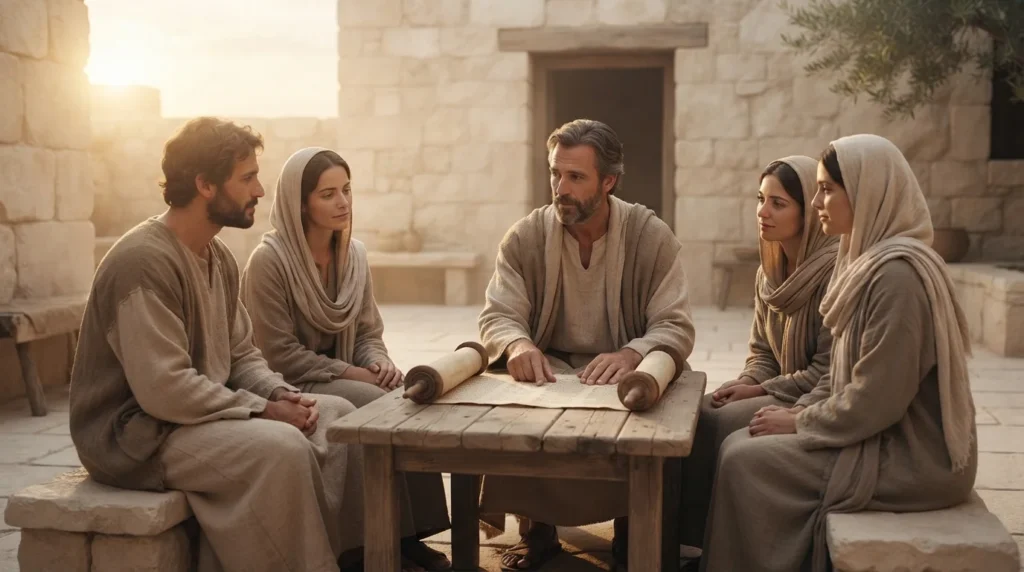
The most dramatic shift in circumcision’s meaning happens after Jesus’ resurrection, as the gospel spreads to non-Jewish (Gentile) believers. This creates an urgent question: do Gentile converts need to be circumcised to be considered full members of the faith?
This debate comes to a head in Acts 15, known as the Jerusalem Council. Some Jewish believers insisted that Gentile converts must be circumcised and follow the law of Moses to be saved.
This decision was massive. It redefined who belonged to God’s covenant community and shifted the entire trajectory of the Christian movement.
Paul’s Theological Reframing
The Apostle Paul writes extensively about circumcision, especially in his letters to the Romans, Galatians, and Colossians. His arguments are some of the richest theological material on this topic in all of Scripture.
Key Pauline teachings include:
- Romans 2:28-29 Paul argues that true circumcision “is a matter of the heart, by the Spirit,” not merely an outward physical act
- Galatians 5:6 Paul states that neither circumcision nor uncircumcision matters; what counts is “faith working through love”
- Colossians 2:11-12 Paul introduces the beautiful image of believers experiencing a spiritual “circumcision of Christ,” referring to being spiritually cut off from sin and united with Christ through baptism
- Philippians 3:3 Paul boldly declares that believers who worship by the Spirit are “the circumcision,” regardless of physical status
Why This Matters for Understanding the Bible Today

It Shows a Consistent Pattern in Scripture
One of the most valuable insights from studying circumcision meaning in the Bible is recognizing a pattern that shows up again and again: physical rituals in the Old Testament often point toward spiritual realities fulfilled in the New Testament. Circumcision, sacrifices, the temple, and dietary laws all follow this same trajectory.
It Highlights the Theme of Grace Over Ritual
The circumcision debate in Acts 15 and Paul’s letters set an important precedent for how Christianity would understand salvation moving forward as a gift received through faith, not earned through ritual observance. This remains a foundational Christian teaching.
It Encourages Self-Reflection
The idea of a “circumcised heart” is a powerful, timeless image. It invites believers to examine whether their faith is genuine and internal, or simply external and performative. This isn’t a uniquely ancient question it’s one that remains deeply relevant for anyone practicing a faith tradition today.
Common Misunderstandings About Biblical Circumcision
- Misconception: Circumcision was purely a hygiene practice. Reality: While there may be health benefits, the biblical text frames it primarily as a covenant and spiritual sign, not a medical instruction.
- Misconception: New Testament Christians rejected circumcision entirely as wrong or sinful. Reality: Paul explicitly says circumcision itself is neither good nor bad (Galatians 5:6) what matters is faith and love, not the physical status.
- Misconception: The circumcision debate was a minor side issue in early Christianity. Reality: It was one of the most significant theological controversies of the first-century church, addressed directly by an official council in Jerusalem.
FAQs About Circumcision Meaning in the Bible
1. What does circumcision symbolize in the Bible?
Circumcision symbolizes the covenant relationship between God and Abraham’s descendants. It represented obedience, belonging, and separation from surrounding nations, and later became a spiritual metaphor for a heart devoted to God.
2. Why did God command circumcision in Genesis 17?
God commanded circumcision as a physical, permanent sign that Abraham and his descendants belonged to His covenant. It served as ongoing proof of the promises God made regarding land, descendants, and blessing.
3. Did Jesus get circumcised?
Yes. Luke 2:21 records that Jesus was circumcised on the eighth day, in keeping with Jewish law, showing that he was raised within full observance of Jewish religious customs.
4. What is “circumcision of the heart”?
This phrase, found in Deuteronomy and later expanded by Paul in Romans, refers to genuine inner devotion to God rather than mere outward religious compliance. It emphasizes internal transformation over ritual performance.
5. Did early Christians require circumcision for salvation?
No. The Jerusalem Council in Acts 15 concluded that Gentile believers did not need to be circumcised to be saved, establishing that salvation comes through faith and grace rather than law-keeping.
6. What does Paul say about circumcision in Galatians?
Paul teaches in Galatians 5:6 that circumcision and uncircumcision don’t matter in themselves what truly counts is “faith working through love.” He warns against making physical circumcision a requirement for salvation.
7. Is circumcision still practiced by religious groups today because of the Bible?
Yes, many Jewish families continue circumcising sons on the eighth day as a continuation of the Abrahamic covenant described in Genesis 17. Most Christian traditions, however, do not require it, following the theological shift established in the New Testament.
Final Thoughts:
So, what is the real circumcision meaning in the Bible? It begins as a physical, covenantal sign given to Abraham a mark of obedience and belonging to God’s chosen people. Throughout the Old Testament, it functions as a serious religious and national identity marker. But even within those early texts, God plants the seed of a deeper truth: outward ritual is meaningless without inward devotion.

James Wilson is a passionate writer who loves exploring meaningful ideas, biblical insights, and topics that inspire everyday life. Through TruthVarse.com, he shares simple, thoughtful, and easy-to-understand content to help readers discover truth, meaning, and inspiration.