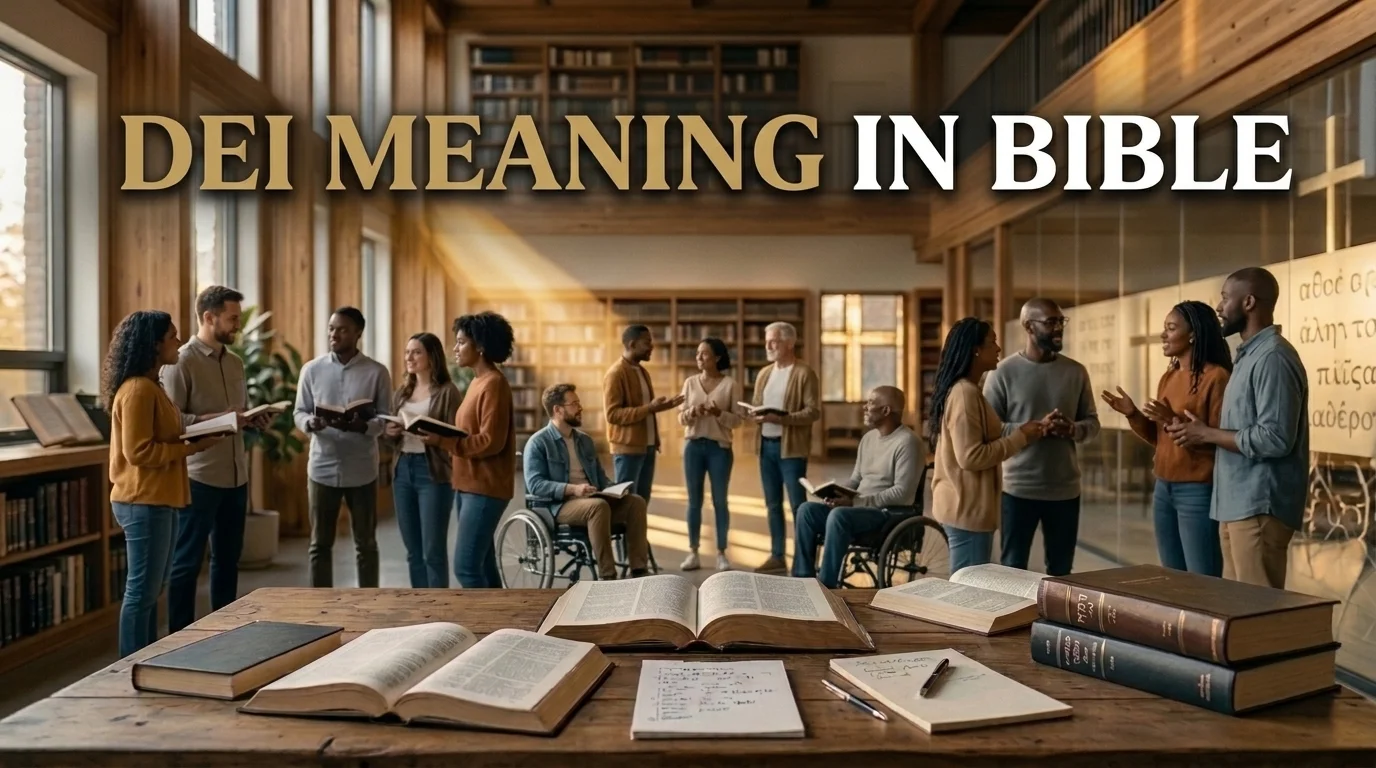
Have you ever wondered whether DEI has a meaning in the Bible and how its principles relate to Christian teachings? DEI stands for Diversity, Equity, and Inclusion, a modern term used to describe respect for differences, fair treatment, and welcoming people from different backgrounds.
Although the Bible does not use the term DEI, several biblical teachings reflect ideas that people today may connect with these principles. For example, Galatians 3:28 teaches that people are one in Christ Jesus, regardless of their ethnic or social background.
James 2:1–4 also warns believers against showing favoritism or treating people differently because of their appearance or wealth. These passages encourage fairness, dignity, love, and equal respect for others.
Understanding “Dei” as a Latin Word in Biblical and Christian Language
The word “Dei” is not actually an English word it’s Latin. It’s the genitive (possessive) form of “Deus,” which simply means “God.” So when you see “Dei” in a phrase, it translates roughly to “of God” or “God’s.”
This matters because Latin was the dominant language of Western Christianity for over a thousand years. The Vulgate, St. Jerome’s Latin translation of the Bible completed around 405 AD, was the standard biblical text used across Europe for centuries. Because of this, dozens of Latin theological phrases containing “Dei” worked their way into church liturgy, hymns, mottos, and even university names.
Common Phrases Using “Dei”
Here are some of the most recognizable Latin phrases that include the word “Dei,” along with their meanings:
- Agnus Dei – “Lamb of God,” referring to Jesus Christ (John 1:29)
- Verbum Dei – “Word of God,” referring to Scripture itself
- Corpus Dei – “Body of God” or “Body of Christ,” used in reference to the Eucharist
- Gratia Dei – “Grace of God”
- Filius Dei – “Son of God”
- Mater Dei – “Mother of God,” a title used for Mary in Catholic tradition
- Regnum Dei – “Kingdom of God”
- Civitas Dei – “City of God,” famously the title of St. Augustine’s fifth-century theological work
- Dei Gratia – “By the grace of God,” historically used by monarchs to claim divine right to rule
So if you’ve come across “Dei” in a church name, a coat of arms, a hymn title, or a Latin motto, it almost always ties back to this simple idea: something belonging to, coming from, or honoring God.
Why This Latin Root Still Matters Today
Even though most modern Bible translations are in English (or other native languages), Latin phrases with “Dei” still show up in:
- University mottos (many Christian and Catholic universities use phrases with “Dei”)
- Church names and denominational titles
- Classical hymns and liturgical music
- Historical documents and royal seals
- Theological and academic writing
Understanding this root helps you recognize the deeper meaning behind these traditions rather than just reading them as decorative Latin phrases.
The Modern DEI Acronym: Diversity, Equity, and Inclusion
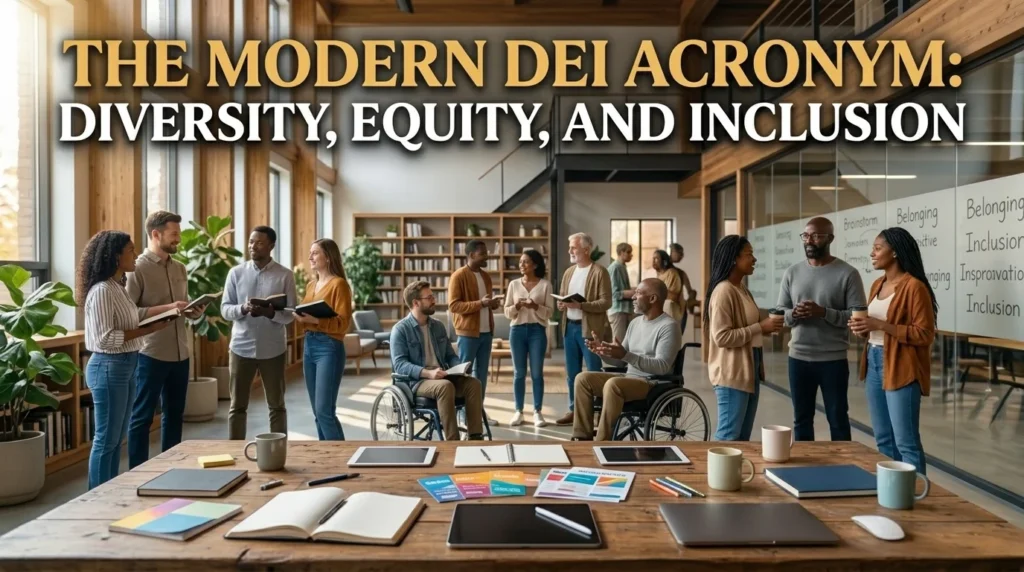
Now let’s shift to the other reason you might be here. In recent years, DEI has become a widely used acronym standing for Diversity, Equity, and Inclusion. It’s a framework often used in workplaces, schools, and organizations to promote fair treatment and representation for people of different backgrounds, races, genders, and abilities.
This isn’t a biblical term or a phrase found in Scripture. It’s a modern social and organizational concept. But because it’s become such a hot topic especially in churches, Christian workplaces, and faith-based organizations many people want to know how it lines up with biblical values, if at all.
Breaking Down What DEI Actually Means
- Diversity – Recognizing and valuing differences among people (race, culture, background, ability, gender, etc.)
- Equity – Ensuring fair access to opportunities, accounting for different starting points and circumstances
- Inclusion – Creating environments where everyone feels welcomed, respected, and able to participate fully
On the surface, these ideas sound compatible with many Christian values like love, hospitality, and justice. But the conversation gets more nuanced when people start comparing the methods and worldview behind modern DEI initiatives to biblical principles.
Does the Bible Talk About Diversity, Equity, and Inclusion?
This is where things get genuinely interesting. While the Bible was written long before the modern DEI framework existed, it absolutely speaks to the underlying values of human worth, fairness, and belonging just through its own lens.
Biblical Support for Diversity
Scripture repeatedly affirms that all people, regardless of ethnicity or background, are made in God’s image and are valuable to Him.
- Genesis 1:27 teaches that all humanity male and female is made in the image of God.
- Galatians 3:28 states that in Christ, there is no distinction between Jew or Greek, slave or free, male or female all are one.
- Revelation 7:9 describes a heavenly vision of “a great multitude that no one could count, from every nation, cohort, people and language” worshiping together.
These passages show that diversity different nations, ethnicities, and backgrounds coming together isn’t just tolerated in Scripture, it’s part of God’s design and even part of the picture of heaven itself.
Biblical Support for Justice and Fairness
The Bible has a lot to say about treating people justly, especially those who are vulnerable, marginalized, or overlooked.
- Micah 6:8 calls believers to “act justly, love mercy, and walk humbly with your God.”
- Proverbs 31:8-9 instructs readers to “speak up for those who cannot speak for themselves” and “defend the rights of the threshold and needy.”
- Leviticus 19:15 commands judges not to show partiality to either the threshold or the rich, but to judge fairly.
- James 2:1-4 warns against favoritism within the church community based on outward appearances like wealth.
These verses show a consistent biblical theme: fairness, justice, and care for the marginalized are deeply rooted in Scripture long before the term “equity” became a modern buzzword.
Biblical Support for Inclusion and Belonging
The concept of welcoming outsiders and including those who might otherwise be excluded runs throughout both the Old and New Testaments.
- Leviticus 19:34 instructs the Israelites to treat foreigners living among them as native-born and to love them as themselves.
- Luke 14:23 records Jesus telling a parable where a host says, “Go out to the roads and country lanes and compel them to come in, so that my house will be full.”
- Ephesians 2:19 tells believers that they are “no longer foreigners and strangers, but fellow citizens” in God’s household.
Jesus himself was known for dining with tax collectors, speaking to Samaritan women, and healing people that religious leaders of his time avoided consistently modeling radical inclusion of people society had pushed to the margins.
Where the Conversation Gets Complicated

Here’s the nuance many people are actually searching for when they type “dei meaning in bible.” While the values of diversity, fairness, and belonging are clearly present in Scripture, some Christians raise concerns about how the modern DEI movement applies these ideas in practice.
Common points of discussion include:
- Worldview differences – Some critics argue that secular DEI frameworks are rooted in ideologies that differ from a biblical understanding of human identity, sin, and redemption.
- Equity vs. equality – Some Christians distinguish between biblical fairness (treating people justly under the same standard) and modern “equity” (adjusting outcomes), debating whether these align.
- Source of identity – The Bible teaches that human worth and identity come from being made in God’s image, whereas some worry secular DEI frameworks root identity primarily in group categories.
- Church application – Many churches are actively discussing how to pursue biblical unity and diversity without adopting secular frameworks wholesale.
This is an active and evolving conversation across denominations, and thoughtful Christians land in different places on it. The important takeaway is that the underlying values valuing all people, pursuing justice, welcoming the outsider are deeply biblical, even if there’s disagreement about specific modern applications.
Real-Life Applications: How Churches and Christians Approach This Today
Many churches and faith-based organizations are actively wrestling with how to live out biblical values of diversity and inclusion in practical ways. Here are some real-world examples of how this plays out:
- Multicultural worship services – Many congregations intentionally include music, languages, and traditions from different cultures to reflect the global nature of the church.
- Community outreach programs – Churches often prioritize serving marginalized groups, including the threshold, immigrants, and those with disabilities, echoing biblical commands to care for the vulnerable.
- Leadership representation – Some denominations actively work to ensure leadership reflects the diversity of their congregation, drawing on the biblical picture of the body of Christ having many different parts (1 Corinthians 12:12-27).
- Reconciliation ministries – Numerous Christian organizations focus specifically on racial reconciliation, rooted in the belief that unity across ethnic lines reflects God’s kingdom.
Key Takeaways: DEI Meaning in Bible Context
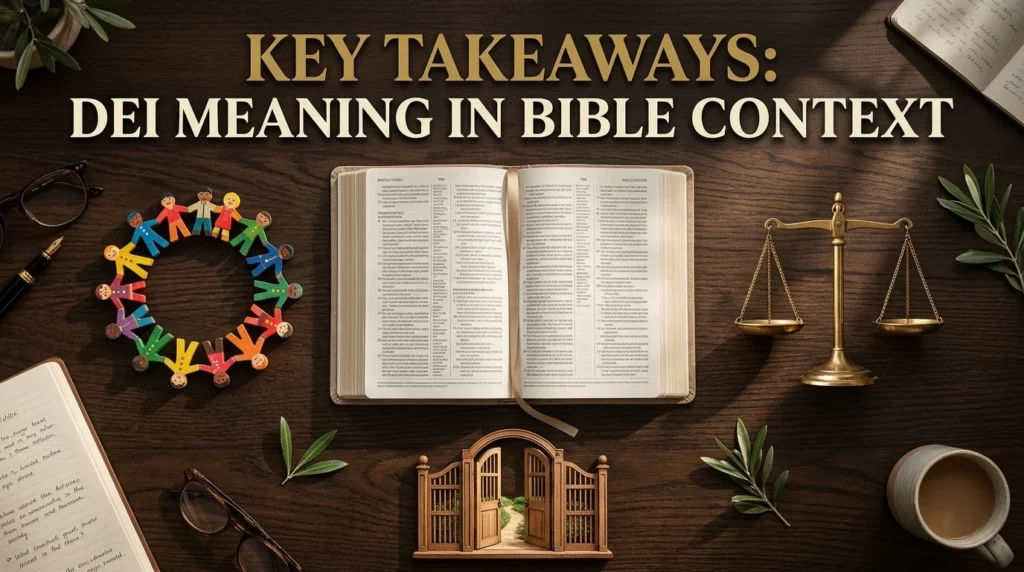
Let’s bring this all together with a quick summary of what we’ve covered:
- “Dei” is Latin for “of God” and appears in countless theological phrases like Agnus Dei, Verbum Dei, and Civitas Dei.
- The modern DEI acronym (Diversity, Equity, Inclusion) is not a biblical term, but its core values overlap significantly with biblical teaching.
- The Bible strongly supports diversity, showing that people of every nation and background are valued and included in God’s family.
- The Bible strongly supports justice and fairness, commanding believers to treat all people equitably and without partiality.
- The Bible strongly supports inclusion, with Jesus himself modeling radical welcome to outsiders and the marginalized.
Frequently Asked Questions
1. What does “Dei” mean in the Bible?
“Dei” is the Latin genitive form of “Deus,” meaning “God.” It translates to “of God” and appears in Latin theological phrases such as Agnus Dei (“Lamb of God”) and Verbum Dei (“Word of God”), which historically appeared in Latin translations and liturgy connected to biblical text.
2. Is DEI (Diversity, Equity, Inclusion) mentioned in the Bible?
No, the specific acronym DEI is a modern term and does not appear in Scripture. However, the underlying values of diversity, fairness, and inclusion are present throughout biblical teaching, expressed through concepts like justice, hospitality, and the unity of all people in Christ.
3. What Bible verses talk about diversity?
Key verses include Genesis 1:27 (all humanity made in God’s image), Galatians 3:28 (unity across ethnic and social lines in Christ), and Revelation 7:9 (a multitude from every nation worshiping together in heaven).
4. Does the Bible support equity or fairness?
Yes. Verses like Micah 6:8, Leviticus 19:15, and Proverbs 31:8-9 emphasize justice, fair treatment, and speaking up for the vulnerable themes that closely align with the idea of equity, though the specific methods of achieving fairness are debated among Christians today.
5. What is the difference between “Dei” and “DEI”?
“Dei” (lowercase, Latin) means “of God” and is a centuries-old theological term. “DEI” (capitalized acronym) refers to the modern Diversity, Equity, and Inclusion movement. They are unrelated in origin but are often confused due to the similar spelling.
6. How do churches interpret DEI principles today?
Approaches vary widely by denomination and congregation. Many churches emphasize biblical diversity, justice, and inclusion through multicultural worship, outreach to marginalized communities, and diverse leadership, while some remain cautious about adopting secular DEI frameworks wholesale, preferring to root their approach directly in Scripture.
7. Where does the phrase “Agnus Dei” come from, and what does it mean?
“Agnus Dei” means “Lamb of God” in Latin. It comes from John 1:29, where John the Baptist refers to Jesus as “the Lamb of God, who takes away the sin of the world.” It’s also a well-known part of the traditional Catholic Mass liturgy and has inspired countless hymns and musical compositions.
Final Thoughts
So, what’s the real dei meaning in bible contexts? It depends on which “Dei” you’re asking about. As a Latin word, “Dei” simply means “of God” and has shaped centuries of Christian language, hymns, and tradition. As a modern acronym, DEI represents Diversity, Equity, and Inclusion concepts that, while not explicitly named in Scripture, echo values the Bible has taught for thousands of years: that every person carries the image of God, that justice matters, and that all are welcome at the table.

Jack Harrison is a passionate writer and researcher at TruthVarse.com, dedicated to creating clear, helpful, and engaging content for curious readers. He enjoys exploring topics related to biblical meanings, spirituality, symbolism, and everyday questions, turning complex ideas into simple and easy-to-understand information.
Through careful research and a reader-first approach, Jack aims to provide content that is informative, practical, and enjoyable to read. His goal is simple: to help readers discover meaningful insights while making every article easy to understand and useful.