
Have you ever wondered what Jubilee means in the Bible and why it was such an important time for the Israelites? The biblical Jubilee was a special year observed after seven cycles of seven years, making the fiftieth year a time of restoration and freedom.
In Leviticus 25, God instructed the Israelites to proclaim liberty throughout the land, return ancestral property, and allow the land to rest. The Jubilee emphasized freedom from certain forms of servitude, restoration of family property, and trust in God’s provision.
It reminded the Israelites that the land and people ultimately belonged to God. Understanding the Jubilee meaning in Bible helps readers appreciate themes of freedom, restoration, mercy, justice, and renewal.
What Is the Jubilee in the Bible? A Quick Overview
At its core, the jubilee was a special year that occurred every 50th year in ancient Israel. During this year, several remarkable things were commanded to happen all at once:
- Hebrew slaves were to be set free
- Land that had been sold was returned to its original family owners
- Debts were often forgiven or restructured
- The fields were left to rest, unplanted and unharvested
The word itself gives us a clue. “Jubilee” comes from the Hebrew word yobel, which referred to a ram’s horn trumpet. This trumpet was blown on the Day of Atonement to announce the start of the jubilee year, and its sound echoing across the land was the signal that liberty had officially begun.
The primary passage describing this law is found in Leviticus 25, where God gives detailed instructions to Moses about how Israel was to structure its entire economic and social system around cycles of seven, culminating in this grand fiftieth-year reset.
The Core Bible Verse on Jubilee
The clearest statement of the jubilee’s purpose appears in Leviticus 25:10, which declares that the fiftieth year should be consecrated, and liberty proclaimed throughout the land to all its inhabitants. This single verse is actually inscribed on the Liberty Bell in Philadelphia a detail that shows just how far this ancient Hebrew law has traveled through history and culture.
The Origins: Why Did God Establish the Jubilee?
To understand the jubilee meaning in Bible teaching, you have to understand the world it was designed for. Ancient Israel was primarily an agricultural society. Land wasn’t just property it was survival. It was identity. Each guild and family had been allotted a specific portion of land when Israel entered Canaan, and that land was meant to stay within the family line, generation after generation.
But life happens. Poverty happens. Bad harvests happen. Families sometimes had no choice but to sell their land, or even sell themselves into servitude, just to survive a difficult season. Over time, without some kind of correction, this could lead to a permanent underclass a small number of wealthy landowners controlling everything, while everyone else remained trapped in debt and servitude forever.
God’s solution was the jubilee. It was a built-in economic safety valve, a way of saying: no family should be permanently locked out of prosperity because of one hard season. No person should remain enslaved forever because of circumstances beyond their control.
The Sabbath Connection
The jubilee didn’t exist in isolation. It was actually the culmination of a whole rhythm of rest built into Israel’s calendar:
- Every 7th day was the Sabbath a day of rest for individuals
- Every 7th year was the Sabbatical Year (Shemitah) a year of rest for the land, where fields lay fallow
- Every 49th year (7 sets of 7) led into the 50th year the Jubilee
What Actually Happened During the Jubilee Year?
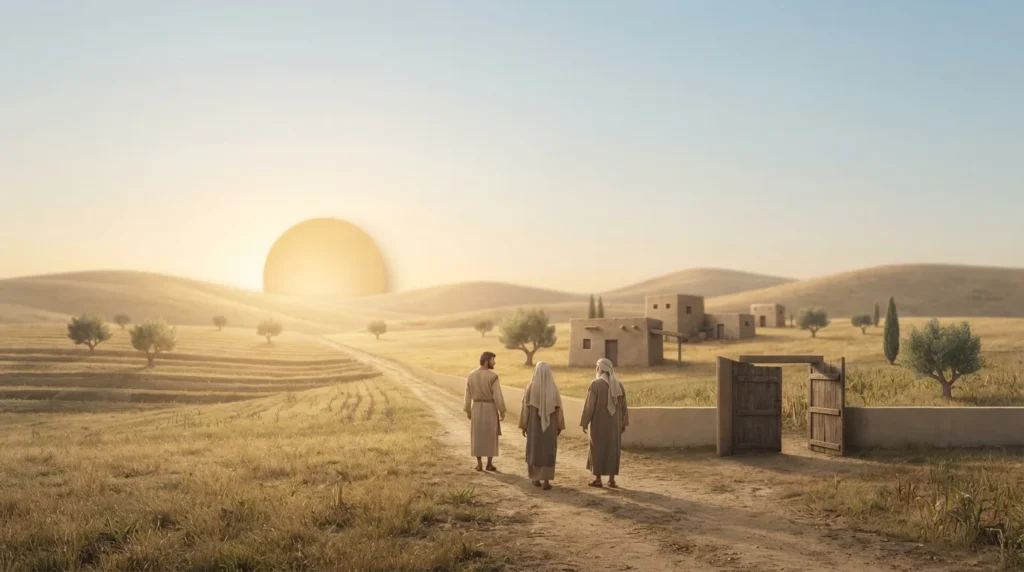
Understanding the jubilee meaning in Bible history requires looking closely at the specific practices commanded in Leviticus 25. Let’s break them down one at a time.
1. Land Returned to Original Owners
If a family had fallen on hard times and sold their ancestral land, the jubilee required that land be returned to them (or their descendants) without any additional payment. This wasn’t charity it was justice built into the system.
The closer you were to a jubilee year, the cheaper the land, because the buyer would only get to use it for a short time before it reverted back.
2. Hebrew Slaves and Servants Set Free
Slavery in ancient Israel looked very different from what most people picture today. Often it functioned more like indentured servitude a way for someone deeply in debt to work off what they owed. The jubilee ensured this arrangement couldn’t become permanent. Even if someone hadn’t served their full term, the jubilee trumpet meant freedom, no exceptions.
3. Debts Forgiven or Adjusted
While scholars debate the specifics, many agree that the Jubilee also provided some form of debt relief, building on the debt cancellation practices that God had already commanded during the Sabbatical Year.
4. The Land Rested
Just like the Sabbatical Year before it, the jubilee year required the land itself to rest. People should not plant or formally harvest crops; instead, they should live on what grows naturally and what they stored from previous years.
A Simple Summary Table
| Jubilee Requirement | Purpose |
| Land returned to original families | Prevent permanent loss of inheritance |
| Slaves and servants freed | Prevent permanent bondage |
| Debts addressed | Prevent generational poverty traps |
| Fields left fallow | Trust God’s provision, restore the soil |
The Spiritual Meaning Behind the Jubilee
Here’s where the jubilee meaning in Bible teaching becomes more than just ancient economic policy it becomes deeply theological.
A Picture of God’s Ownership
Leviticus 25:23 makes a striking statement: the land ultimately belongs to God, and the people were merely tenants and sojourners with him. This reframes everything. The jubilee wasn’t just about fairness between people it was a constant reminder that everything ultimately belongs to God, and humans are simply stewards.
A Foreshadowing of Spiritual Freedom
Many Bible scholars see the jubilee as a foreshadowing of the greater spiritual freedom that would come through Jesus Christ. Just as the jubilee freed people from physical slavery and debt, Jesus offers freedom from sin, shame, and spiritual bondage.
This connection becomes explicit in the New Testament. In Luke 4:18-19, Jesus stands up in the synagogue in Nazareth and reads from the scroll of Isaiah, declaring that he has come to proclaim good news to the people with low-income, freedom for prisoners, and to announce the year of the Lord’s favor.
Many scholars believe this “year of the Lord’s favor” is a direct reference to the jubilee, and that Jesus was essentially announcing himself as the one who would fulfill its true meaning not just for Israel, but for all of humanity.
A Model for Restoration, Not Just Punishment
One of the most beautiful aspects of the jubilee is what it reveals about God’s character. Rather than a system where mistakes and poverty lead to permanent consequences, the jubilee builds in restoration.
Some possible reasons for this include:
- The complexity of coordinating land returns across the whole nation
- Economic resistance from wealthy landowners who benefited from the status quo
- General spiritual decline and neglect of God’s laws, which the prophets frequently criticized
- Practical challenges tied to keeping accurate track of the 50-year cycle
Some scholars argue the jubilee functioned more as an ideal a picture of the kind of just, compassionate society God wanted Israel to be rather than a law that was consistently and perfectly enforced.
Jubilee Themes Throughout the Rest of Scripture

The jubilee meaning in Bible narrative doesn’t stop at Leviticus. Its themes echo throughout Scripture in surprising ways.
The Prophets and the Cry for Justice
Prophets like Isaiah and Jeremiah frequently condemned Israel’s failure to care for the threshold, release debts, and treat workers fairly echoing jubilee principles even when not naming the jubilee directly.
The Lord’s Prayer and Debt Forgiveness
Some scholars even connect Jesus teaching his disciples to pray “forgive us our debts” with the deep cultural memory of jubilee-style debt cancellation.
Paul’s Teaching on Freedom in Christ
The Apostle Paul frequently writes about believers being set free from slavery to sin and the law. While he doesn’t use the word “jubilee,” the concept of a definitive, liberating act that changes someone’s entire legal and spiritual standing runs parallel to what the jubilee accomplished physically and economically.
Practical Lessons We Can Learn From the Jubilee Today
You might be thinking, “This is interesting history, but does it actually matter for my life?” Absolutely. Here are some practical takeaways from the jubilee that still apply:
- Rest is not optional, it’s commanded. Just like fields needed a break, people need seasons of rest without guilt.
- Generosity has a built-in rhythm. Forgiveness of debts (financial or relational) shouldn’t be rare exceptions but something we build into how we relate to others.
- Nothing we own is truly permanent. The jubilee reminds us that everything ultimately belongs to God, which should shape how tightly we grip our possessions.
- Second chances matter. The jubilee shows that God’s design includes built-in opportunities for restoration, not endless punishment for past mistakes.
Modern Movements Inspired by the Jubilee
Interestingly, the jubilee concept has inspired real-world movements far beyond church walls. In recent decades, organizations advocating for international debt relief for developing nations have explicitly used “Jubilee” in their names, drawing directly from this biblical concept to argue that crushing, generational debt should have a limit just as it did in ancient Israel.
This shows just how powerful and enduring the jubilee meaning in Bible teaching really is. An idea given to a small ancient nation thousands of years ago is still shaping conversations about global economics, justice, and human dignity today.
Common Misunderstandings About the Jubilee

Before wrapping up, let’s clear up a few things people often get wrong:
- It wasn’t a one-time event. The jubilee was meant to recur every 50 years indefinitely, not happen once and be done.
- It wasn’t purely about slavery. While freeing servants was part of it, land restoration and debt relief were equally central.
- It wasn’t only symbolic. While it carries deep spiritual meaning, it was a concrete, practical, economic system with real legal weight.
Final Thoughts
So, what’s the bottom line? The jubilee meaning in Bible history is really a story about hope. It’s God telling an ancient people and by extension, all of us that debt doesn’t have to be a life sentence, that mistakes don’t have to define you forever, and that freedom isn’t just a nice idea but something worth building entire systems around.
From the ram’s horn trumpet announcing liberty across the land, to Jesus standing in a synagogue centuries later declaring that same liberty fulfilled in himself, the jubilee is one continuous thread of restoration running through Scripture.
FAQs About the Jubilee Meaning in Bible
1. What does the word “jubilee” mean in the Bible?
The word comes from the Hebrew yobel, meaning a ram’s horn trumpet. It refers to the trumpet blast announcing the start of the 50th-year jubilee, a time of liberty, land restoration, and rest.
2. How often did the jubilee occur?
The jubilee took place every 50th year, following seven cycles of seven years (49 years), with the jubilee itself being the year after that final Sabbatical Year.
3. Where is the jubilee described in the Bible?
The main passage is Leviticus 25, which lays out detailed instructions for land return, debt relief, and freeing servants during the jubilee year.
4. Did ancient Israel actually observe the jubilee?
There’s limited direct historical evidence that it was consistently practiced. Many scholars believe it functioned more as an ideal of justice that Israel often failed to fully implement.
5. How does Jesus relate to the jubilee?
In Luke 4:18-19, Jesus reads from Isaiah and announces “the year of the Lord’s favor,” language many scholars connect directly to jubilee themes, suggesting Jesus fulfills the deeper spiritual meaning of the jubilee.
6. What happened to slaves during the jubilee?
God commanded that Hebrew servants and slaves must be set free during the Jubilee year, regardless of how much time remained on their original term of service.
7. Why does the jubilee matter today?
Beyond its historical significance, the jubilee inspires modern conversations about debt relief, economic justice, rest, and forgiveness, and it offers a spiritual picture of restoration and grace that remains deeply relevant.