
Have you ever wondered what a yoke means in the Bible and why Jesus used this word in His teachings? A yoke was a wooden device placed on animals, such as oxen, to connect them and help them pull a load or work together.
In Scripture, the word can also carry a symbolic meaning, representing submission, authority, burden, or service. Jesus used the image of a yoke in Matthew 11:29–30 when He invited people to learn from Him and described His yoke as easy and His burden as light.
Elsewhere in the Bible, a yoke can describe oppression, bondage, or difficult burdens. Understanding the yoke Bible meaning helps readers see how this simple farming tool became a powerful biblical picture of responsibility, spiritual submission, freedom, and following God.
What Is a Yoke? (The Literal Meaning First)
Before we can appreciate the spiritual meaning, we need to understand what a yoke physically was in biblical times.
A yoke was a wooden farming tool, usually carved from a single piece of timber, designed to connect two animals most commonly oxen so they could pull a plow, cart, or heavy load together. The wood rested across the necks or shoulders of the animals and was fastened with leather straps or wooden pins.
Here’s what made the yoke so important in agricultural life:
- It distributed weight evenly between two animals, making heavy labor manageable.
- It kept both animals moving in the same direction, preventing one from wandering off or working against the other.
- It was custom-fitted to each animal, often carved by hand to avoid chafing and injury.
- It required training young, untrained oxen were often paired with an experienced, older ox that already knew how to walk in step.
That last point matters a lot for understanding the biblical symbolism. Farmers would deliberately pair an inexperienced animal with a seasoned one so the younger ox could learn the rhythm, pace, and direction from its partner. The older ox effectively carried more of the burden while the younger one learned to follow.
Keep that image in your mind it becomes incredibly important when Jesus uses the metaphor later.
Yoke Bible Meaning in the Old Testament

The Old Testament uses the yoke image in several distinct but related ways: as a symbol of servitude, oppression, discipline, and covenant relationship.
The Yoke as a Symbol of Bondage and Oppression
Throughout the Old Testament, “yoke” frequently symbolizes slavery, forced labor, or national subjugation. When one nation conquered another, it was common to speak of placing a “yoke” on the defeated people.
- In Deuteronomy 28:48, God warns Israel that disobedience will result in serving enemies who will “put a yoke of iron on your neck.”
- In 1 Kings 12, the northern leagues of Israel beg King Rehoboam to “lighten the harsh labor” and “heavy yoke” his father Solomon had placed on them.
- The prophet Isaiah repeatedly uses “yoke” as shorthand for oppression, and famously prophesies deliverance in Isaiah 9:4, saying God will break “the yoke of his burden.”
- Jeremiah performs a dramatic object lesson, literally wearing a wooden yoke around his neck to symbolize Judah’s coming captivity under Babylon (Jeremiah 27-28).
In all these cases, the yoke represents heaviness, restriction, and lost freedom being forced to bear a burden imposed by someone else’s power.
The Yoke as Divine Discipline
Interestingly, the Old Testament doesn’t only present the yoke negatively. Sometimes it represents necessary discipline or training that shapes character.
- Lamentations 3:27 says, “It is good for a man that he bear the yoke in his youth.” Here, the yoke represents formative hardship the kind of struggle that builds maturity and resilience.
- Hosea 10:11 describes Ephraim as “a trained heifer” that God will put to work under a yoke, illustrating purposeful, guided labor rather than punishment.
This dual meaning burden versus beneficial discipline sets the stage for how the New Testament will transform the symbol even further.
Yoke Bible Meaning in the New Testament
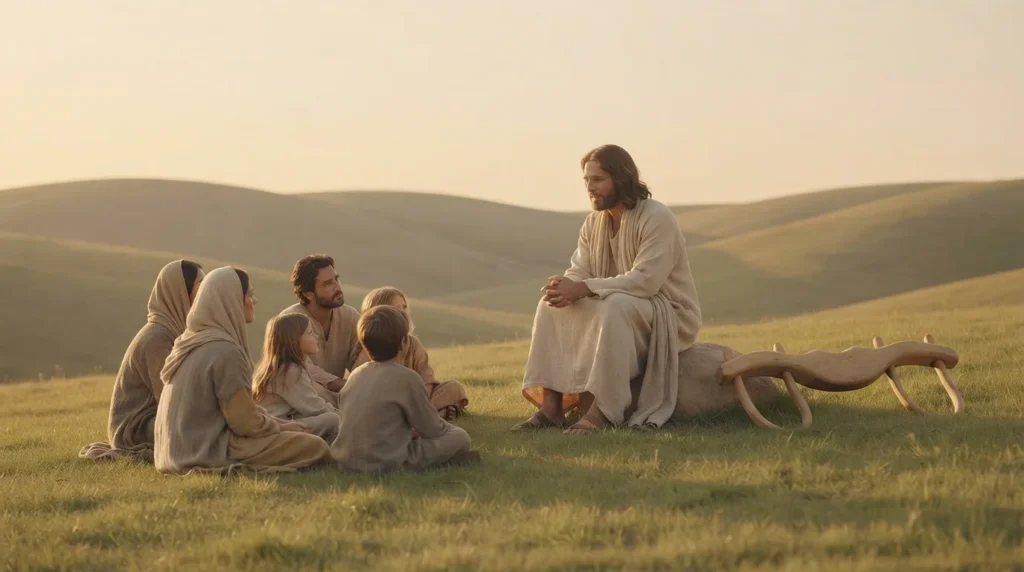
If the Old Testament mostly frames the yoke as oppression, the New Testament flips the image into something surprisingly comforting. This shift centers on two major passages: Jesus’s invitation in Matthew, and Paul’s warning in 2 Corinthians.
“My Yoke Is Easy” Matthew 11:28-30
This is probably the most beloved yoke passage in the entire Bible:
“Come to me, all who labor and are heavy laden, and I will give you rest. Take my yoke upon you, and learn from me, for I am gentle and lowly in heart, and you will find rest for your souls. For my yoke is easy, and my burden is light.”
At first glance, this seems almost contradictory. Why would Jesus offer “rest” and then immediately ask people to take on a yoke a tool for hard labor?
The answer lies in that farming detail we mentioned earlier. Remember how a young, untrained ox was often paired with an experienced one? That’s exactly the picture Jesus is painting.
- Jesus is the strong, experienced partner in the yoke.
- When you “take his yoke,” you’re not carrying the load alone He’s walking beside you, setting the pace, and bearing the greater share of the weight.
- The rest He promises isn’t the absence of work; it’s the relief that comes from no longer struggling under your own strength.
In Jewish rabbinic tradition, the phrase “yoke of the law” or “yoke of the Torah” referred to submitting to a teacher’s instruction and way of life. When Jesus says “take my yoke,” He’s directly invoking that tradition and essentially saying: become my disciple, walk in step with me, and let me carry the hard part with you.
This is a beautiful redefinition. The yoke, once a symbol of crushing labor, becomes a symbol of partnership, guidance, and shared burden.
“Do Not Be Unequally Yoked” 2 Corinthians 6:14
Paul takes the metaphor in a different, but related, direction:
“Do not be unequally yoked with unbelievers. For what partnership has righteousness with lawlessness? Or what fellowship has light with darkness?”
Here Paul draws on the practical farming reality that mismatched animals in a yoke create problems.
- If you pair an ox with a donkey (explicitly forbidden in Deuteronomy 22:10), the mismatch in size, strength, gait, and temperament makes the work inefficient and painful for both animals.
- Two animals moving at different paces, with different strengths, will constantly pull against each other.
Paul uses this image to warn believers against forming deep, binding partnerships especially marriage, but also business or close spiritual alliances with people who don’t share their values or faith commitments. The concern isn’t about avoiding relationships with non-believers altogether, but about entering into bonds so close and mutually dependent that they create constant friction, compromised direction, and spiritual strain.
This passage has become foundational in Christian teaching on marriage and close partnerships, often summarized simply as the principle of not being “unequally yoked.”
Galatians 5:1 The Yoke of Slavery
Paul uses the image one more time in Galatians 5:1:
“For freedom Christ has set us free; stand firm therefore, and do not submit again to a yoke of slavery.”
Here Paul returns to the Old Testament association of yoke with bondage, warning believers not to return to legalistic requirements (specifically, Old Testament ceremonial law) as a means of earning righteousness. The yoke here represents the exhausting cycle of trying to earn God’s favor through rule-keeping, rather than resting in grace.
Comparing the Different Yoke Meanings in Scripture
To make this easier to digest, here’s a quick breakdown of how the yoke symbol shifts meaning depending on context:
| Passage | Yoke Represents |
| Deuteronomy 28:48 | Oppression and punishment for disobedience |
| 1 Kings 12 | Harsh political and physical burden |
| Isaiah 9:4 | Deliverance from oppression |
| Jeremiah 27-28 | Coming national captivity |
| Lamentations 3:27 | Beneficial discipline in youth |
| Matthew 11:28-30 | Discipleship, partnership, and rest in Christ |
| 2 Corinthians 6:14 | Warning against mismatched partnerships |
| Galatians 5:1 | Legalistic bondage versus gospel freedom |
Notice the pattern: the yoke almost always represents a shared burden the question is always who you’re yoked to, and whether that partnership brings life or drains it.
Why the Yoke Metaphor Still Matters Today
You might be thinking, “This is interesting history, but what does it mean for me right now?” Quite a lot, actually. The yoke metaphor speaks directly to some very modern struggles.
1. It Reframes What “Rest” Really Means
Many people assume spiritual rest means doing nothing. Jesus’s invitation shows something different rest comes not from avoiding responsibility, but from carrying it in partnership rather than isolation. If you’re exhausted from trying to handle everything on your own, the yoke metaphor offers a gentle correction: you were never meant to pull alone.
2. It Offers a Framework for Choosing Relationships
Paul’s warning about being “unequally yoked” is often applied narrowly to dating and marriage, but the principle stretches further:
- Business partnerships where core values don’t align
- Close friendships that consistently pull you away from your goals or convictions
- Mentorships or teams where direction and pace are constantly mismatched
Whenever you’re entering a close, binding partnership, it’s worth asking: are we actually walking in the same direction?
3. It Distinguishes Healthy Discipline from Toxic Burden
Lamentations reminds us that some yokes some hard seasons and disciplines are genuinely good for growth. Not every difficulty is oppression; some of it is training. Learning to tell the difference between a burden that’s shaping you for good and one that’s simply crushing you is a skill worth developing.
4. It Warns Against Self-Imposed Religious Burnout
Galatians speaks powerfully to anyone caught in a cycle of trying to “earn” acceptance whether from God, a religious community, or even just themselves through endless rule-keeping and performance. The yoke of slavery Paul describes is exhausting precisely because it’s never satisfied. The freedom he points to is the relief of no longer needing to prove your worth.
Real-Life Application: Living Out the Yoke Principle
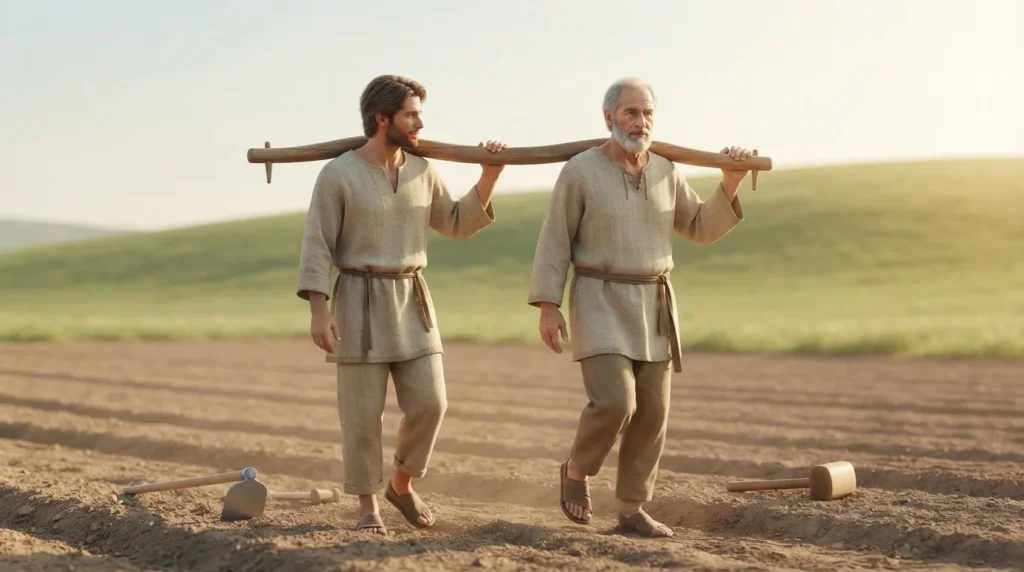
Let’s make this practical. Here are a few ways people apply the biblical yoke concept in everyday life:
- In prayer and daily decisions, some believers describe “taking Christ’s yoke” as a way of consciously inviting His guidance instead of white-knuckling through decisions alone.
- In marriage preparation, many couples and premarital counselors reference 2 Corinthians 6:14 when discussing shared faith, values, and long-term compatibility.
- In mentorship, older, more experienced believers often describe discipling newer Christians using the same “yoked together” language walking alongside someone until they find their own pace.
- In seasons of burnout, people frequently return to Matthew 11:28-30 as a reminder that struggling alone isn’t a badge of honor; it’s simply unsustainable.
Common Misunderstandings About the Yoke Bible Meaning
Since this metaphor is so widely quoted, it’s easy to misread it. Here are a few clarifications worth keeping in mind:
- A yoke isn’t about eliminating effort. Jesus doesn’t promise a life free of labor He promises a life where the labor is shared and sustainable.
- “Unequally yoked” isn’t a call to isolation. Paul isn’t telling Christians to avoid all contact or friendship with non-believers; he’s warning against binding, dependent partnerships that create constant spiritual conflict.
- The “yoke of slavery” in Galatians isn’t about all rules. It specifically addresses trying to earn righteousness through law-keeping, not general structure or discipline in life.
Key Takeaways on the Yoke Bible Meaning
Let’s bring it all together:
- A yoke was a wooden tool joining two animals so they could carry a load together, evenly and in step.
- In the Old Testament, it usually symbolizes oppression, servitude, or, occasionally, formative discipline.
- Jesus transforms the image in Matthew 11 into a picture of discipleship partnership with Him that brings rest rather than exhaustion.
- Paul uses the metaphor twice: warning against mismatched partnerships (2 Corinthians 6:14) and against returning to a legalistic, works-based faith (Galatians 5:1).
- The unifying thread across every passage is the question of partnership who or what you’re bound to, and whether that bond leads to life or to strain.
Understanding the full yoke bible meaning gives you a much richer picture of some of Scripture’s most quoted verses and offers practical wisdom for relationships, rest, and spiritual growth that’s just as relevant today as it was in an ancient farmer’s field.
FAQs About Yoke Bible Meaning
1. What does “yoke” mean in the Bible?
In the Bible, a yoke refers first to a literal wooden farming tool used to join two animals for shared labor. Symbolically, it represents burden-bearing, partnership, submission, or bondage, depending on the context ranging from oppression under a foreign power to the gentle, shared discipleship Jesus offers in Matthew 11.
2. What does Jesus mean by “my yoke is easy”?
Jesus is inviting people to become His disciples and walk through life’s burdens in partnership with Him rather than alone. Drawing on the farming image of an experienced ox guiding a younger one, He’s promising that He will bear the greater share of the load, making the burden lighter and more manageable.
3. What does “unequally yoked” mean in the Bible?
“Unequally yoked” comes from 2 Corinthians 6:14, where Paul warns believers against forming close, binding partnerships especially marriage with people whose core values or faith don’t align with theirs. The image comes from farming, where pairing mismatched animals in a yoke created strain and inefficiency for both.
4. Is the yoke always a negative symbol in the Bible?
No. While many Old Testament passages use “yoke” to describe oppression or slavery, other verses, like Lamentations 3:27, present it positively as beneficial discipline. In the New Testament, Jesus reframes the yoke entirely as a symbol of gentle partnership and rest.
5. What is the “yoke of slavery” in Galatians 5:1?
Paul uses this phrase to warn believers against returning to a legalistic system of earning righteousness through law-keeping. It represents the exhausting, never-satisfied cycle of trying to earn God’s approval through performance, contrasted with the freedom found in grace.
6. How does the yoke metaphor apply to marriage today?
Many Christians apply 2 Corinthians 6:14 to marriage, using it as a guiding principle for choosing a spouse who shares similar core faith and values. The idea is that a marriage, like a yoke, works best when both partners are moving in the same direction with compatible strength and pace.
7. Why did farmers pair a young ox with an older one under a yoke?
Farmers often paired an inexperienced, young ox with an older, trained one so the younger animal could learn the correct pace and direction while the more experienced animal carried a greater share of the physical burden. This practice is widely believed to be the background image behind Jesus’s invitation in Matthew 11:29-30.
Final Thoughts
The yoke Bible meaning teaches important lessons about responsibility, submission, service, and spiritual guidance. Scripture uses the image of a yoke to describe both burdens and the authority under which a person lives. Jesus invites His followers to take His yoke and learn from Him, showing that following Him brings a different kind of burden one marked by humility, trust, and rest.

William Turner is a passionate writer who enjoys exploring meaningful ideas, biblical insights, and the stories behind words and traditions. His goal is to make every article simple, helpful, and engaging for readers around the world.