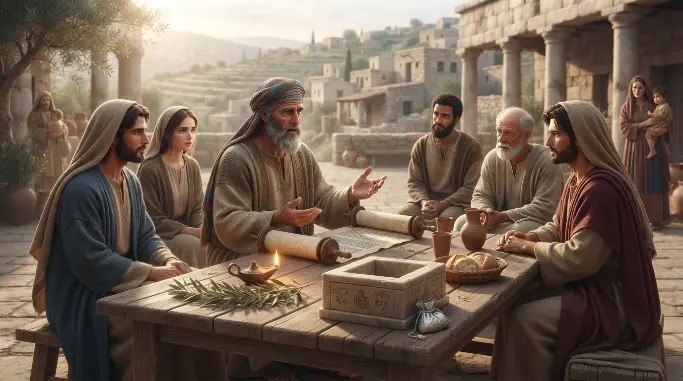
Have you ever wondered what circumcision means in the Bible and why it was important to God’s people? Circumcision is the removal of the foreskin from the male sexual organ and was given as a sign of God’s covenant with Abraham and his descendants.
In Genesis 17, God commanded Abraham to practice circumcision as a lasting sign of the covenant. Throughout the Old Testament, circumcision became an important part of Israel’s identity and relationship with God.
In the New Testament, however, Scripture also emphasizes the idea of a “circumcision of the heart,” which points to inner faith, obedience, and spiritual transformation.
What Is Circumcision in the Bible? A Quick Overview
At its most basic level, circumcision is the surgical removal of the foreskin from the male body. In the biblical context, though, it’s far more than a medical or hygienic procedure. It was established by God as a sign of covenant a physical, permanent mark that identified a man and his descendants as belonging to God’s chosen people.
The practice first appears in Genesis 17, when God speaks to Abraham and establishes what’s known as the Abrahamic Covenant. This wasn’t a random command. It was a deeply symbolic act meant to represent something much bigger than the physical act itself: a set-apart relationship between God and the people He was calling to Himself.
So when people ask about the meaning of circumcision in the Bible, they’re really asking about three layered things:
- The historical and cultural context of the practice
- The spiritual and covenantal symbolism behind it
- How its meaning shifted and transformed in the New Testament
We’ll cover all three in detail below.
The Origin of Circumcision: Genesis 17 and the Abrahamic Covenant
To really understand circumcision, you have to start where the Bible starts with Abraham.
In Genesis 17:1-14, God appears to Abraham (still called Abram at this point) and makes a covenant with him. God promises to make Abraham the father of many nations, to give his descendants the land of Canaan, and to be their God forever. As a sign of this everlasting covenant, God commands:
Why the Eighth Day?
One detail that often gets overlooked is the timing. God instructed that baby boys be circumcised on the eighth day after birth. Bible scholars and theologians have offered a few interesting insights into why this specific timing mattered:
- Medical wisdom ahead of its time Modern research has shown that vitamin K levels and clotting factors in infants peak around the eighth day, making it a safer time for the procedure than earlier days. Many see this as evidence of divine wisdom embedded in the command.
- Symbolic completion In Jewish thought, the number seven often represents completion (as in the seven days of creation), so the eighth day represents a “new beginning” stepping into a covenant relationship with God right at the start of life.
Circumcision as a Sign of Covenant, Not Salvation
This is a crucial point that gets misunderstood a lot: circumcision was never meant to save anyone or earn favor with God through works. It was a sign, not the substance, of the relationship.
Think of it like a wedding ring. The ring itself doesn’t create the marriage the covenant and commitment between two people does. But the ring is a visible, physical reminder of that commitment every single day. Circumcision worked similarly. It was the outward, physical marker of an inward covenant relationship that already existed by faith.
Circumcision in the Mosaic Law
By the time we get to the Law of Moses, circumcision had become deeply embedded into Israelite identity and religious practice. Leviticus 12:3 reaffirms the eighth-day command as part of the broader ceremonial law given at Sinai.
Under the Mosaic covenant, circumcision took on additional layers of meaning:
- National identity It distinguished Israelites from surrounding pagan nations, many of which did not practice circumcision or practiced it differently (some cultures performed it at puberty as a rite of passage rather than in infancy).
- Ritual purity It was tied to the broader system of ceremonial cleanliness that governed Israelite worship and daily life.
The Deeper Symbolic Meaning: Circumcision of the Heart

Here’s where things get really interesting, and honestly, this is the part most people miss when they only think of circumcision as a physical ritual.
Throughout the Old Testament, God and the prophets frequently point beyond the physical act toward a deeper spiritual reality: circumcision of the heart.
- In Deuteronomy 10:16, Moses tells the Israelites to “circumcise your heart” and stop being stubborn.
- Jeremiah 4:4 uses similar language, calling Israel to circumcise themselves to the Lord and remove the “foreskin of your hearts.”
The physical sign was a teaching tool, a constant physical reminder pointing toward the spiritual reality it represented.
This theme becomes hugely important later, especially in how the New Testament reinterprets the entire practice.
Circumcision in the New Testament: A Major Shift
If you’ve read the book of Acts or Paul’s letters, you know that circumcision becomes a massive point of theological debate in the early church. Understanding this shift is essential to grasping the full meaning of circumcision in the Bible.
The Jerusalem Council (Acts 15)
As the early church began welcoming Gentile (non-Jewish) believers, a serious controversy broke out. Some Jewish Christians insisted that Gentile converts needed to be circumcised and follow the Law of Moses to be truly saved. This led to a major meeting in Jerusalem, recorded in Acts 15, where the apostles and elders debated the issue.
Paul’s Teaching on Circumcision
The apostle Paul, a former Pharisee who was deeply trained in Jewish law, becomes the primary voice explaining the theological meaning of this shift in his letters:
- Galatians 5:6 Paul teaches that neither circumcision nor its absence carries any spiritual weight on its own; what truly matters is faith working through love.
- Romans 2:28-29 Paul draws a sharp contrast between outward, physical circumcision and what he calls circumcision “of the heart, by the Spirit.” He argues that true spiritual identity isn’t about an external ritual but an internal transformation produced by God’s Spirit.
- Philippians 3:3 Paul describes believers who worship by the Spirit as the “true circumcision,” regardless of physical status.
Common Misunderstandings About Biblical Circumcision
Let’s clear up a few things people often get confused about:
- “Circumcision saves you.” This was never true, even in the Old Testament. Circumcision was a sign of an existing covenant relationship rooted in faith, not the means of earning that relationship.
- “The New Testament says circumcision is bad.” Not exactly. Paul doesn’t condemn the practice itself he condemns the idea that it’s necessary for salvation. He even had Timothy circumcised in Acts 16 for practical, cultural reasons, showing the physical act itself wasn’t sinful.
Practical and Spiritual Lessons We Can Learn Today

Even for modern readers who aren’t wrestling with questions of Old Testament law, the story of biblical circumcision offers some genuinely valuable lessons:
- God often uses physical symbols to teach spiritual truths. Just like circumcision pointed to a transformed heart, many things in our lives from communion to baptism carry symbolic weight meant to remind us of deeper spiritual realities.
- Outward practices without inward transformation are empty. The prophets repeatedly criticized Israelites who were physically circumcised but spiritually far from God. This is a timeless warning against religious practice without genuine heart change.
Frequently Asked Questions
What is the meaning of circumcision in the Bible?
In the Bible, circumcision is the physical sign of the covenant God made with Abraham in Genesis 17. It represented Israel’s set-apart relationship with God and, over time, came to symbolize a deeper spiritual reality: a transformed, devoted heart rather than just an external ritual.
Why did God command circumcision in the Bible?
God commanded circumcision as a lasting sign of His covenant with Abraham and his descendants. It served as a visible, permanent mark distinguishing God’s chosen people and reminding them of their relationship and responsibilities to Him.
What does “circumcision of the heart” mean in the Bible?
“Circumcision of the heart” is a phrase used throughout Scripture (Deuteronomy 10:16, 30:6; Jeremiah 4:4; Romans 2:29) to describe an inward spiritual transformation removing stubbornness and sin so a person can fully love and follow God, rather than relying only on outward religious ritual.
Do Christians need to be circumcised according to the Bible?
No. The Jerusalem Council in Acts 15 and Paul’s teachings in Galatians and Romans clarify that physical circumcision is not required for salvation or full acceptance into the Christian faith. What matters is faith in Jesus Christ.
What did Paul teach about circumcision in the New Testament?
Paul taught that physical circumcision holds no special spiritual value on its own. In Romans and Galatians, he emphasized that true circumcision is a spiritual matter of the heart, accomplished through faith and the work of the Holy Spirit, not a physical procedure.
Why was circumcision performed on the eighth day in the Bible?
God specifically commanded that circumcision take place on the eighth day after a baby boy’s birth (Genesis 17:12; Leviticus 12:3).
Final Thoughts:
Understanding circumcision in the Bible meaning gives us so much more than historical trivia. It reveals how God has always used physical signs to point toward spiritual truths, how covenant relationship has always been rooted in faith rather than performance, and how the story of Scripture moves from external ritual toward internal transformation.
At the end of the day, the real message behind circumcision was never about the physical act itself.

Jack Harrison is a passionate writer and researcher at TruthVarse.com, dedicated to creating clear, helpful, and engaging content for curious readers. He enjoys exploring topics related to biblical meanings, spirituality, symbolism, and everyday questions, turning complex ideas into simple and easy-to-understand information.
Through careful research and a reader-first approach, Jack aims to provide content that is informative, practical, and enjoyable to read. His goal is simple: to help readers discover meaningful insights while making every article easy to understand and useful.