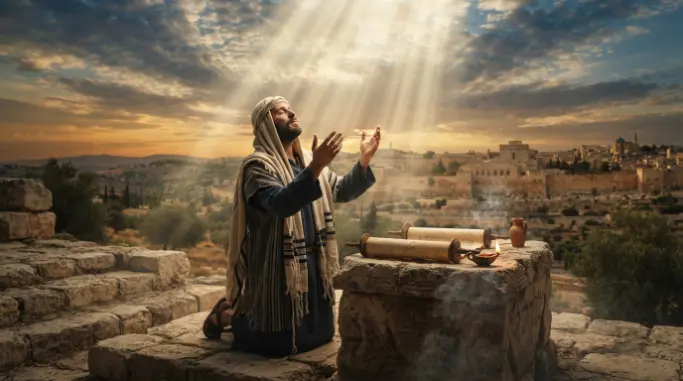
Have you ever wondered what consecration means in the Bible and why it is important in a believer’s relationship with God? Consecration means setting something or someone apart for a sacred purpose, dedicated service, or special use for God.
In Scripture, people, places, objects, and offerings could be consecrated, meaning they were devoted to God and treated as holy. Biblical consecration also carries the idea of giving oneself fully to God and choosing to live according to His will.
Understanding the consecration meaning in the Bible helps readers see the importance of dedication, holiness, obedience, and faithful service. In simple terms, consecration means being set apart and dedicated to God for His purposes.
What Does Consecration Mean in the Bible?
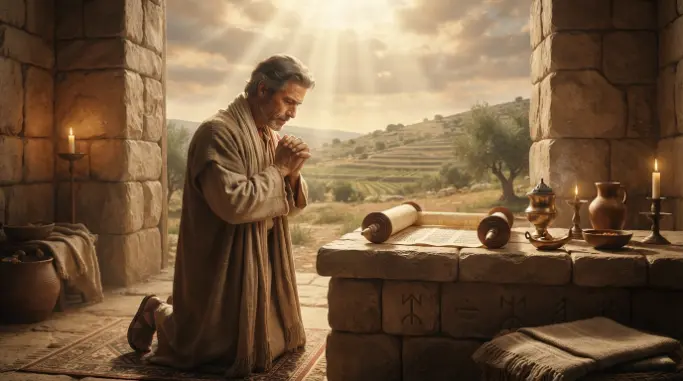
At its core, consecration means to set something or someone apart for a sacred, holy purpose dedicating it exclusively to God’s service. It’s the opposite of “common” or “ordinary” use. When something is consecrated, it’s no longer available for regular, everyday purposes. It belongs to God alone.
Think of it this way: imagine you own a beautiful set of dishes that you never use for regular meals. You save them exclusively for holidays, special guests, or sacred family traditions. In a small way, that’s the idea behind consecration except in the Bible, it’s not about dishes. It’s about priests, altars, tabernacles, offerings, and even entire nations being reserved exclusively for God’s purposes.
The Hebrew Root: Qadash
In the Old Testament, the primary Hebrew word translated as “consecrate” is qadash (קָדַשׁ), which means “to be set apart,” “to be holy,” or “to sanctify.” This same root gives us the Hebrew word for “holy” (qodesh), showing just how closely consecration and holiness are tied together in biblical thought.
The Greek Root: Hagiazo
In the New Testament, the Greek word hagiazo (ἁγιάζω) carries a similar meaning: to make holy, to sanctify, or to set apart for sacred use. This word shares the same root as hagios, the Greek term for “holy” or “saint.” So whether you’re reading the Old Testament in Hebrew or the New Testament in Greek, the underlying idea remains consistent: consecration is about being separated from the ordinary and devoted entirely to God.
Consecration in the Old Testament
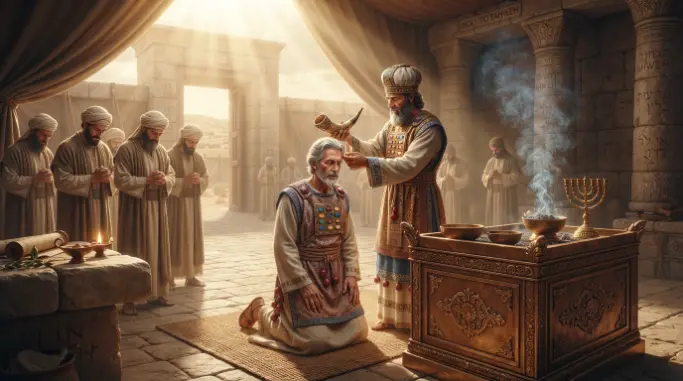
The Old Testament is filled with vivid examples of consecration, especially in the books of Exodus, Leviticus, and Numbers. These passages show how consecration wasn’t just a spiritual idea it was a physical, ceremonial process with specific rituals attached.
Consecration of Priests
One of the clearest examples of consecration meaning in the Bible comes from the ordination of Aaron and his sons as priests. In Exodus 29, God gives Moses detailed instructions for consecrating Aaron and his sons for priestly service. The process included:
- Ceremonial washing with water
- Anointing with specially prepared oil
- Sacrificial offerings, including a bull and rams
- Applying blood to the priests’ ears, thumbs, and toes as a symbol of total dedication
- Wearing specific garments designed exclusively for priestly duties
This wasn’t a quick or casual process. It took seven full days of ritual consecration before Aaron and his sons could officially serve as priests (Exodus 29:35-37).
Consecration of the Tabernacle and Its Furnishings
It wasn’t just people who were consecrated objects and places were too. The tabernacle, the portable worship structure the Israelites carried through the wilderness, along with its altar, utensils, and furnishings, all had to be consecrated before they could be used in worship (Exodus 40:9-11).
This included:
- The altar of burnt offering
- The bronze basin used for washing
- The table for showbread
- The golden lampstand
- The ark of the covenant
Consecration of the Firstborn
Another fascinating example appears in Exodus 13:2, where God commands that every firstborn male, whether human or animal, be consecrated to Him. This command was rooted in the Passover story, where God spared the firstborn of Israel while judgment fell on Egypt. As a result, the firstborn belonged to God in a special way, symbolizing gratitude and total dependence on Him.
Consecration of the Nation of Israel
Beyond individuals and objects, God consecrated the entire nation of Israel as His treasured possession. In Exodus 19:6, God tells the Israelites they will be “a kingdom of priests and a holy nation” if they obey His voice and keep His covenant.
Consecration in the New Testament
While the Old Testament focuses heavily on ceremonial and ritual consecration, the New Testament shifts the emphasis toward inward transformation and spiritual devotion.
Jesus as the Ultimate Consecrated One
Jesus Christ is described as being sanctified and sent into the world by the Father (John 10:36). His entire life, ministry, death, and resurrection reflect complete consecration to God’s redemptive plan. Unlike the priests of the Old Testament who needed repeated ceremonial consecration, Jesus is presented as the perfect and final high priest, fully set apart for His unique mission (Hebrews 7:26-27).
Believers Called to Be Consecrated
The New Testament also extends the idea of consecration to everyday believers. In Romans 12:1, Paul urges Christians to offer their bodies as “a living sacrifice, holy and pleasing to God.” This is a beautiful echo of Old Testament consecration language, except now the “sacrifice” isn’t an animal on an altar it’s a person’s entire life, offered daily to God.
Similarly, in 1 Peter 2:9, believers are described as “a chosen people, a royal priesthood, a holy nation, God’s special possession.” This directly parallels the language used for Israel in Exodus 19:6, showing that the New Testament sees the church as inheriting and fulfilling that same call to consecrated living.
Consecration Through Sanctification
The New Testament often uses the word “sanctify” alongside or interchangeably with consecration. In John 17:17, Jesus prays that His followers would be sanctified by the truth of God’s Word.
Key Differences Between Consecration and Sanctification
Many people confuse consecration with sanctification, and while they’re closely related, there are subtle distinctions worth understanding:
- Consecration typically refers to the initial act of setting something or someone apart for God’s purposes. It’s often a deliberate, decisive moment.
- Sanctification refers to the ongoing process of becoming holy growing in character, purity, and devotion over time.
Think of consecration as the starting line and sanctification as the race itself. Consecration says, “I now belong to God.” Sanctification is the lifelong journey of living out that belonging.
Why Consecration Mattered So Much in Ancient Israel
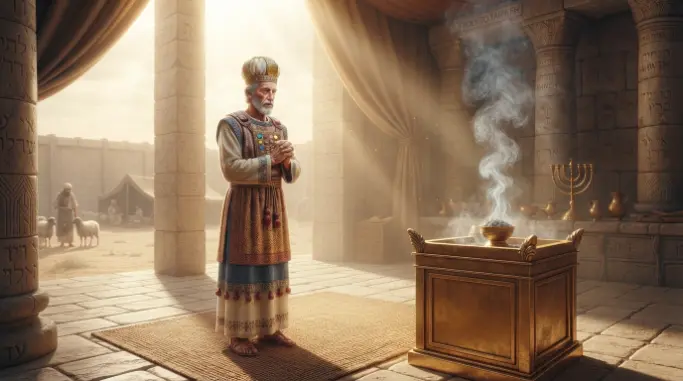
It’s easy to read these ancient rituals and wonder why they were so elaborate. But consecration served several important purposes in the life of Israel:
1. It Reinforced God’s Holiness
By setting apart specific people, places, and objects, God taught Israel that He is holy completely different from anything common or ordinary. This helped prevent the casual, careless approach to worship that was common among surrounding pagan nations.
2. It Created Boundaries and Order
Consecration established clear boundaries around who could approach God, how, and under what conditions. This wasn’t about exclusion for its own sake it was about protecting the sacredness of worship and ensuring reverence.
3. It Pointed Forward to Christ
Many Bible scholars see the consecration rituals of the Old Testament as foreshadowing the ultimate consecration accomplished through Jesus Christ. The blood of bulls and goats couldn’t permanently cleanse sin (Hebrews 10:4), but they pointed toward a greater, once-and-for-all consecration through Christ’s sacrifice.
What Consecration Looks Like for Christians Today
You might be thinking, “That’s interesting history, but what does consecration mean for my life today?” Great question. While we no longer perform animal sacrifices or anoint altars with oil, the heart behind consecration remains deeply relevant.
Here are practical ways consecration shows up in modern Christian life:
- Dedicating your time to prayer, worship, and studying Scripture instead of filling every moment with distractions
- Setting apart your finances through tithing or generous giving as an act of trust and devotion
- Committing your relationships to reflect godly values rather than worldly patterns
- Offering your talents and career as a means of serving God’s purposes, not just personal ambition
- Guarding your thoughts and habits, recognizing that your mind and body belong to God (1 Corinthians 6:19-20)
Consecration isn’t about perfection it’s about direction. It’s a daily choice to say, “This part of my life belongs to God, not just to me.”
Common Symbols and Practices Associated with Consecration
Throughout Scripture, certain symbols consistently appear alongside consecration ceremonies. Recognizing these can deepen your understanding of biblical consecration:
- Anointing oil – represents the Holy Spirit’s presence and empowerment
- Blood – symbolizes atonement, purification, and total dedication
- Washing with water – represents cleansing from impurity before entering sacred service
- Special garments – signify a new identity and role set apart from ordinary life
- Laying on of hands – represents the transfer of authority, blessing, or responsibility
Examples of Consecration in Everyday Bible Stories
Beyond the priestly ceremonies, consecration themes appear in several well-known Bible stories:
- Samuel was consecrated to God by his mother Hannah before he was even born, and he served in the temple from a young age (1 Samuel 1:11).
- The Nazirite vow described in Numbers 6 allowed ordinary Israelites to voluntarily consecrate themselves to God for a specific period, avoiding wine, cutting their hair, or touching a dead body as outward signs of their dedication.
- Solomon’s Temple was formally consecrated in 1 Kings 8, with elaborate prayers, sacrifices, and celebrations marking its dedication as God’s dwelling place among His people.
Why Understanding Consecration Still Matters
In a culture that often blurs the lines between sacred and secular, understanding consecration meaning in the Bible offers a powerful reminder: not everything is meant to be treated the same. Some things and some people are called to a higher purpose, a deeper devotion, a set-apart life.
Whether you’re studying Scripture for personal growth, preparing a sermon, or simply curious about biblical concepts, grasping the depth of consecration helps you see the Bible’s bigger story more clearly. It’s a thread that connects the tabernacle in the wilderness to the life of Jesus, and ultimately, to the everyday choices believers make today.
FAQs About Consecration Meaning in the Bible
1. What is the simplest definition of consecration in the Bible?
Consecration means setting someone or something apart exclusively for God’s use and purpose, making it holy rather than common or ordinary.
2. What is the difference between consecration and dedication?
Dedication often refers to committing something to a specific purpose, while consecration specifically implies making something holy and setting it apart from ordinary use for God’s service.
3. Is consecration only for priests in the Bible?
No. While priests underwent formal consecration ceremonies, ordinary believers, objects, places, and even entire nations were also consecrated throughout Scripture.
4. What does it mean to consecrate yourself to God today?
It means intentionally dedicating your time, talents, relationships, and daily choices to God’s purposes rather than living purely for personal or worldly goals.
5. What Bible verse best explains consecration?
Romans 12:1 is often considered one of the clearest New Testament explanations, encouraging believers to offer themselves as a living sacrifice, holy and pleasing to God.
6. How is consecration different from sanctification?
Consecration is often the initial act of being set apart for God, while sanctification is the ongoing, lifelong process of growing in holiness and Christlike character.
7. Why did the Old Testament require such detailed consecration rituals?
These rituals emphasized God’s holiness, established reverence in worship, and foreshadowed the ultimate consecration accomplished through Jesus Christ’s sacrifice.
Final Thoughts
Understanding consecration meaning in the Bible opens up a richer, deeper appreciation for how God relates to His people. From the detailed priestly ceremonies in Exodus and Leviticus to Paul’s call for believers to offer themselves as living sacrifices, consecration consistently points to one central truth: God desires a people, places, and things set apart wholly for Him.

James Wilson is a passionate writer who loves exploring meaningful ideas, biblical insights, and topics that inspire everyday life. Through TruthVarse.com, he shares simple, thoughtful, and easy-to-understand content to help readers discover truth, meaning, and inspiration.