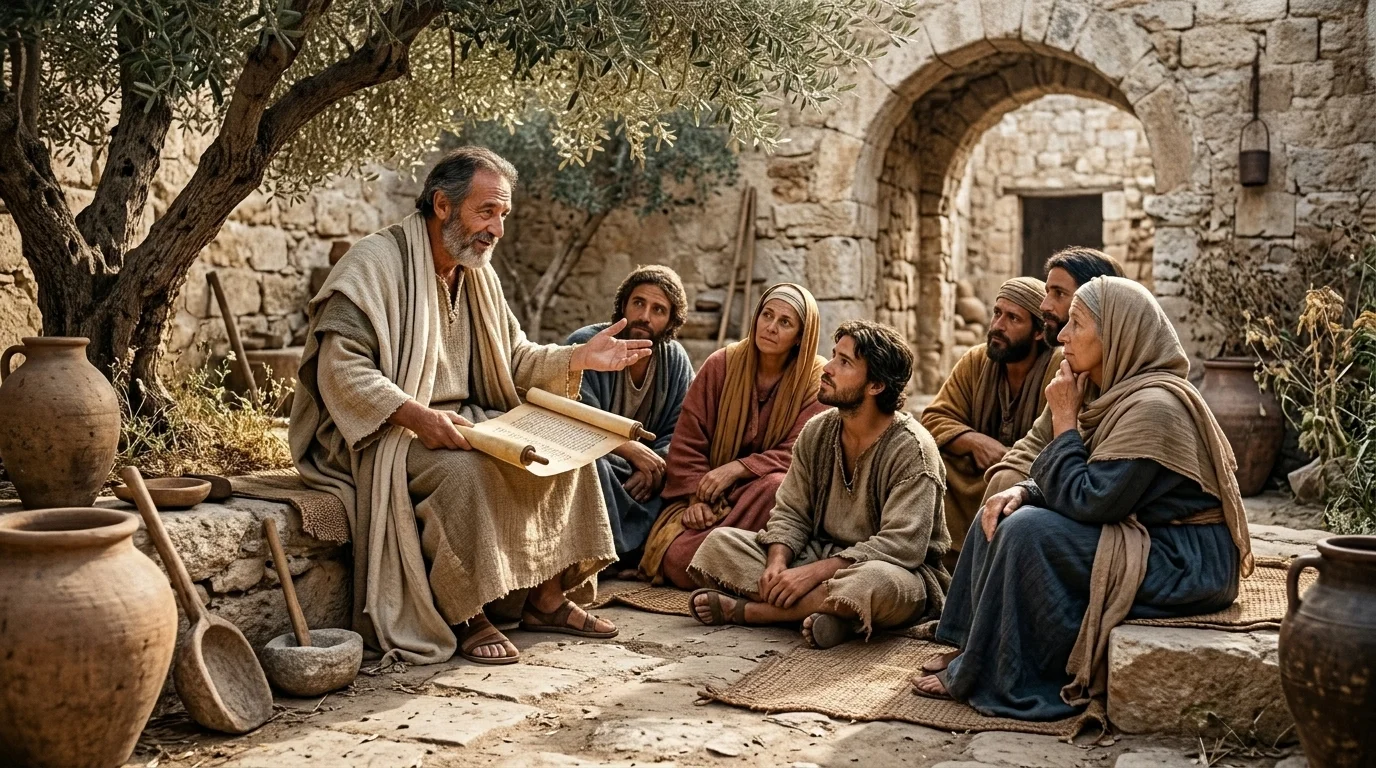
Have you ever wondered what exhortation means in the Bible and why this word is important in Christian teaching? Exhortation means encouraging, urging, or strongly advising someone to follow a particular path or do what is right.
In Scripture, exhortation often involves encouraging believers to grow in faith, remain faithful to God, love one another, and live according to His Word.
The New Testament frequently emphasizes the importance of building others up through encouragement, wise instruction, and spiritual guidance. For example, Hebrews 10:24–25 encourages believers to motivate one another toward love and good works and to continue meeting together.
Exhortation Meaning in the Bible: A Straightforward Definition
In simple terms, the exhortation meaning in the Bible centers on urging, encouraging, and motivating someone toward faithful action usually connected to obedience, perseverance, or spiritual growth. It’s not cold instruction. It’s warm, personal, and forward-moving.
Think of exhortation as the bridge between “knowing what’s right” and “actually doing it.” A sermon might teach you that forgiveness matters. Exhortation is the friend who calls you afterward and says, “I know it’s hard, but let’s pray through forgiving that person together, starting today.”
Breaking Down the Original Language
The New Testament was written in Greek, and the word behind “exhort” is parakaleo, with its noun form paraklesis. This word literally means “to call to one’s side” as if someone is walking over, standing next to you, and speaking directly into your situation.
This exact word family gives us the title “Paraclete,” used for the Holy Spirit as our Helper and Comforter in John 14. That connection matters. It tells us exhortation was never meant to feel like criticism from a distance. It’s meant to feel like companionship with a purpose.
In the Old Testament, while the specific term differs across Hebrew passages, the concept is very much alive prophets, judges, and leaders regularly urged God’s people to remain faithful, return to obedience, or take courage in difficult seasons.
How Exhortation Differs From Similar Biblical Concepts

To fully grasp the exhortation meaning in the Bible, it helps to see how it stands apart from related ideas people often confuse it with.
- Teaching explains truth. Exhortation urges a response to that truth.
- Rebuke corrects wrongdoing, often firmly. Exhortation motivates toward what’s right, often before wrongdoing even happens.
- Comfort soothes pain. Exhortation does that too, but adds a forward push toward action or perseverance.
Many Bible translations actually use “encourage” and “exhort” as near-synonyms, but exhortation typically carries a bit more urgency it’s encouragement with a specific call to action attached.
Key Bible Verses That Reveal the Meaning of Exhortation
Let’s look at how Scripture itself uses and models exhortation, since the best way to understand a biblical concept is to see it in context.
Hebrews 3:13 A Daily, Communal Practice
This verse calls believers to encourage one another every single day, so that no one is hardened by sin’s deceitfulness. Three important truths come out of this passage:
- Exhortation isn’t a once-a-year event it’s meant to happen daily.
- It’s a job for every believer, not just pastors or leaders.
- Its purpose is protective guarding hearts against slow spiritual drift.
Romans 12:6-8 Exhortation as a Spiritual Gift
Paul lists exhortation alongside prophecy, serving, teaching, giving, and leadership as a spiritual gift given by grace. This tells us something fascinating: some people are simply wired by the Holy Spirit to be especially effective encouragers. You likely know someone like this in your own life the person who always seems to say the right thing at the right moment to get you moving forward again.
1 Thessalonians 5:11 Mutual Encouragement
Paul instructs the Thessalonian church to encourage one another and build each other up, language he repeats throughout his letters. This shows exhortation flowing in both directions within a community it’s not top-down instruction, but mutual support among equals.
2 Timothy 4:2 Exhortation Paired With Patience
Paul tells Timothy to preach the word in season and out of season, and to correct, rebuke, and encourage with great patience and careful instruction. Patience is the key word here. Biblical exhortation, even when it includes a corrective element, is never rushed, harsh, or impatient.
Titus 1:9 Exhortation as a Leadership Responsibility
Paul describes qualified church leaders as those able to encourage others with sound teaching and to refute those who oppose it. This shows exhortation can also be a formal, structured responsibility carried by elders and pastors guiding a congregation.
Acts 14:22 Exhortation During Hardship
After facing persecution, Paul and Barnabas returned to strengthen the disciples, encouraging them to continue in the faith despite hardships they would face entering the kingdom of God. This example shows exhortation isn’t only for calm, comfortable seasons it’s often most needed in the middle of trials.
Why Exhortation Still Matters for Christians Today

Understanding the exhortation meaning in the Bible isn’t just historical trivia it has direct relevance for how believers are meant to live together in community right now.
It Prevents Quiet Spiritual Drift
Few Christians walk away from their faith in one dramatic moment. More often, it’s a slow fade skipped church services, shortened prayer times, and gradual isolation. Regular exhortation acts like a guardrail, keeping people connected and spiritually alert before drift becomes a full detour.
It Turns Knowledge Into Action
Most believers already know they should pray more, forgive faster, or serve more generously. What’s often missing isn’t information it’s motivation. Exhortation supplies exactly that missing spark.
It Builds Deeper Community
Because the root word literally means “calling someone alongside,” practicing exhortation regularly deepens relationships. It says, “I care enough about you to walk this road with you,” rather than simply offering advice from a distance.
It Reflects God’s Own Character
Throughout Scripture, God consistently draws near to His people rather than remaining distant. Exhortation mirrors that same pattern of nearness, patience, and forward-moving love.
What Biblical Exhortation Looks Like in Everyday Life
Understanding the theory is helpful, but seeing exhortation in action makes it click. Here are some relatable, real-world examples:
- A coworker saying, “I know this project feels overwhelming, but I’ve seen how you’ve handled tough situations before let’s tackle this together,” instead of simply saying “just get it done.”
- A parent telling a struggling teenager, “I understand this friendship is hard to navigate, but I believe you have the wisdom and strength in Christ to make a good choice here.”
- A small group member texting someone who missed church, “We missed you Sunday no pressure, just wanted you to know we’re praying for you and would love to see you this week.”
- A pastor closing a sermon with, “Don’t just leave here informed leave here ready to actually reach out and reconcile with that person you’ve been avoiding.”
Notice the pattern across every example: truth plus warmth, encouragement plus a nudge toward action.
Practical Tips for Practicing Exhortation Yourself
If you want to start applying the exhortation meaning in the Bible in your daily relationships, here are some practical starting points:
- Lead with warmth, not correction. Exhortation builds people up; it doesn’t tear them down.
- Be specific rather than vague. Instead of a generic “hang in there,” name the exact truth or action someone needs.
- Anchor your words in Scripture. The most powerful exhortation flows from God’s Word, not just personal opinion or motivational cliches.
- Make it a habit, not a rare event. Following Hebrews 3:13’s model, aim for consistent, ongoing encouragement rather than occasional pep talks.
- Season correction with patience. If exhortation involves pointing someone toward a better path, do it gently, following Paul’s example in 2 Timothy 4:2.
- Listen before you speak. The best exhortation responds to someone’s actual situation, not just a generic script.
Common Misconceptions About Exhortation
A few misunderstandings tend to surface around this word, so let’s clear them up:
- “Exhortation is just nagging.” Not true nagging is repetitive and often irritating, while true exhortation is relational, warm, and rooted in genuine care.
- “Only pastors are supposed to exhort.” Scripture disagrees Hebrews 3:13 and Romans 12 both frame exhortation as a responsibility (and sometimes gift) for every believer.
- “Exhortation always means someone did something wrong.” In reality, most biblical exhortation is proactive encouragement toward continued faithfulness, not reactive correction.
The Bigger Spiritual Picture Behind Exhortation

When you trace the exhortation meaning in the Bible from Genesis through Revelation, a clear pattern emerges: God never designed faith to be walked out in isolation. Community, mutual encouragement, and shared accountability show up again and again throughout Scripture’s storyline.
Exhortation is one of the practical tools God gave His people to live out this design. It’s a small word carrying enormous relational weight, reminding every believer that the Christian life was always meant to be shared walked “alongside” one another, exactly as the Greek word parakaleo suggests.
FAQs About Exhortation Meaning in the Bible
1. What is the simplest definition of exhortation in the Bible?
Exhortation in the Bible means encouraging, urging, or motivating someone toward faithful and godly action, blending truth with warmth rather than delivering cold instruction.
2. Is exhortation considered a spiritual gift?
Yes. Romans 12:8 specifically lists exhortation among the spiritual gifts, showing that some believers are especially equipped to encourage and motivate others effectively.
3. How is exhortation different from encouragement?
The two are closely related and often used interchangeably in translation, but exhortation typically carries a slightly stronger sense of urgency, pushing toward a specific action rather than offering general comfort.
4. What Greek word is translated as “exhort” in the New Testament?
The Greek word is parakaleo (verb form) or paraklesis (noun form), meaning “to call alongside” the same root behind the Holy Spirit’s title as our Comforter.
5. Which Bible verse best explains the practice of exhortation?
Hebrews 3:13 is one of the clearest, instructing believers to encourage one another daily so no one becomes hardened by sin’s deceitfulness.
6. Does exhortation ever involve correction or rebuke?
Sometimes, yes. 2 Timothy 4:2 pairs exhortation with rebuke and correction, but always emphasizes patience, showing that even corrective exhortation should remain gentle and loving.
7. Why is understanding exhortation important for Christians today?
It helps prevent spiritual isolation, turns biblical knowledge into real action, and strengthens relationships within the church community, all of which remain just as vital today as in the early church.
Final Thoughts:
Ultimately, the exhortation meaning in the Bible points to something far richer than a vocabulary definition it points to a relational invitation. It’s God’s design for believers to walk alongside one another, offering encouragement, motivation, and gentle correction rooted in genuine love and biblical truth.
You’re the coworker offering a timely word, the parent guiding a teenager, or someone simply trying to live out Hebrews 3:13 in your closest relationships, understanding and practicing exhortation has the power to transform your own spiritual life and the lives of everyone around you.

James Wilson is a passionate writer who loves exploring meaningful ideas, biblical insights, and topics that inspire everyday life. Through TruthVarse.com, he shares simple, thoughtful, and easy-to-understand content to help readers discover truth, meaning, and inspiration.