Hosanna Meaning in the Bible
Have you ever wondered what Hosanna means in the Bible and why this word is connected with praise and salvation? Hosanna comes from a Hebrew expression commonly understood as “save us” or “please save,” and it was used as a cry for help and deliverance.
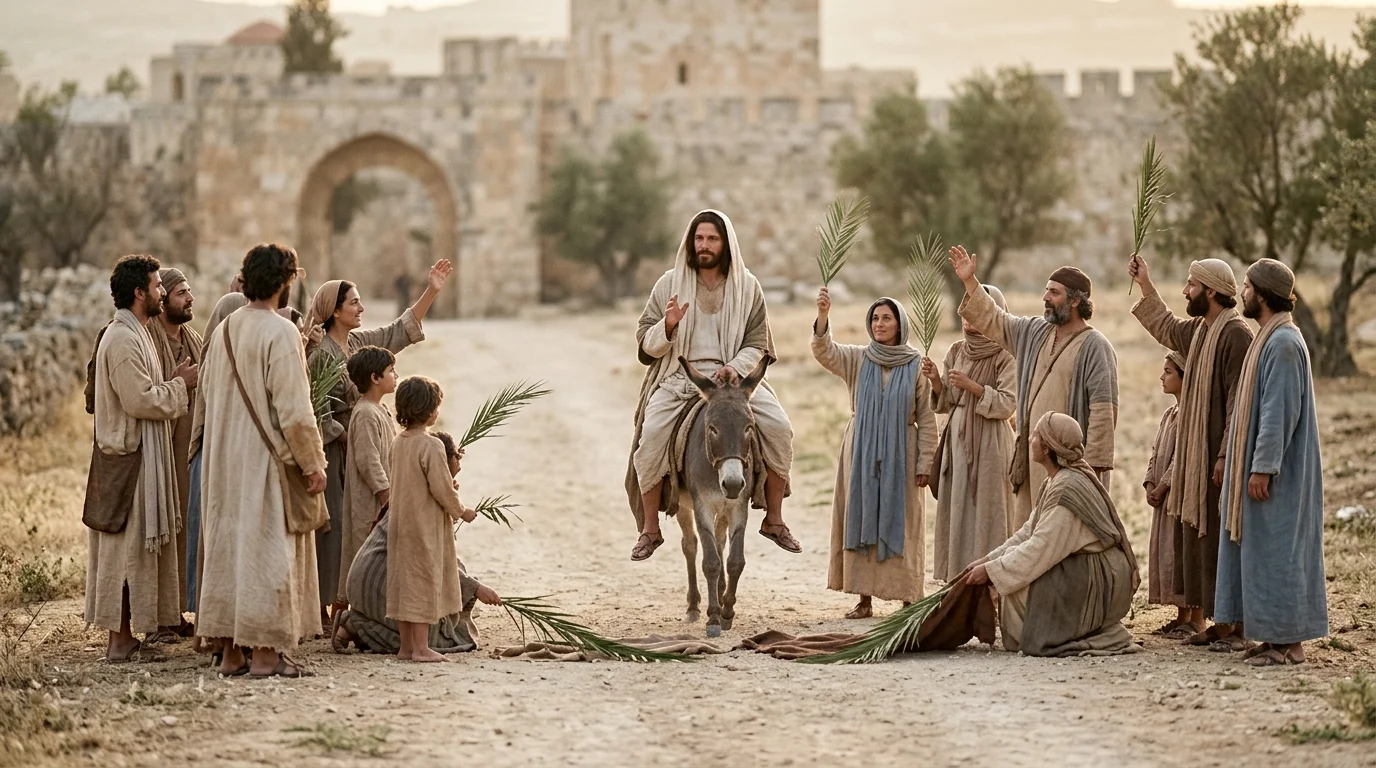
In the New Testament, the word appears during Jesus’ triumphal entry into Jerusalem, when crowds welcomed Him with praise and cried out, “Hosanna to the Son of David.”
Over time, Hosanna became closely associated with praise, worship, and recognition of Jesus as the promised Savior.
What Does Hosanna Mean in the Bible?
At its core, the hosanna meaning in the bible boils down to a heartfelt plea: “Save us, we pray” or “Save now.” It’s not simply an exclamation of joy like “Hooray!” or “Hallelujah!” although it eventually took on that celebratory tone. Originally, it was a genuine cry for deliverance directed straight at God.
The word comes from the Hebrew phrase hoshi’ah na (הוֹשִׁיעָה נָּא), which combines two elements:
- Hoshia meaning “save” or “deliver”
- Na a Hebrew particle expressing urgency, similar to “please” or “now”
So when ancient worshippers cried out “Hosanna,” they were literally begging God to rescue them. Over time, especially by the first century, the word shifted in common usage to also express praise and triumphant welcome much like how we might shout “Long live the king!” at a coronation. It became both a plea and a proclamation.
The Transformation of a Word
Language evolves, and “Hosanna” is a perfect example. What began as a desperate liturgical cry in the Old Testament transformed into a joyful shout of celebration by the time Jesus entered Jerusalem. This shift is key to understanding why the crowds used it the way they did they were mixing genuine hope for rescue with excited praise for someone they believed was their promised deliverer.
The Old Testament Roots of Hosanna
To truly grasp the hosanna meaning in the bible, you have to go back to the Psalms, specifically Psalm 118.
Psalm 118:25 The Original Cry
Psalm 118:25 reads: “Save us, we beseech thee, O LORD: O LORD, we beseech thee, send now prosperity.” In Hebrew, this verse contains the exact phrase that became “Hosanna.” This psalm was part of the Hallel a collection of psalms (113–118) that Jewish worshippers recited during major festivals, including Passover, the Feast of Tabernacles, and Hanukkah.
During the Feast of Tabernacles (Sukkot), worshippers would carry palm branches, willow branches, and myrtle known as the lulav while processing around the altar, reciting Psalm 118 and crying “Hosanna” as both a prayer for rain, prosperity, and salvation, and a celebration of God’s faithfulness.
This is crucial background because it explains something many readers miss: the crowd that welcomed Jesus into Jerusalem wasn’t inventing a new chant. They were pulling directly from a familiar liturgical tradition tied to festival worship and messianic hope.
A Cry Rooted in National Longing
By the time of Jesus, Israel had been under foreign occupation for generations first the Greeks, then the Romans. The cry of “Hosanna” carried deep national longing. It wasn’t just personal salvation people wanted; they wanted political and spiritual deliverance from oppression. This layered meaning is essential context for what happens next.
Hosanna in the New Testament: Palm Sunday and the Triumphal Entry
The most famous use of “Hosanna” appears during what Christians now call the Triumphal Entry, when Jesus rode into Jerusalem on a donkey just days before His crucifixion. This event is recorded in all four Gospels, which shows just how significant it was to the early Christian community.
Matthew 21:9
“And the multitudes that went before, and that followed, cried, saying, Hosanna to the son of David: Blessed is he that cometh in the name of the Lord; Hosanna in the highest.”
Mark 11:9-10
“And they that went before, and they that followed, cried, saying, Hosanna; Blessed is he that cometh in the name of the Lord.”
John 12:13
“Took branches of palm trees, and went forth to meet him, and cried, Hosanna: Blessed is the King of Israel that cometh in the name of the Lord.”
Notice the pattern? In each account, the crowd combines “Hosanna” with a direct quotation from Psalm 118:26 “Blessed is he that cometh in the name of the Lord.” This wasn’t a coincidence. The people were consciously applying a well-known messianic psalm to Jesus, publicly declaring Him as the one they believed would save them.
Why Palm Branches Mattered
Waving palm branches wasn’t a random gesture. Palm branches were a national symbol of victory and celebration in Jewish culture, closely associated with the Feast of Tabernacles and later with the Maccabean victory celebrations after Israel’s temporary independence from Greek rule. By waving palms and shouting “Hosanna,” the crowd was essentially declaring Jesus a conquering king someone who would restore Israel’s freedom and glory.
This is why the event is called the “Triumphal Entry.” The crowd’s actions mirrored how ancient near-eastern cultures welcomed victorious kings and generals returning from battle.
The Deeper Layers of Meaning Behind Hosanna
Once you understand the historical background, several layers of meaning emerge from this single word.
1. A Cry for Salvation
At its most literal level, the crowd was crying out for God to save them through Jesus. Whether they fully understood the type of salvation He offered (spiritual rather than purely political) is debatable, but their hearts were crying “save us.”
2. A Declaration of Kingship
By pairing “Hosanna” with “Son of David” and “King of Israel,” the crowd was making a bold political and theological statement: this man riding into Jerusalem was the long-awaited Messiah, the rightful heir to David’s throne.
3. An Act of Worship
“Hosanna in the highest” (found in Matthew and Mark) elevates the cry beyond an earthly request. It directs praise toward heaven itself, acknowledging that ultimate salvation comes from God alone.
4. Tragic Irony
Here’s something that often gets overlooked: the same crowd or a crowd very much like it that shouted “Hosanna” on Sunday was likely shouting “Crucify him!” by Friday. This dramatic reversal highlights the fickle nature of human devotion and the gap between expecting a political savior and accepting a suffering servant. It’s a sobering reminder that praise without true understanding can crumble quickly under pressure.
How Hosanna Is Used Today

The word didn’t disappear after the first century. It has been woven into Christian worship, liturgy, and music for two thousand years.
In Church Liturgy
Many liturgical traditions Catholic, Orthodox, Anglican, and Lutheran churches especially include “Hosanna” in their communion liturgy, often in the Sanctus: “Holy, holy, holy… Hosanna in the highest. Blessed is he who comes in the name of the Lord. Hosanna in the highest.” This connects the celebration of communion directly back to the Palm Sunday narrative and the ancient psalms.
In Modern Worship Music
Countless worship songs use “Hosanna” as both praise and petition. Artists and worship leaders have written songs that capture both sides of the word’s meaning the celebratory shout and the desperate plea for God’s presence and salvation in everyday life.
In Palm Sunday Celebrations
Every year, churches around the world reenact the Triumphal Entry on Palm Sunday, waving palm branches and shouting “Hosanna” to commemorate Jesus’ arrival in Jerusalem before His crucifixion and resurrection. This tradition keeps the word’s original context alive for new generations.
Hosanna vs. Hallelujah: What’s the Difference?
People often confuse these two words, so let’s clear it up.
- Hallelujah means “Praise the Lord” it’s a direct command or invitation to praise God. It doesn’t carry the plea for salvation that “Hosanna” does.
- Hosanna means “Save us, please” originally a request, later also used as an expression of praise.
Think of it this way: Hallelujah says “Praise Him!” while Hosanna says “Save us and we praise You for doing it.” Both words are Hebrew in origin and both made their way into Christian worship largely unchanged, which is fairly rare for ancient Hebrew expressions.
Why Understanding Hosanna Matters for Believers Today

Knowing the true hosanna meaning in the bible isn’t just a fun linguistic fact it can genuinely transform how you approach your faith.
It Reframes Worship as Dependency
When you understand that “Hosanna” is fundamentally a cry for help, it reminds you that true worship isn’t about performance or empty ritual. It’s about acknowledging your need for God and trusting Him to act on your behalf.
It Connects Old and New Testament Themes
Seeing how Psalm 118 directly informs the Palm Sunday narrative helps you appreciate the unity of Scripture. The Old Testament isn’t a separate story from the New Testament it’s the foundation that the Gospel writers assumed their readers would understand.
It Challenges Shallow Faith
The Palm Sunday crowd’s quick turn from praise to rejection is a warning. It’s easy to shout “Hosanna” when things are going well or when we expect God to meet our expectations exactly the way we want. True faith holds on even when God’s plan doesn’t match our assumptions.
It Deepens Palm Sunday Observance
For anyone who celebrates Palm Sunday, knowing the weight behind the word adds richness to the tradition. You’re not just waving a branch you’re joining a centuries-old cry that spans from ancient Jerusalem festival worship to Jesus’ final week before the cross.
Quick Recap: Key Facts About Hosanna
- Hebrew origin: From “hoshia na,” meaning “save now” or “save, we pray”
- First appears: In Psalm 118:25, part of the Hallel psalms
- Associated festival: The Feast of Tabernacles (Sukkot), where palm branches were used
- New Testament usage: Shouted during Jesus’ Triumphal Entry into Jerusalem (Matthew, Mark, Luke, John)
- Dual meaning: Both a desperate plea for salvation and a joyful shout of praise
- Modern use: Found in church liturgy, worship songs, and Palm Sunday celebrations worldwide
FAQs About Hosanna Meaning in the Bible
1. What is the literal translation of Hosanna?
The literal translation is “save now” or “save, we pray,” derived from the Hebrew phrase “hoshia na.”
2. Why did the crowd shout Hosanna when Jesus entered Jerusalem?
The crowd shouted “Hosanna” because they recognized Jesus as the Messiah, the promised “Son of David,” and were both pleading for deliverance and celebrating His arrival as a king, drawing directly from the language of Psalm 118.
3. Is Hosanna a name or a word of praise?
Hosanna is not a proper name it’s a Hebrew exclamation that functions as both a cry for salvation and, later, an expression of praise and celebration.
4. Where in the Bible does the word Hosanna first appear?
Hosanna’s root phrase first appears in Psalm 118:25 in the Old Testament, and the word itself appears prominently in the Gospels Matthew 21, Mark 11, and John 12 during the Triumphal Entry.
5. What is the connection between Hosanna and Palm Sunday?
Palm Sunday commemorates Jesus’ Triumphal Entry into Jerusalem, when crowds waved palm branches and shouted “Hosanna,” fulfilling messianic expectations tied to Psalm 118 and ancient victory celebrations.
6. Is Hosanna used in modern Christian worship?
Yes, “Hosanna” is commonly used in liturgical prayers like the Sanctus, in contemporary worship songs, and during Palm Sunday services across many Christian denominations.
7. What’s the difference between Hosanna and Hallelujah?
“Hallelujah” means “Praise the Lord” and is a command to praise, while “Hosanna” means “save us, please” and originated as a plea for deliverance that later took on a tone of praise as well.
Final Thoughts
The hosanna meaning in the bible is far richer than most people realize. What started as a desperate cry for salvation in the Psalms became one of the most powerful and emotional shouts in the entire Gospel narrative a word that captures hope, expectation, worship, and even tragic irony all at once.

William Turner is a passionate writer who enjoys exploring meaningful ideas, biblical insights, and the stories behind words and traditions. His goal is to make every article simple, helpful, and engaging for readers around the world.