The rainbow is a beautiful and meaningful symbol in the Bible.
It represents God’s promise, faithfulness, hope, and mercy toward humanity.
The rainbow first appears after Noah’s flood as a sign of God’s everlasting covenant.
It reminds believers that God always keeps His promises and cares for His creation.
Throughout Scripture, the rainbow also reflects God’s glory and His unchanging love.
Understanding the rainbow meaning in the Bible helps us see it as a symbol of hope, peace, and God’s eternal faithfulness.
What Rainbow Means in the Bible
The rainbow in the Bible symbolizes God’s covenant and His promise to humanity. It serves as a visible reminder of God’s faithfulness and mercy after the judgment of the Flood. The rainbow also appears in heavenly visions, emphasizing God’s glory and majesty.
The Origin of the Rainbow in the Bible
To understand the rainbow meaning bible writers intended, you have to go back to the very beginning literally, to the book of Genesis. The story of the rainbow is tied directly to one of the most dramatic events in the Old Testament: the great flood.
According to Genesis 6-9, humanity had become deeply corrupt, and God chose one righteous man, Noah, to build an ark and preserve his family along with pairs of every animal.
After 40 days and nights of rain, the earth was flooded, wiping out everything outside the ark. When the waters finally receded and Noah’s family stepped onto dry land again, something remarkable happened.
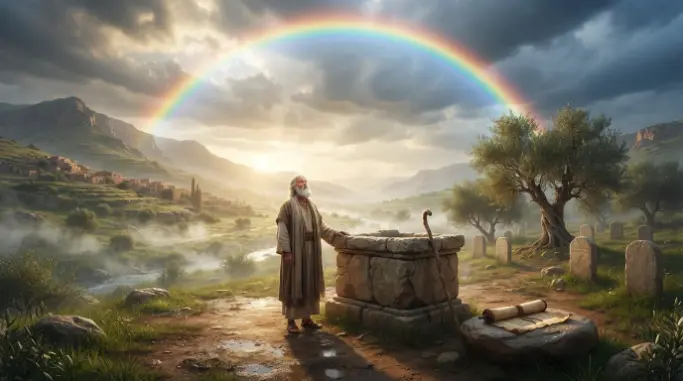
God made a covenant a solemn, binding promise with Noah and every living creature on earth. He promised that He would never again destroy all life with a flood. And as the sign of that covenant, He set a rainbow in the clouds.
“I have set my rainbow in the clouds, and it will be the sign of the covenant between me and the earth.” Genesis 9:13
That single verse is the foundation of everything the rainbow represents in biblical tradition. It wasn’t just a pretty phenomenon; it was chosen deliberately as a physical, visible reminder of a spiritual promise.
Why a Rainbow Specifically?
It’s worth pausing here to ask a question a lot of people skip over: why a rainbow? Why not a star, a mountain, or some other sign?
A few reasons make sense when you think about it:
- It appears after rain. Since the flood was caused by rain, a sign that shows up specifically after rainfall serves as a direct, natural reminder tied to the very event it commemorates.
- It requires both sun and rain. A rainbow can only form when sunlight and water droplets interact together. Symbolically, this pictures the coexistence of judgment (rain/storm) and grace (sunlight/light breaking through).
- It’s impossible to grasp or control. You can see a rainbow, but you can never touch it, hold it, or own it. That mystery reflects the untouchable, unbreakable nature of God’s promise.
What Is the Significance of a Rainbow in the Bible
In the Bible, the rainbow is a sign of God’s covenant with Noah after the Flood. Genesis 9:12–16 presents it as a reminder of God’s promise never again to destroy the earth with a flood. It represents God’s covenant, mercy, and faithfulness.
The Deeper Symbolic Meaning of the Rainbow in Scripture
Now that we know the origin story, let’s dig into what the rainbow actually symbolizes on a deeper level. This is where the rainbow meaning bible scholars discuss really starts to unfold into something rich and layered.
1. A Covenant of Mercy
At its core, the rainbow represents mercy. After the flood, God could have continued dealing with humanity through destruction whenever sin got out of hand. Instead, He chose restraint. The rainbow is a visual pledge of patience a reminder that judgment isn’t the final word.
2. A Universal Promise
Unlike many biblical covenants that were made specifically with Israel or a particular group of people, the rainbow covenant was made with “every living creature” (Genesis 9:12).
This makes it one of the most universal promises in the entire Bible it applies to all of humanity, all animals, and the earth itself, regardless of nationality, religion, or background.
3. A Reminder for God, Not Just for Humans
Here’s something many people miss when they read Genesis 9 quickly. The text says the rainbow is a reminder for God as well:
“Whenever the rainbow appears in the clouds, I will see it and remember the everlasting covenant.” Genesis 9:16
This phrasing is fascinating. It’s not just that people look up and remember God’s promise Scripture describes God Himself as remembering His covenant when He sees the bow in the sky. It personalizes the promise in a way that feels almost tender, like a parent tying a string around their finger so they don’t forget something important to their child.
4. A Symbol of Hope After Judgment
Storms in the Bible often represent trials, judgment, or hardship. A rainbow appearing right after the storm clears is a powerful image of hope emerging after difficulty. This is one reason the rainbow has become such a comforting symbol for people going through hard seasons it visually represents the idea that storms don’t last forever, and something beautiful can follow pain.
Where in the Bible Does It Talk About the Rainbow
The main biblical passage about the rainbow is Genesis 9:12–16, where God places the rainbow in the clouds as the sign of His covenant with Noah. The rainbow is also mentioned in Ezekiel 1:28 and Revelation 4:3, where it is associated with God’s heavenly glory.
Rainbows Elsewhere in the Bible
While Genesis 9 is the most famous rainbow passage, it’s not the only place rainbows show up in Scripture. Understanding these other references adds even more depth to the overall picture.
Ezekiel’s Vision of God’s Glory
In Ezekiel 1:28, the prophet describes a vision of God’s glory using rainbow imagery:
“Like the appearance of a rainbow in the clouds on a rainy day, so was the radiance around him.”
Here, the rainbow isn’t tied to a flood story at all. Instead, it’s used to describe the overwhelming, radiant glory of God’s presence. This shows that rainbows in biblical symbolism aren’t limited to a single meaning they’re also connected to divine majesty and holiness.
The Rainbow Around God’s Throne in Revelation
The book of Revelation, written by the Apostle John, also features a stunning rainbow image:
“A rainbow that shone like an emerald encircled the throne.” Revelation 4:3
This vision places a rainbow directly around God’s throne in heaven. Many Bible scholars connect this image back to the Genesis covenant, suggesting that the same promise of mercy and faithfulness surrounds God’s very throne a permanent reminder woven into the fabric of heaven itself, not just something that appears occasionally in earthly skies.
Where in the Bible Is the Rainbow Mentioned
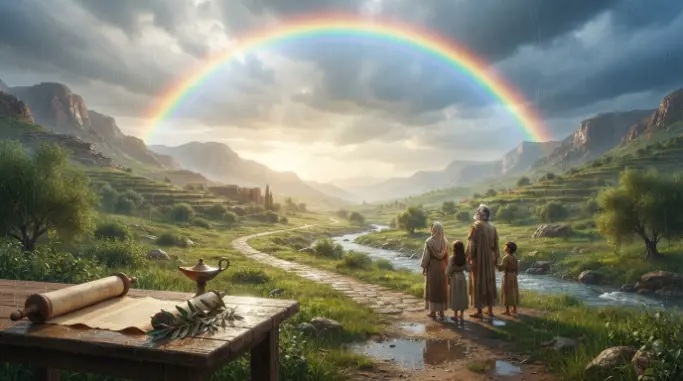
The rainbow is mentioned in several important passages, including Genesis 9:13–16, Ezekiel 1:28, and Revelation 4:3. Genesis connects it with God’s covenant after the Flood, while Ezekiel and Revelation use rainbow imagery in visions of God’s presence and heavenly throne.
What Colors Might Represent in Biblical Symbolism
While the Bible doesn’t break down each individual color of the rainbow with specific meanings (that kind of color-by-color interpretation is more of a modern or traditional add-on than something explicitly stated in Scripture), color symbolism does appear elsewhere in the Bible and can add context to how people have historically interpreted rainbows:
- Red often associated with sacrifice, blood, and redemption
- Blue connected to heaven, the divine, and revelation
- Purple linked to royalty and majesty
- Green associated with life, growth, and renewal
- Gold/Yellow tied to God’s glory and divine presence
- White represents purity and holiness
It’s important to be clear here: these color associations come from broader biblical symbolism and tradition, not from a direct verse-by-verse explanation of the rainbow’s colors.
If you come across sources claiming the Bible explicitly assigns meaning to each rainbow color, take that with a grain of salt it’s more interpretive tradition than direct scriptural teaching.
Why the Rainbow Still Matters Today
You might be wondering: this all happened thousands of years ago, so why does it matter now? Here’s the thing the promise described in Genesis wasn’t just for Noah’s generation. It was described as an “everlasting covenant,” meaning it applies across all of human history, including right now.
A Personal Reminder During Hard Times
Many people going through grief, uncertainty, or personal storms find comfort in the biblical rainbow meaning. It’s a visual reminder that:
- Difficult seasons are temporary
- God keeps His promises, even when circumstances feel chaotic
- Beauty and hope can emerge even after devastating loss
A Symbol Used in Christian Art, Worship, and Culture
Because of its rich meaning, the rainbow has become a common symbol in:
- Church artwork and stained-glass windows
- Christian jewelry and home décor
- Sermons about hope, faithfulness, and new beginnings
- Children’s Bible stories, especially retellings of Noah’s Ark
A Reminder of God’s Faithfulness in Daily Life
Even outside of formal religious settings, many believers describe an emotional response when they see a rainbow unexpectedly treating it as a small, personal reminder that they are seen and that promises made long ago still hold true.
Common Misunderstandings About the Rainbow’s Biblical Meaning
Let’s clear up a few things people often get confused about when researching the rainbow meaning bible passages describe.
Misunderstanding #1: The Rainbow Was Created at the Flood
Some people assume God physically invented rainbows for the first time after the flood, as if rainbows didn’t exist before that point. Scripture doesn’t necessarily say the rainbow was newly created many scholars believe it’s more likely that God took something that already existed in nature (light refracting through water) and assigned new spiritual meaning to it as a covenant sign, similar to how bread and wine took on new significance in later biblical traditions.
Misunderstanding #2: The Promise Means Bad Things Won’t Happen Again
The Genesis covenant specifically promises there won’t be another global flood destroying all life on earth.
It doesn’t promise an absence of hardship, storms, or difficulty in a broader sense. Understanding this distinction helps avoid misapplying the promise to situations it wasn’t meant to address.
Misunderstanding #3: Every Rainbow Color Has an Official “Biblical Meaning”
As mentioned earlier, detailed color-by-color breakdowns are largely traditional interpretation rather than direct scriptural statements. It’s fine to find meaning in these interpretations, just know they’re not verse-by-verse biblical facts.
How to Apply the Rainbow’s Meaning to Your Own Life
Understanding the history is one thing, but many people want to know how this ancient symbol can be meaningful in a modern, personal way. Here are a few simple ways people apply this symbolism:
- Use it as a reminder during tough seasons. When life feels overwhelming, remembering the rainbow’s message of hope after the storm can offer real emotional comfort.
- Reflect on faithfulness. Just as God kept His promise across thousands of years, it can be encouraging to reflect on the idea of steady, unwavering commitment in your own relationships and faith.
- Teach it to children. The Noah’s Ark story, paired with the rainbow promise, is one of the most accessible ways to introduce younger children to biblical concepts of mercy and hope.
- Journal or pray when you see one. Some people make it a personal practice to pause and say a quick prayer of gratitude whenever they spot a rainbow, treating it as a small, personal moment of connection.
Frequently Asked Questions About the Rainbow Meaning in the Bible
1. What does the rainbow symbolize in the Bible?
The rainbow symbolizes God’s covenant promise to Noah that He would never again destroy all life on earth with a flood. It represents mercy, hope, and faithfulness.
2. Where is the rainbow first mentioned in the Bible?
The rainbow is first mentioned in Genesis 9:12-17, right after Noah and his family left the ark following the great flood.
3. Does the Bible explain the meaning of each rainbow color?
No, the Bible does not give a specific, verse-by-verse explanation for each individual color of the rainbow. Color symbolism associated with rainbows comes largely from broader biblical color traditions, not direct scriptural teaching.
4. What is the significance of the rainbow in Revelation?
In Revelation 4:3, a rainbow is described encircling God’s throne in heaven, symbolizing that His mercy and covenant faithfulness surround His eternal presence.
5. Why did God choose a rainbow instead of another sign?
A rainbow requires both sunlight and rain to appear, making it a fitting symbol that connects directly to the flood story while also representing the coexistence of judgment and grace.
6. Is the rainbow covenant only for Christians or Israelites?
No, the covenant in Genesis 9 is described as being made with “every living creature,” making it a universal promise that applies to all of humanity and creation, not just one specific group.
7. What does it mean spiritually when you see a rainbow?
While interpretations vary by individual and tradition, many people see a rainbow as a personal reminder of hope, God’s faithfulness, and the idea that difficult seasons eventually give way to peace.
Final Thoughts on the Rainbow Meaning in the Bible
At the end of the day, understanding the rainbow meaning bible writers recorded thousands of years ago comes down to one central truth: it’s a symbol of promise-keeping mercy.
Born out of the story of Noah’s flood, the rainbow stands as a covenant sign between God and every living creature a guarantee that judgment doesn’t get the final say, and that hope has a way of breaking through even after the darkest storms.
From its roots in Genesis to its appearance in Ezekiel’s vision and its place around God’s throne in Revelation, the rainbow weaves through Scripture as a consistent thread of grace.
Read Mores Articles
Blasphemy Meaning in the Bible: The Unforgivable Sin Explained 2026
Yoke Meaning in the Bible: Complete Biblical Guide to the Meaning of Yoke 2026
Emmanuel Meaning in Bible: The Powerful Message of “God With Us” 2026
Damian Name Meaning Bible: Everything You Need to Know About Damian 2026

James Wilson is a passionate writer who loves exploring meaningful ideas, biblical insights, and topics that inspire everyday life. Through TruthVarse.com, he shares simple, thoughtful, and easy-to-understand content to help readers discover truth, meaning, and inspiration.