
Have you ever wondered what rejoice means in the Bible and why Scripture encourages believers to rejoice even during difficult times? Rejoice means to feel or express great joy, happiness, or gladness.
In the Bible, rejoicing is often connected with faith, gratitude, worship, and trust in God. Scripture encourages people to rejoice in the Lord because of His goodness, faithfulness, and promises.
For example, Philippians 4:4 says, “Rejoice in the Lord always: and again I say, Rejoice,” reminding believers to find joy in their relationship with God. Biblical rejoicing does not mean ignoring sadness or pretending that life is always easy.
What Does Rejoice Mean in the Bible?
At its core, the biblical meaning of rejoice goes far beyond simply feeling happy. In everyday English, “rejoice” often gets treated as a fancy synonym for “be glad.” But in Scripture, rejoicing is deeper, more intentional, and more spiritual than a passing emotion.
To rejoice in the Bible means to experience deep, settled joy that comes from your relationship with God a joy that isn’t dependent on your circumstances. It’s an active response of the heart, mind, and even the body (through praise, singing, and worship) to who God is and what He has done.
This is a critical distinction. Happiness is usually a reaction to good circumstances. Biblical rejoicing is a choice rooted in trust, gratitude, and faith. That’s why Scripture can command believers to rejoice even in suffering something that would make no sense if rejoicing were just another word for happiness.
The Hebrew Meaning of Rejoice
In the Old Testament, the most common Hebrew word translated as “rejoice” is sāmaḥ (שָׂמַח). This word carries the idea of being glad, joyful, or merry, often expressed outwardly through singing, shouting, dancing, or celebration. Another related word, gîl (גִּיל), leans toward the idea of spinning around with joy or exulting, almost like the picture of someone who can’t contain their excitement.
You’ll notice that Hebrew rejoicing is rarely a quiet, internal feeling. It’s physical and communal. Think of King David dancing before the Ark of the Covenant (2 Samuel 6:14), or the Israelites celebrating during the Feast of Tabernacles. Rejoicing, in Hebrew thought, was meant to be seen and shared.
The Greek Meaning of Rejoice
In the New Testament, the primary Greek word for rejoice is chairō (χαίρω), which shares its root with the Greek word for grace, charis. This connection is significant biblical joy is tied directly to grace. You rejoice not because everything is perfect, but because grace has been given to you.
Paul, who wrote much of the New Testament, uses chairō repeatedly, especially in his letter to the Philippians, which he wrote from prison. That context matters enormously. Paul wasn’t rejoicing because his situation was good he was chained up, uncertain of his future, and far from comfortable. Yet he wrote, “Rejoice in the Lord always. I will say it again: Rejoice!” (Philippians 4:4). This shows us that biblical rejoicing is a spiritual discipline, not a feeling dictated by circumstances.
Rejoice vs. Happiness: Why the Distinction Matters

It’s worth pausing here to really separate these two ideas, because confusing them leads to a lot of guilt and confusion for believers.
- Happiness is circumstantial. It rises and falls with your bank account, your relationships, your health, and your daily mood.
- Rejoicing is relational. It’s rooted in your connection to God and His unchanging character, promises, and presence.
This is why the Bible can say things like “count it all joy” when facing trials (James 1:2) or command believers to rejoice in suffering (Romans 5:3). These verses aren’t asking you to fake happiness about painful things. They’re inviting you to anchor your joy in something Someone who doesn’t change when your circumstances do.
Think of it this way: happiness is like the weather, constantly shifting. Rejoicing is like the climate underneath steady, because it’s rooted in unchanging truth about who God is.
Key Bible Verses About Rejoicing
To really grasp the rejoice meaning in Bible teaching, it helps to look at how the word is actually used in Scripture. Here are some of the most well-known and instructive verses:
- Philippians 4:4 – “Rejoice in the Lord always. I will say it again: Rejoice!”
- Psalm 118:24 – “This is the day that the Lord has made; let us rejoice and be glad in it.”
- Nehemiah 8:10 – “Do not grieve, for the joy of the Lord is your strength.”
- 1 Thessalonians 5:16-18 – “Rejoice always, pray continually, give thanks in all circumstances.”
- Romans 12:12 – “Be joyful in hope, patient in affliction, faithful in prayer.”
- James 1:2 – “Consider it pure joy, my brothers and sisters, whenever you face trials of many kinds.”
- Psalm 100:1-2 – “Shout for joy to the Lord, all the earth. Worship the Lord with gladness; come before him with joyful songs.”
- Luke 15:7 – “There will be more rejoicing in heaven over one sinner who repents than over ninety-nine righteous persons who do not need to repent.”
Notice the pattern? Rejoicing is tied to who God is (Lord, Creator, Savior), what He’s done (salvation, provision, forgiveness), and what He promises (hope, strength, eternal joy). It’s never rooted in temporary things.
Why Does God Command Us to Rejoice?

This is a question many people wrestle with. If rejoicing were just a feeling, commanding it would be strange you can’t really order someone to feel happy. But because biblical rejoicing is a choice and a discipline, it makes complete sense as a command.
Here are a few reasons Scripture repeatedly calls believers to rejoice:
1. Rejoicing Reflects Trust in God’s Character
When you rejoice despite hardship, you’re making a statement: “I believe God is still good, still in control, and still working even when I can’t see it.” This is an act of faith, not denial.
2. Rejoicing Shifts Your Focus
Grief, anxiety, and fear naturally pull your attention inward and downward. Rejoicing pulls your attention upward and outward toward God’s promises, His past faithfulness, and the bigger picture of eternity.
3. Rejoicing Builds Spiritual Strength
Nehemiah 8:10 makes a striking claim: “the joy of the Lord is your strength.” Biblical joy isn’t just an emotional nicety it’s fuel. It strengthens you to endure hardship, resist temptation, and keep moving forward in faith.
4. Rejoicing Is a Witness to Others
When people see someone rejoicing in genuinely difficult circumstances, it points beyond that person to the God they trust. It becomes a quiet, powerful testimony that something Someone sustains them beyond human explanation.
Different Contexts of Rejoicing in the Bible
The Bible doesn’t present rejoicing as a one-size-fits-all emotion. It shows up in several distinct contexts, each with its own flavor.
Rejoicing in Worship
A huge portion of biblical rejoicing happens in the context of corporate worship. The Psalms are full of calls to “shout for joy,” “sing praises,” and “make a joyful noise.” Worship, in the biblical sense, was rarely a quiet, reserved affair it was often loud, physical, and communal.
Rejoicing in Salvation
One of the deepest wells of biblical joy is salvation itself. Luke 15 describes heaven rejoicing over a single sinner who repents. This isn’t polite applause it’s described as genuine celebration, like a party thrown for someone who was lost and has now been found.
Rejoicing in Suffering
Perhaps the most countercultural form of biblical rejoicing is the call to rejoice in trials. James, Paul, and Peter all address this theme. The idea isn’t that suffering itself is good, but that God can use suffering to produce character, perseverance, and a deeper dependence on Him and that’s worth rejoicing over.
Rejoicing with Others
Romans 12:15 instructs believers to “rejoice with those who rejoice.” Biblical joy isn’t meant to be private. It’s meant to be shared celebrating other people’s blessings, answered prayers, and milestones as if they were your own.
Practical Ways to Rejoice in the Lord
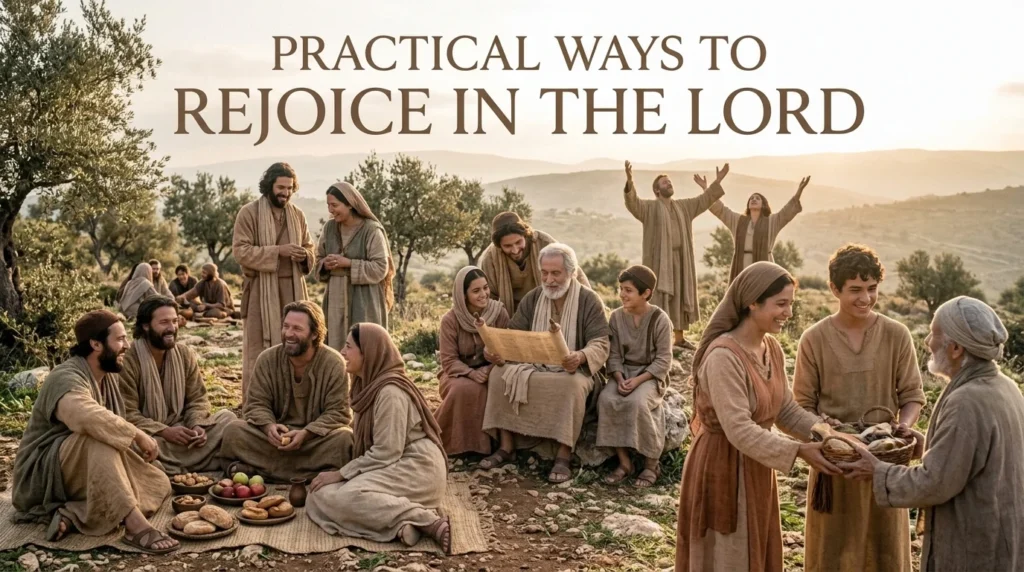
Understanding the rejoice meaning in Bible teaching is one thing. Actually living it out is another. Here are some practical, everyday ways to put biblical rejoicing into practice:
- Start a gratitude practice. Write down three things you’re thankful for each day, even on hard days. Gratitude and rejoicing are close cousins.
- Sing or listen to worship music. Music has always been tied to biblical rejoicing let it lift your focus toward God.
- Recall God’s past faithfulness. When current circumstances feel dark, remembering how God has come through before can reignite genuine joy.
- Celebrate with others. Show up for other people’s good news. Rejoice with those who rejoice, even when your own life feels harder.
- Pray with thanksgiving, not just requests. Philippians 4:6 pairs prayer with thanksgiving a practical formula for cultivating joy even in anxious moments.
- Read Scripture that reminds you of eternal hope. Rejoicing often grows stronger when your perspective widens beyond today’s problems to God’s bigger promises.
None of these are magic formulas that erase pain. They’re habits that train your heart to notice and respond to God’s goodness, even in the middle of a hard season.
Rejoicing Even When Life Is Hard
Let’s be honest this is the part that trips most people up. How do you rejoice when you’ve just lost a job, a loved one is sick, or life feels like it’s falling apart?
The Bible never asks believers to pretend everything is fine. In fact, Scripture is full of lament, tears, and honest pain the Psalms alone contain dozens of raw, emotional cries to God. Biblical rejoicing isn’t about suppressing those feelings. It’s about holding both truths at once: this is genuinely hard, and God is genuinely good.
Paul’s letter to the Philippians is the perfect example. He wasn’t writing from a beach vacation he was writing from a prison cell, uncertain if he’d live or die. And yet he chose to rejoice, not because his situation had changed, but because his focus was fixed on something unshakable.
That’s the real secret behind biblical rejoicing: it’s not the absence of hardship, but the presence of hope in the middle of it.
FAQs About the Meaning of Rejoice in the Bible
What is the biblical definition of rejoice?
The biblical definition of rejoice is a deep, God-rooted joy expressed through gladness, praise, and celebration. Unlike surface-level happiness, it isn’t dependent on circumstances but flows from trust in God’s character, promises, and presence.
What is the Hebrew word for rejoice in the Bible?
The most common Hebrew word for rejoice is sāmaḥ, which describes outward gladness often expressed through singing, dancing, or celebration. Another related word, gîl, conveys exuberant joy or exultation.
What is the Greek word for rejoice in the New Testament?
The Greek word most often translated as rejoice is chairō, which shares its root with the word for grace (charis). This connection highlights that New Testament joy is closely tied to God’s grace rather than external circumstances.
Why does the Bible say to rejoice always?
Philippians 4:4 commands believers to “rejoice in the Lord always” because biblical joy is rooted in an unchanging God, not changing circumstances. Since God’s character and promises never shift, believers can choose joy even during difficult seasons.
Is rejoicing the same as being happy?
No, rejoicing and happiness are different. Happiness is typically an emotional reaction to good circumstances, while biblical rejoicing is a deliberate, faith-based response to who God is, regardless of what’s happening in life.
How can I rejoice when I’m going through a difficult season?
You can rejoice during hard times by focusing on God’s past faithfulness, practicing gratitude, praying with thanksgiving, and remembering that present struggles don’t cancel out God’s promises. Rejoicing doesn’t mean denying pain it means holding onto hope alongside it.
What does it mean to rejoice in the Lord?
To rejoice in the Lord means directing your joy, praise, and gladness toward God specifically not toward possessions, achievements, or circumstances. It’s a joy anchored in your relationship with Him, which means it can remain steady even when everything else changes.
Final Thoughts:
So, what is the rejoice meaning in Bible terms, at the end of the day? It’s a rich, active, faith-fueled response to God’s character and grace not a fleeting emotion dependent on good days. Whether it’s rooted in the Hebrew picture of dancing and shouting for joy, or the Greek connection between rejoicing and grace, Scripture consistently points to one truth: real joy comes from God, not circumstances.

Jack Harrison is a passionate writer and researcher at TruthVarse.com, dedicated to creating clear, helpful, and engaging content for curious readers. He enjoys exploring topics related to biblical meanings, spirituality, symbolism, and everyday questions, turning complex ideas into simple and easy-to-understand information.
Through careful research and a reader-first approach, Jack aims to provide content that is informative, practical, and enjoyable to read. His goal is simple: to help readers discover meaningful insights while making every article easy to understand and useful.