Have you ever come across the phrase “unequally yoked” in a sermon, a Bible study, or maybe even in a conversation with a friend about dating and marriage, and wondered what it actually means? You’re not alone.
The concept of being “yoked” shows up several times throughout Scripture, and understanding the yoked meaning bible teaches can completely change the way you view relationships, discipleship, and your walk with God.
In this article, we’re going to dig deep into the biblical meaning of “yoke,” where the term comes from, how it’s used across different books of the Bible, and why it still matters for believers today.
What Is a Yoke? Understanding the Origin of the Word
Before we can fully grasp the yoked meaning bible passages describe, it helps to understand what a literal yoke actually was in ancient times.
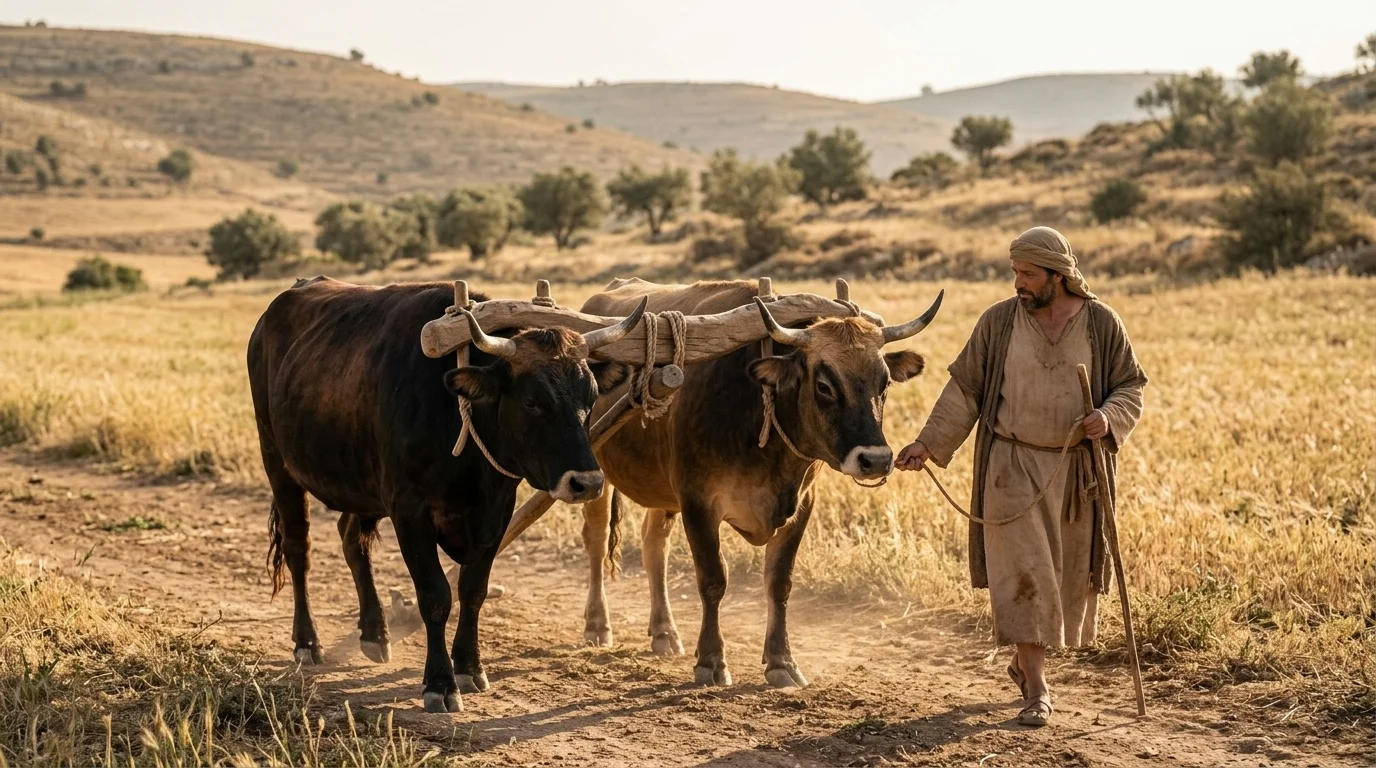
A yoke was a wooden farming tool, usually a heavy crossbar, that was placed across the necks of two animals, most commonly oxen, so they could pull a plow, cart, or heavy load together. The yoke connected the two animals physically, forcing them to move in the same direction, at the same pace, and toward the same goal.
Here’s the key detail that matters for the biblical meaning: if the two animals yoked together weren’t matched in size, strength, or temperament, the whole system would fail. A young, weak ox paired with a strong, mature one would be dragged along, exhausted, and possibly injured. The mismatch created inefficiency, suffering, and frustration for both animals.
This everyday agricultural image became a powerful metaphor throughout the Old and New Testaments for:
- Partnership and shared purpose
- Submission and discipline
- Burden-bearing
- Compatibility (or incompatibility) in relationships
Once you understand this farming background, the spiritual meaning behind “yoke” in Scripture starts to click into place.
The Yoked Meaning in the Bible: Key Passages Explained

Let’s walk through the most significant places where “yoke” appears in the Bible and unpack what each one is really saying.
1. “Unequally Yoked” 2 Corinthians 6:14
This is probably the verse most people are thinking of when they search for the yoked meaning bible topic. Paul writes to the Corinthian church:
Paul instructs believers not to partner themselves with unbelievers in a way that mirrors that mismatched ox-and-ox picture. The phrase <cite index=”1-1″>”do not be unequally yoked with unbelievers”</cite> has traditionally been understood as a call to avoid deep, binding partnerships (marriage being the most commonly referenced application) between a believer and someone who does not share the same faith commitment.
The logic follows the farming metaphor perfectly. When two people with fundamentally different spiritual values, priorities, and life directions try to move forward together in a committed relationship, tension is almost inevitable. One person is trying to pull toward God’s purposes, while the other is pulling toward something entirely different. The result, much like the mismatched oxen, is strain, exhaustion, and often heartbreak.
It’s worth noting that many scholars believe Paul’s original audience application went beyond marriage. It likely also addressed:
- Business partnerships
- Close friendships that shape major life decisions
- Any binding agreement requiring shared direction and values
While marriage is the most commonly discussed modern application, the principle is broader: don’t tie your future tightly to someone (or something) pulling in a spiritually opposite direction.
2. “My Yoke Is Easy” Matthew 11:28-30
This is the other major passage tied to the yoked meaning bible search, and it flips the image in a beautifully different direction. Jesus says:
Here, Jesus invites people to <cite index=”1-2″>come to Him and find rest for their souls, describing His yoke as easy and His burden as light</cite>.
This is such a striking contrast to the warning in 2 Corinthians. Instead of a yoke representing danger or mismatch, Jesus presents His yoke as something restful, something that lightens the load rather than adding to it.
In Jesus’s time, rabbis often spoke of the “yoke of the law” or the “yoke of Torah,” referring to the weighty responsibility of following religious commandments and traditions. Many people felt crushed under the burden of rules, rituals, and expectations. When Jesus says His yoke is easy, He’s making a bold claim: following Him isn’t about being crushed under impossible standards. It’s about walking in step with Him, learning from Him, and trusting Him to carry the heaviest part of the load.
Think about how a yoke works between an experienced ox and a younger one being trained. The stronger, more experienced animal bears the majority of the weight while the younger one learns the pace and rhythm. That’s the picture Jesus paints of discipleship. He’s not asking us to drag the plow alone. He’s walking right beside us, shouldering the heavier portion.
3. Old Testament References to the Yoke
The concept didn’t start in the New Testament. Old Testament writers used “yoke” extensively as a symbol of:
- Slavery and oppression Israel’s bondage in Egypt is described using yoke imagery, representing forced, painful servitude.
- Discipline and correction In Lamentations, bearing a yoke in one’s youth is described as beneficial for character building.
- Political subjugation Prophets like Jeremiah used the yoke as a picture of nations being forced under foreign rule.
- Breaking free Passages describing God “breaking the yoke” symbolize liberation and deliverance from oppression.
So even before Jesus and Paul used the metaphor, “yoke” already carried strong emotional and spiritual weight for a Jewish audience. It represented control, burden, and submission, whether that submission was forced (as under slavery) or willingly accepted (as under God’s law).
Why the Yoked Meaning in the Bible Still Matters Today

You might be wondering, why does an ancient farming tool metaphor still matter for modern readers? Great question. Here’s why this concept remains incredibly relevant.
It Shapes How We Think About Relationships
The “unequally yoked” principle continues to influence how many Christians approach dating, marriage, and even close friendships. It raises important questions:
- Are we building our closest relationships with people who share our core values?
- Are we entering partnerships (romantic, business, or otherwise) that will pull us toward growth or away from it?
- Is compatibility about more than surface-level attraction or convenience?
This doesn’t mean believers can’t be kind, respectful, or in relationship with people of different faiths in everyday life. The warning is specifically about deep, binding partnerships where direction and purpose need to be unified.
It Reframes Our Understanding of Discipleship
Jesus’s invitation to take His yoke reshapes what it means to follow Him. It is not about white-knuckling your way through religious obligation. It’s about partnership. It’s about walking closely enough to Him that you learn His pace, His character, and His heart.
This is a comforting and challenging idea at the same time. Comforting, because it means you’re not doing this alone. Challenging, because being “yoked” to Jesus means surrendering the desire to go your own direction.
It Teaches Us About Burden-Bearing
Whether it’s the burden of the law in ancient Judaism or the burden of daily stress and anxiety today, the yoke metaphor speaks directly to how we carry weight in life. Jesus’s promise of an “easy yoke” offers a radically different approach than trying to white-knuckle your way through life’s hardest seasons.
Practical Applications: How to Live Out the Yoked Meaning Bible Teaches
Understanding the concept intellectually is one thing. Living it out is another. Here are some practical, real-life ways this teaching can shape your daily walk.
Relationships
- Before entering a serious relationship or marriage, have honest conversations about faith, values, and long-term direction.
- Evaluate close friendships and business partnerships for shared vision, not just shared interests.
- Remember the goal isn’t isolation from people who believe differently, but wisdom about who you allow to shape your major life decisions.
In the Your Walk With God
- Approach your faith as a partnership with Jesus rather than a checklist of rules to follow.
- When life feels heavy, remember the invitation to bring your burdens to Him rather than carrying them solo.
- Practice regular prayer and Scripture reading as a way of “staying close” to the one you’re yoked to, learning His pace and rhythm.
In Daily Decision-Making
- Ask yourself who or what you’re “yoked” to in terms of habits, priorities, and commitments.
- Consider whether your current direction in life is being pulled by something (or someone) that aligns with your values and faith.
Common Misunderstandings About Being Yoked in the Bible

Because this phrase gets used so often, especially in dating and relationship contexts, a few misconceptions have crept in over time. Let’s clear a few of them up.
Misunderstanding #1: “Unequally yoked” only applies to marriage. While marriage is the most common modern application, the original context likely had broader implications for any binding partnership requiring unified direction.
Misunderstanding #2: Being “yoked” to Jesus means more rules and restrictions. Actually, the opposite is true. Jesus contrasts His yoke with the heavy burden of legalistic religious expectation, offering rest instead of exhaustion.
Misunderstanding #3: The yoke metaphor is outdated and doesn’t apply to modern life. Even though most of us have never seen an actual ox yoke in person, the principles of partnership, shared direction, and burden-bearing are just as relevant to modern relationships and spiritual life as they were 2,000 years ago.
A Simple Illustration to Remember the Concept
Picture two runners tied together at the ankle in a three-legged race. If both runners are the same height, same stride length, and moving at the same pace, they can run smoothly and even win the race. But if one runner is significantly taller, faster, or moving in a slightly different direction, they’ll both stumble, trip, and struggle the entire way.
That’s the heart of the yoked meaning bible passages are trying to communicate. Partnership requires alignment. Direction matters. And when you’re yoked to the right partner, whether that’s a spouse, a close friend, or Jesus Himself, the journey becomes lighter, steadier, and far more successful than trying to go it alone or being tied to someone pulling a different way.
Final Thoughts
At its core, the biblical concept of being “yoked” is about partnership, alignment, and shared direction. Whether it’s a warning against binding yourself to someone whose values pull against your own, or an invitation to walk closely with Jesus and let Him carry the heavier load, the metaphor offers timeless wisdom for how we build relationships and pursue our faith.
The next time you hear someone reference being “unequally yoked” or Jesus’s promise that His “yoke is easy,” you’ll understand the rich agricultural and spiritual imagery behind those words. It’s not just an old-fashioned phrase. It’s a practical, still-relevant call to examine who and what we allow to shape our direction in life.
Frequently Asked Questions
1. What does “yoked” mean in the Bible?
In the Bible, “yoked” refers to being closely bound or connected to someone or something, drawing on the image of a farming tool used to join two animals together so they could work in unison. Spiritually, it represents partnership, shared direction, submission, or burden-bearing.
2. What does “unequally yoked” mean in 2 Corinthians 6:14?
“Unequally yoked” refers to Paul’s instruction not to enter binding partnerships, most commonly applied to marriage, with someone who does not share the same core faith commitment. The idea is that mismatched direction and values create strain and conflict.
3. Does “unequally yoked” only apply to marriage?
While marriage is the most common modern application, many scholars believe the original teaching applied more broadly to any close, binding partnership, including business relationships and significant friendships that shape major life decisions.
4. What did Jesus mean when He said “my yoke is easy”?
In Matthew 11:28-30, Jesus contrasts His yoke with the heavy burden of religious legalism. He invites people to find rest by following Him, promising that partnering with Him is lighter and more restful than trying to carry life’s burdens alone.
5. What was a literal yoke used for in biblical times?
A yoke was a wooden crossbar placed over the necks of two work animals, typically oxen, allowing them to pull plows or heavy loads together. It required the animals to be matched in size and strength to work effectively.
6. Can Christians be friends with non-believers based on this teaching?
Yes. The “unequally yoked” principle specifically addresses deep, binding partnerships requiring unified direction and purpose, not everyday friendships or interactions. Christians are still called to engage with and love people of all beliefs.
7. How can I apply the yoked meaning bible teaches to my daily life?
You can apply it by evaluating your closest relationships and commitments for shared values and direction, approaching your faith as a partnership with Jesus rather than a list of obligations, and bringing your burdens to Him instead of carrying them alone.

William Turner is a passionate writer who enjoys exploring meaningful ideas, biblical insights, and the stories behind words and traditions. His goal is to make every article simple, helpful, and engaging for readers around the world.