Have you ever come across the word “remnant” in the Bible and wondered why it is so important? In Scripture, a remnant refers to a small group of people who remain after a larger group has been reduced by hardship, judgment, war, or other difficult circumstances.
The biblical idea of a remnant is often connected with faithfulness, preservation, hope, and God’s promises. Throughout the Old Testament, God preserved a remnant of His people even during times of judgment and rebellion.
This theme shows that God can preserve those who remain faithful to Him and continue His purposes through them. Understanding the remnant meaning in the Bible helps readers appreciate God’s faithfulness, mercy, and promise of restoration even during difficult seasons.
Remnant Meaning in Bible
In the Bible, a remnant often refers to a faithful group of people preserved by God during times of judgment, hardship, or destruction. Passages such as Isaiah 10:20–22 show the idea of a remnant returning to God and remaining faithful to Him.
What Does the Word Remnant Mean
The word remnant means a small part that remains after the larger portion has been removed, lost, or destroyed. In everyday language, it can refer to something left over, while in the Bible it often describes a remaining group of people.
What Is the Remnant Meaning in the Bible?
At its core, the remnant meaning in the Bible refers to a small, faithful group of people who survive judgment, exile, or hardship and remain committed to God, even when the majority of the community turns away. Think of it as the “leftover” portion but instead of being unwanted scraps, this leftover group is precious to God. It’s the seed from which restoration grows.
The Hebrew word most often translated as “remnant” is she’ar (שְׁאָר) or its related forms like she’erit (שְׁאֵרִית), meaning “that which remains” or “the rest.”
So when you read about a “remnant” in your Bible, picture this: a nation or people group facing disaster, most falling away or being destroyed, and yet a small, faithful group surviving to carry the promise forward. That’s the heartbeat of the concept.
Quick Definition Recap
- Remnant = the surviving, faithful portion of a larger group
- Often used after judgment, exile, or national disaster
- Represents hope, continuity, and God’s unbroken promises
- Appears in both the Old and New Testaments
What Does Remnant Mean
Remnant means what remains or is left behind after something has been reduced or destroyed. In biblical contexts, the word can describe people, possessions, or a portion of something that remains, depending on the passage.
Remnant Spiritual Meaning
Spiritually, a remnant can represent faithfulness, preservation, hope, and perseverance. Biblical passages often use the idea to show that even during difficult times, God may preserve people who continue to trust and follow Him.
Why the Remnant Theme Matters in Scripture

You might wonder why this small linguistic detail deserves so much attention. Here’s the thing the remnant theme isn’t a side note in the Bible. It’s a thread woven through the entire narrative of Scripture, tying together God’s judgment, His mercy, and His faithfulness to His promises.
Without the remnant, there’s no continuity. No Noah surviving the flood. No Israel returning from exile. No lineage leading to Jesus. The remnant is God’s way of saying, “I keep My word, even when everything looks hopeless.”
The Remnant Shows God’s Character
Every time the remnant appears, it reveals something about who God is:
- He is just judgment still happens; sin has consequences.
- He is merciful He doesn’t wipe out everyone, even when a nation deserves it.
- He is faithful His covenant promises never fail, even through hardship.
- He is sovereign He controls history, preserving exactly who and what He intends.
This combination of justice and mercy is what makes the remnant concept so rich. It’s not just about survival it’s about purpose.
The Remnant in the Old Testament

The Old Testament is where the remnant concept really takes shape. Let’s walk through some of the most important examples.
1. Noah and His Family (Genesis 6–9)
Long before the word “remnant” became a theological term, the concept was already at work. When God judged the wickedness of the world with a flood, He didn’t wipe out humanity entirely. He preserved Noah, his wife, his three sons, and their wives eight people total, carrying the future of the human race forward.
2. The Remnant of Israel After the Assyrian Conquest
When the northern kingdom of Israel fell to Assyria in 722 BC, the prophet Isaiah spoke often about a remnant that would survive and return. In fact, Isaiah named one of his own sons Shear-jashub, which literally means “a remnant shall return” (Isaiah 7:3). That’s not a subtle message Isaiah was living out the theology through his own family.
Isaiah 10:20-22 captures this beautifully, describing how only a remnant of Israel would truly rely on the Lord after judgment, even though the nation as a whole numbered like the sand of the sea.
3. The Remnant After the Babylonian Exile
This is probably the most well-known biblical remnant story. When Judah fell to Babylon and the people were carried into exile, it seemed like the story might be over. The temple was destroyed. The land was empty. The Davidic line looked finished.
But God preserved a remnant. Decades later, under kings like Cyrus of Persia, a group of exiles returned to Jerusalem to rebuild the temple and the city walls. Books like Ezra, Nehemiah, and Haggai are essentially remnant stories accounts of a small, determined group rebuilding what was lost, against tremendous odds.
Haggai 1:12 specifically mentions “the remnant of the people” obeying the voice of the Lord and beginning the work of restoration.
4. Elijah and the 7,000
One of the most personal and relatable remnant stories comes from the life of Elijah. After his dramatic showdown with the prophets of Baal on Mount Carmel, Elijah found himself exhausted, afraid, and convinced he was the only faithful person left in all of Israel (1 Kings 19:10).
God’s response is striking. He tells Elijah that He has preserved 7,000 people who had not bowed the knee to Baal (1 Kings 19:18). Elijah couldn’t see them, but they were there a hidden remnant, quietly faithful, known only to God.
This story reminds us that the remnant isn’t always visible or obvious.
5. The Remnant in the Prophets
The prophetic books are saturated with remnant language. A few standout references:
- Micah 2:12 God promises to gather “the remnant of Israel” like sheep in a fold.
- Micah 4:7 The unimpressive and the outcast will become “a strong nation,” a picture of the remnant restored to strength.
- Jeremiah 23:3 God promises to gather the remnant of His flock from all the countries where He has driven them.
- Zephaniah 3:12-13 A “meek and humble” remnant will trust in the name of the Lord.
- Zechariah 8:6, 12 The remnant will experience prosperity and blessing after hardship.
Notice the pattern here: judgment, scattering, and then a promise of gathering and restoration. This rhythm shows up again and again throughout the prophetic literature.
The Remnant in the New Testament
You might assume the remnant theme fades out once you cross into the New Testament, but actually, it becomes even more theologically significant.
Romans 9-11: Paul’s Extended Teaching on the Remnant
The apostle Paul directly addresses the remnant concept in his letter to the Romans, especially in chapters 9 through 11. He’s wrestling with a hard question: if Israel was God’s chosen people, why have so many rejected the Messiah?
Paul’s answer draws directly from Old Testament remnant theology. In Romans 9:27, quoting Isaiah, he writes that though the number of the children of Israel be as the sand of the sea, only a remnant will be saved. In Romans 11:5, he applies this concept directly to his own generation, saying there is “a remnant chosen by grace” Jewish believers in Jesus who represent the faithful continuation of God’s covenant people.
This is a huge theological move.
The Remnant and the Church
Many theologians see the remnant theme extending into how the early church understood itself. A small, often persecuted group of believers, faithful to Jesus while the wider culture rejected Him, mirrors the remnant pattern established throughout the Old Testament.
Revelation continues this idea in a different form, describing a faithful group who “keep the commandments of God and hold to the testimony of Jesus” even amid intense persecution (Revelation 12:17).
Key Characteristics of the Biblical Remnant
To really grasp the remnant meaning in the Bible, it helps to break down the recurring traits that define a remnant throughout Scripture:
- Small in number Remnants are never the majority; they’re the faithful minority.
- Survivors of judgment They come through hardship, exile, or disaster.
- Faithful and obedient What sets them apart isn’t luck; it’s their commitment to God.
- Carriers of promise Remnants preserve God’s covenant and purposes for the future.
- Often hidden or unnoticed Like Elijah’s 7,000, remnants aren’t always visible to the naked eye.
- A source of hope Remnant stories are never about defeat; they’re about restoration.
Why the Remnant Concept Matters for Us Today
Here’s where this ancient theme becomes deeply practical. You don’t have to be a Bible scholar to feel the weight of what “remnant” means for everyday faith.
1. You’re Not Alone, Even When You Feel Like It
If you’ve ever felt isolated in your faith like you’re the only one still trying to do the right thing the story of Elijah should encourage you. God often has more faithful people around you than you realize. Feeling alone doesn’t mean you actually are.
2. Faithfulness Matters More Than Numbers
Popularity and majority opinion have never been the measure of truth in Scripture. The remnant theme reminds us that God values consistent, quiet faithfulness over crowd-pleasing conformity.
3. Restoration Always Follows Judgment
Every remnant story in the Bible follows the same arc: hardship, preservation, and eventually restoration. If you’re in a season that feels like exile loss, disappointment, waiting the remnant pattern offers real hope that God isn’t finished writing the story.
4. God Keeps His Promises
Whether it’s Noah’s family, the returning exiles, or Paul’s remnant of grace, one thing never changes: God’s covenant promises survive. The remnant is proof that His faithfulness doesn’t depend on human numbers or human effort.
Common Symbols and Pictures of the Remnant
Scripture often illustrates the remnant using vivid imagery, which makes the concept easier to remember:
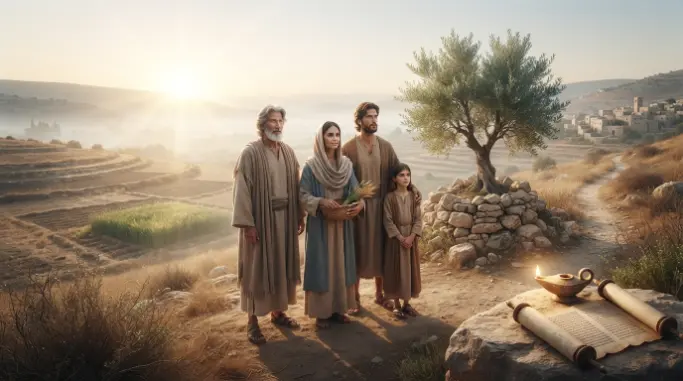
- A stump with a shoot (Isaiah 11:1) Even after a tree is cut down, new life can spring from what remains.
- Gleanings after a harvest (Isaiah 17:6) A few grapes left on the vine after the main harvest.
- Scattered sheep gathered by a shepherd (Micah 2:12) A picture of God actively regathering His people.
- A remnant returning like a river to its source (Isaiah 10:22) Emphasizing both smallness and inevitability.
These images aren’t just poetic flourishes they reinforce the same truth from different angles: something small can still carry the full weight of promise and future growth.
How to Study the Remnant Theme in Your Own Bible Reading
If this topic has sparked your curiosity, here are a few practical tips for digging deeper on your own:
- Use a concordance to search for “remnant,” “remain,” and “left” across both testaments.
- Read Isaiah, Jeremiah, and Micah in full these prophets develop the theme extensively.
- Study Romans 9-11 carefully this is Paul’s fullest New Testament treatment of the topic.
- Pay attention to context ask who the remnant is, what judgment preceded it, and what promise follows.
- Journal your reflections note how the remnant theme connects to your own seasons of waiting or restoration.
Frequently Asked Questions About the Remnant Meaning in the Bible
1. What does “remnant” mean in the Bible?
In the Bible, a remnant refers to the small, faithful portion of a people or nation that survives judgment, exile, or hardship and remains loyal to God. It represents hope and continuity for God’s promises.
2. Where does the word “remnant” first appear in the Bible?
While the specific word appears more clearly in later books, the concept begins as early as Genesis with Noah and his family surviving the flood as a preserved remnant of humanity.
3. What is the remnant of Israel?
The remnant of Israel refers to the faithful survivors of the nation after events like the Assyrian conquest and Babylonian exile the group that returned to the land and continued the covenant relationship with God.
4. What did Paul mean by “a remnant chosen by grace” in Romans 11?
Paul used this phrase to describe Jewish believers in his own time who accepted Jesus as Messiah, showing that God’s remnant principle continued into the New Testament church, based on grace rather than works.
5. Why did God always preserve a remnant instead of starting over completely?
Preserving a remnant allowed God to maintain continuity with His covenant promises. Instead of erasing history and starting fresh, He worked through a faithful few to carry His purposes forward into the future.
6. Is the remnant theme only in the Old Testament?
No. While the Old Testament develops the theme extensively through the prophets, the New Testament especially Paul’s writings and the book of Revelation applies the same concept to the early church and end-times believers.
7. How can understanding the remnant help my faith today?
Recognizing the remnant pattern can offer real encouragement during difficult seasons. It reminds believers that God values faithfulness over popularity, that isolation doesn’t mean abandonment, and that restoration always follows periods of hardship.
Final Thoughts:
So, what’s the real takeaway from all of this? The remnant meaning in the Bible isn’t just an interesting vocabulary lesson it’s a message stitched into the very fabric of Scripture. From Noah’s ark to Elijah’s cave, from the ruins of Jerusalem to Paul’s letters to the Romans, the same truth keeps surfacing: God preserves a faithful few, and through them, He accomplishes something far bigger than numbers could ever suggest.
Read More Articles
Vain Meaning in the Bible: What Does “In Vain” Mean in the Bible? 2026
Steward Meaning in Bible: Complete Guide to Stewardship in Scripture 2026
Salvation Meaning in Bible: What Does It Mean to Be Saved? 2026
Wisdom Meaning in the Bible: Why Wisdom Is Important for Christians 2026

James Wilson is a passionate writer who loves exploring meaningful ideas, biblical insights, and topics that inspire everyday life. Through TruthVarse.com, he shares simple, thoughtful, and easy-to-understand content to help readers discover truth, meaning, and inspiration.