Selah Meaning in the Bible is a phrase that appears many times in the Book of Psalms and a few times in the Book of Habakkuk. Although no one knows its exact meaning with complete certainty, many Bible scholars believe “Selah” was used as a pause for reflection, worship, or music.
It encouraged readers and listeners to stop for a moment, think deeply about God’s words, and reflect on His power, wisdom, and faithfulness.
In the Bible, Selah is more than just a simple word. It reminds believers not to rush through Scripture but to take time to understand its message and apply it to their lives.
Selah Definition Bible
In the Bible, Selah is a Hebrew term that appears mainly in the Book of Psalms and also in Habakkuk 3. Its exact definition is uncertain, but many scholars believe it indicates a pause, a moment of reflection, or musical emphasis. It encourages readers to consider the surrounding words and reflect on God’s message.
What Does Selah Mean in the Bible?
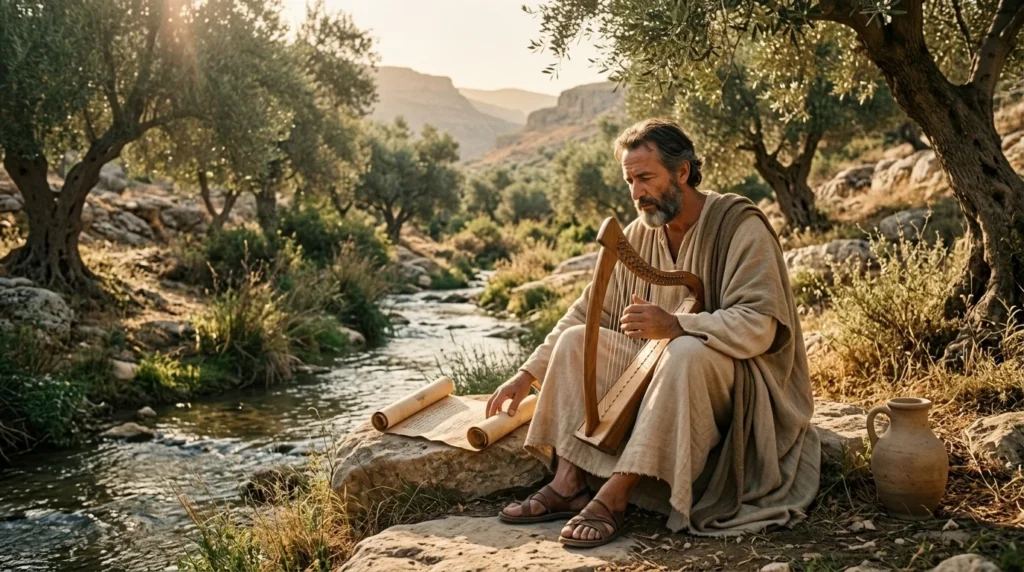
Selah is commonly understood as a cue to pause and reflect on God’s truth, power, and promises. In the Psalms, it often appears after prayers, praise, or statements about God’s faithfulness. Although its original purpose remains debated, many Christians use it as a reminder to slow down and meditate on Scripture.
What Is Selah? A Quick Overview
Selah is a Hebrew word, written in the original text as סֶלָה, that appears 74 times in the Book of Psalms and 3 times in the Book of Habakkuk, for a total of 77 occurrences in the Bible.
Unlike most words in the Bible, Selah isn’t part of a sentence. It doesn’t describe an action, a person, or an event. Instead, it appears as a standalone marker, usually placed at the end of a verse or the close of a thought, almost like a musical or liturgical note.
Because of this unusual placement, most modern English translations including the King James Version, the ESV, and the NIV simply leave the word untranslated.
Why Selah Is Considered a “Mystery Word”
Selah is often called one of the Bible’s great linguistic mysteries :
- It has no clear grammatical function in Hebrew sentence structure.
- There is no direct English equivalent that scholars universally agree on.
- Ancient Jewish and Christian scholars have offered different interpretations across centuries.
- It appears almost exclusively in poetic and musical texts, adding to the theory that it relates to worship performance rather than literal meaning.
Selah Meaning in Greek
The selah is originally a Hebrew word, written סֶלָה, rather than a Greek term. In the ancient Greek Septuagint, translators often used diapsalma (διάψαλμα) in corresponding passages, a term traditionally associated with a musical pause or interruption. However, its precise meaning is also debated, so it is best not to treat it as an exact, certain Greek translation of Selah.
The Hebrew Origins of Selah
To really understand Selah, we need to look at its Hebrew roots. Scholars generally point to two possible origin words:
1. From the Hebrew Root “Calah” (to pause or be silent)
Many Hebrew scholars believe Selah comes from the root “calah,” which relates to the idea of pausing, stopping, or being silent. Under this interpretation, Selah functions as a musical or liturgical instruction telling worshippers to pause and reflect on what was just sung or read.
This is the most widely accepted interpretation in modern Christian teaching, and it’s why you’ll often hear pastors describe Selah as meaning “pause and think about that.”
2. From the Hebrew Root “Salah” (to lift up or exalt)
Other scholars trace Selah to the root “salah,” meaning to lift up, exalt, or praise. Under this view, Selah would function more like an instruction to raise the voice, lift the instruments, or elevate the moment of worship essentially a musical crescendo rather than a moment of silence.
3. An Ancient Musical or Liturgical Notation
A third theory suggests Selah wasn’t meant to be translated at all, but instead functioned similarly to modern musical notations like “forte,” “rest,” or “interlude.” Under this view, Selah simply told temple musicians and singers when to add an instrumental break, change tempo, or signal a transition in the song.
Given that many Psalms were originally composed for temple worship often accompanied by harps, lyres, and trumpets this theory fits naturally with how ancient Hebrew worship was structured.
How Ancient Translators Interpreted Selah

It’s fascinating to see how Selah has been handled throughout history by different translators and scholars.
- The Septuagint (the ancient Greek translation of the Old Testament) translates Selah as “diapsalma,” a Greek musical term believed to indicate an instrumental interlude or pause in a song.
- Jewish Targums (ancient Aramaic paraphrases of Scripture) sometimes translate Selah as “forever” or “eternally,” suggesting a sense of permanence or emphasis.
- The King James Version (1611) chose to leave Selah untranslated, a decision that most modern English translations have followed ever since.
Where Selah Appears in the Bible
Selah appears almost exclusively in poetic and musical Scripture. Here’s a breakdown of where you’ll find it:
In the Book of Psalms
Selah appears 74 times across 39 different Psalms, often at emotionally or theologically significant points. For example:
- Psalm 3:4 after David expresses trust that God hears him despite his enemies
- Psalm 46:10-11 right after the well-known phrase “Be still and know that I am God”
- Psalm 62:8 following an invitation to “pour out your heart before Him”
Notice a pattern?
In the Book of Habakkuk
Selah also appears 3 times in Habakkuk chapter 3, which is actually structured as a prayer. This reinforces the theory that Selah has strong ties to musical performance and liturgical worship, since Habakkuk 3 explicitly mentions stringed instruments in its concluding verse.
The Deeper Meaning of Selah for Modern Believers
While scholars may debate the precise linguistic meaning, most Bible teachers agree that Selah carries a deeper spiritual invitation, regardless of its exact translation. Here’s how many Christians apply its meaning today:
1. An Invitation to Pause and Reflect
Whether Selah technically means “pause” or not, its placement throughout the Psalms strongly suggests a moment meant for reflection. In a world filled with noise and distraction, Selah reminds us to:
- Stop and consider what we just read or prayed
- Let Scripture sink in rather than rushing through it
- Create space for silence in our spiritual practice
2. A Call to Worship and Exaltation
If we lean toward the “lift up” interpretation, Selah becomes an invitation to raise our praise, elevate our worship, and respond actively to what God has done. This turns Selah into a moment of celebration rather than silence a reminder to actively engage with gratitude and praise.
3. A Musical and Emotional Marker
Because Selah so often follows deeply emotional or theologically rich statements, it can also be understood as an emotional punctuation mark much like an exclamation point or a long musical rest that lets a powerful moment breathe before moving forward.
Practical Ways to Apply “Selah” in Daily Life

Understanding the Selah meaning in the Bible isn’t just an academic exercise it can genuinely shape how you approach prayer, worship, and daily reflection. Here are some practical ways believers apply this concept today:
- Pause after reading Scripture. Instead of immediately moving to the next verse, sit with what you just read for a moment of quiet reflection.
- Use it in personal prayer journals. Some Christians write “Selah” after a prayer entry to mark it as something worth revisiting and meditating on.
- Create moments of silence in worship services. Some churches intentionally build pauses into their services, inspired by the concept of Selah, to let worship breathe rather than rushing from song to song.
- Reflect before responding. In daily life, applying the spirit of Selah might mean pausing before reacting to stress, conflict, or big decisions creating space to think and pray before responding.
- Journal your own “Selah moments.” Keep a list of moments in your day worth pausing on and giving thanks for, treating them as personal Selah markers in your life.
Common Misunderstandings About Selah
Because Selah is so mysterious, a lot of misinformation has spread over the years. Let’s clear up a few common myths:
- Myth : Selah definitively means “pause.” Fact: While “pause” is the most popular interpretation, scholars aren’t in full agreement, and other meanings like “lift up” or a musical notation.
- Myth: Selah appears throughout the entire Bible. ✅ Fact: Selah only appears in Psalms and Habakkuk nowhere else in Scripture.
- Myth: Selah always appears at the end of a Psalm. Fact: Selah often appears mid-Psalm, not just at the conclusion, frequently marking emotional high points within the text.
Why Selah Still Matters Today
Even though we don’t have a perfect translation for Selah, its presence throughout the Psalms teaches us something timeless: Scripture invites us to slow down. In a culture that prizes speed, multitasking, and constant noise, the ancient practice behind Selah whether it’s a call to silence, reflection, or exaltation offers a much-needed spiritual rhythm.
It’s become more than an obscure Hebrew term it’s a spiritual practice in its own right.
Frequently Asked Questions About Selah Meaning in the Bible
1. What does Selah mean in the Bible?
Selah is a Hebrew word appearing 74 times in Psalms and 3 times in Habakkuk. While its exact meaning is debated, most scholars believe it functions as a musical or liturgical marker meaning “pause and reflect” or “lift up in praise.”
2. Is Selah a Hebrew word?
Yes, Selah (סֶלָה) is an original Hebrew word. It has never been fully translated into English, which is why most Bible versions leave it as “Selah” directly in the text.
3. Why do Bible translations leave Selah untranslated?
Because there’s no single agreed-upon English equivalent. Scholars have proposed several possible meanings pause, exaltation, or a musical notation but none has been universally accepted, so translators typically leave the original Hebrew word.
4. Does Selah mean “pause and reflect”?
This is one of the most popular interpretations, based on the Hebrew root “calah,” meaning to pause or be silent. However, it’s not the only theory, and some scholars believe it relates more to musical performance or exaltation.
5. Where does Selah appear in the Bible?
Selah appears 74 times in the Book of Psalms and 3 times in Habakkuk chapter 3. It does not appear anywhere else in Scripture.
6. Selah used in modern Christian worship?
Yes. Many worship songs, sermons, and personal devotionals use “Selah” as a way to encourage pausing, reflecting, or emphasizing a meaningful moment, drawing directly from its biblical usage.
7. What is the spiritual significance of Selah today?
Beyond its uncertain literal translation, Selah has come to symbolize the practice of intentional pausing creating space in prayer, worship, and daily life to reflect deeply on God’s presence and truth.
Final Thoughts:
So, what’s the real takeaway when it comes to the Selah meaning in the Bible? While scholars may never reach a final, unanimous conclusion on its exact translation, one thing is clear: Selah invites us to slow down. Whether it’s a call to musical pause, a moment of silent reflection, or an invitation to lift our praise higher, this small Hebrew word carries a powerful spiritual lesson for modern readers.
Read More Articles
Glory Meaning in the Bible: Symbolism, Importance 2026
Selah Meaning in Bible: The Powerful Word Hidden in the Psalms
444 Meaning Bible: Spiritual Significance, Symbolism 2026
Tristan Meaning in Bible: Biblical Significance and Name Analysis 2026

James Wilson is a passionate writer who loves exploring meaningful ideas, biblical insights, and topics that inspire everyday life. Through TruthVarse.com, he shares simple, thoughtful, and easy-to-understand content to help readers discover truth, meaning, and inspiration.