
Have you ever wondered what worship means in the Bible and why it is such an important part of a believer’s life? Worship means showing love, honor, reverence, and devotion to God. In the Bible, worship involves more than singing songs or attending church services.
It includes prayer, praise, obedience, thanksgiving, and living according to God’s teachings. John 4:24 teaches that people should worship God in spirit and truth, highlighting the importance of sincere faith and a genuine heart.
Throughout Scripture, believers worship God through personal devotion, public gatherings, and acts of faithfulness. True worship is not limited to a particular place or activity; it reflects a person’s relationship with God and willingness to honor Him in everyday life.
Worship Meaning in the Bible: The Core Definition

At its heart, the worship meaning in the Bible centers on ascribing worth, honor, and reverence to God through both action and attitude. It’s not just a feeling or a song it’s a posture of the heart that shows up in obedience, surrender, and devotion.
The English word “worship” actually comes from the old term “worth-ship” literally meaning to declare someone’s worth. When you worship God, you’re declaring that He is worthy of your praise, your obedience, your time, and your entire life.
The Hebrew Roots of Worship
In the Old Testament, one of the most common Hebrew words translated as “worship” is shachah, which literally means to bow down, to prostrate oneself, or to pay homage. This word appears throughout the Hebrew Scriptures whenever someone falls before God in reverence and submission.
Another important Hebrew word is abad, which means to serve or to work. This is significant it tells us that in the Old Testament mindset, worship and service were deeply connected. To worship God meant to serve Him with your whole life, not just to feel a certain emotion during a religious ceremony.
The Greek Roots of Worship
In the New Testament, the primary Greek word for worship is proskuneo, which means to kiss toward, to bow down, or to show deep reverence, often pictured as someone falling at another’s feet in total submission and honor.
Another important New Testament word is latreuo, meaning to serve or minister, often used specifically regarding religious service and devotion to God. Together, these words paint a picture of worship as both an inward posture of reverence and an outward expression of service and devotion.
Worship vs. Other Related Biblical Concepts

To fully grasp the worship meaning in the Bible, it’s helpful to distinguish it from concepts people often confuse it with.
- Worship vs. Praise Praise is often a specific expression of worship, usually verbal or musical, celebrating God’s attributes and actions. Worship is the broader category, encompassing praise but also including obedience, service, and lifestyle devotion.
- Worship vs. Music While music is a common vehicle for worship, especially in corporate church settings, biblical worship extends far beyond singing. You can worship through generosity, obedience, prayer, and everyday faithfulness.
- Worship vs. Religious Ritual Rituals can be empty if the heart behind them is absent. Scripture repeatedly warns against going through religious motions without genuine devotion, showing that true worship must involve authentic heart engagement, not just external performance.
Key Bible Passages That Reveal the Meaning of Worship
Let’s walk through some of the most important passages that shape our understanding of biblical worship.
Genesis 22 Abraham’s Sacrificial Worship
When Abraham took Isaac up the mountain to sacrifice him at God’s command, he told his servants that he and the boy would go worship and then return. This is remarkable because Abraham used the language of worship in the context of costly obedience and sacrifice, not song or ceremony. This early biblical example shows worship as radical trust and surrender, even when it costs everything.
John 4:23-24 Worship in Spirit and Truth
Jesus tells the Samaritan woman at the well that true worshippers will worship the Father in spirit and in truth, since the Father is seeking those who worship Him this way. This passage is foundational for understanding New Testament worship:
- Worship must be spiritual flowing from a genuine, Spirit-led heart, not mere external ritual.
- Worship must be truthful grounded in accurate knowledge of who God actually is, not vague spirituality or personal preference.
- Worship is no longer tied to a specific location, like the temple in Jerusalem, but is now available anywhere believers gather in spirit and truth.
Romans 12:1 Worship as Everyday Life
Paul urges believers to present their bodies as a living sacrifice, holy and pleasing to God, describing this as their reasonable and spiritual act of worship. This radically expands worship beyond a Sunday activity into a daily, whole-life posture. Every choice how you work, treat others, spend money, and use your time becomes an act of worship when offered to God.
Psalm 95:6 Worship as Physical Posture
The psalmist calls believers to come, bow down, and kneel before the Lord their Maker. This reflects the Hebrew concept of shachah, showing that physical posture bowing, kneeling has long been a meaningful expression of reverence and humility before God.
Revelation 4-5 Worship in Heaven
In these chapters, heavenly beings and elders continually fall down before God’s throne, casting their crowns before Him and declaring His worthiness to receive glory, honor, and power. This heavenly worship scene gives us a glimpse of eternal worship continuous, wholehearted, and centered entirely on God’s worthiness rather than personal preference or performance.
Matthew 4:10 Worship Belongs to God Alone
When tempted by Satan, Jesus responds by quoting Scripture, declaring that worship belongs to the Lord God alone, and Him only shall we serve. This passage draws a clear line: worship is not something to be divided or shared with lesser things it belongs exclusively to God.
Why Worship Matters So Much in the Christian Life
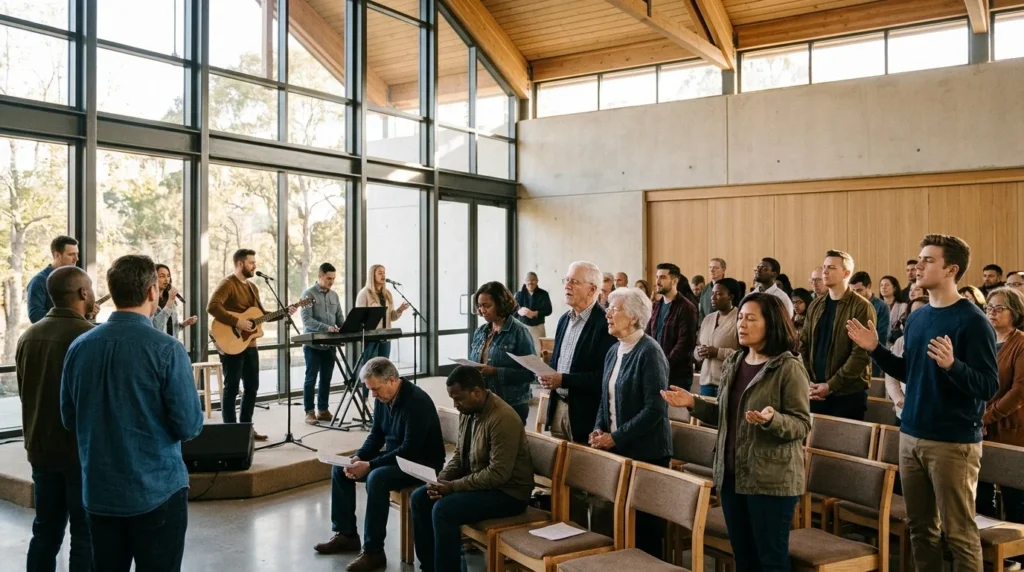
Understanding the worship meaning in the Bible isn’t just theological trivia it shapes how believers are meant to live every single day.
It Reorients Our Priorities
When we truly worship God, declaring His worth above everything else, it naturally reorders our priorities. Money, status, relationships, and ambitions all take their proper place beneath our devotion to God rather than competing with it.
It Combats Idolatry
Scripture consistently warns against worshipping created things instead of the Creator. Understanding true worship helps believers recognize subtle idols in daily life whether it’s success, comfort, relationships, or even ministry itself and redirect their ultimate devotion back to God alone.
It Transforms Ordinary Moments Into Sacred Ones
Because Romans 12:1 frames all of life as an act of worship, even mundane tasks like doing dishes, showing up to work, or being patient with a difficult family member become meaningful spiritual acts when done with a worshipful heart.
It Connects Us to Eternity
The worship scenes in Revelation remind us that worship isn’t just a temporary earthly practice it’s an eternal reality believers will participate in forever. Practicing worship now is, in a sense, practicing for eternity.
What Biblical Worship Looks Like in Real Life
Understanding the theory is helpful, but seeing worship lived out makes it practical. Here are some real-life examples:
- A single mom working a difficult job, choosing to work with integrity and a good attitude as an offering to God, even when no one is watching.
- A businessperson turning down a dishonest deal, recognizing that true worship means honoring God’s standards even at financial cost.
- A family setting aside distractions to genuinely engage during a worship service, rather than merely being physically present while mentally elsewhere.
- Someone forgiving a person who wronged them, recognizing that obedience to God’s command to forgive is itself an act of worship.
- A person giving generously, even sacrificially, as an expression of trusting God’s provision above their own financial security.
Practical Tips for Living Out True Worship
If you want to deepen your understanding and practice of the worship meaning in the Bible, here are some practical starting points:
- Guard your heart, not just your actions. True worship starts internally; external actions should flow from genuine devotion, not empty performance.
- Worship beyond music. Look for ways to worship through obedience, service, generosity, and daily faithfulness, not just during Sunday singing.
- Study who God actually is. Since worship must be rooted in truth (John 4:24), spend time in Scripture learning God’s character so your worship reflects reality, not assumption.
- Practice consistency, not just intensity. A single emotional worship experience matters less than a consistent lifestyle of devotion over time.
- Watch for competing worship. Regularly examine your life for things that may be quietly competing for the devotion that belongs to God alone.
Common Misunderstandings About Worship
A few misconceptions tend to come up around this topic, so let’s address them directly:
- “Worship is just singing.” In reality, singing is only one small expression of a much larger, whole-life concept that includes obedience, service, and daily devotion.
- “Worship only happens in church buildings.” Scripture shows worship happening on mountains, at wells, in daily work, and even in heaven itself it’s not confined to a specific location or building.
- “Worship is primarily about our emotions.” While emotion can certainly be part of authentic worship, true biblical worship is rooted in truth and obedience, not just emotional highs during a service.
The Bigger Picture: Worship as Life’s Ultimate Purpose
When you trace the worship meaning in the Bible from Genesis through Revelation, a powerful theme emerges: worship isn’t just one activity among many in the Christian life it’s the very purpose for which humanity was created. We were made to bring glory to God, and worship is how that purpose gets expressed, whether through song, sacrifice, service, or simple daily obedience.
This bigger picture transforms how we approach worship.
FAQs About Worship Meaning in the Bible
1. What is the simplest definition of worship in the Bible?
Worship in the Bible means ascribing worth, honor, and reverence to God through both heartfelt devotion and obedient action, rather than through singing or ritual alone.
2. What is the Hebrew word for worship in the Old Testament?
The primary Hebrew word is shachah, meaning to bow down or prostrate oneself, along with abad, meaning to serve, showing worship’s close connection to humble service.
3. What is the Greek word for worship in the New Testament?
The main Greek word is proskuneo, meaning to bow down or show deep reverence, often paired with latreuo, meaning to serve or minister to God.
4. What does it mean to worship God in spirit and truth?
According to John 4:23-24, worshipping in spirit and truth means engaging God authentically from the heart while grounding that worship in accurate, biblical understanding of who God truly is.
5. Is worship only about singing in church?
No. While music is a common expression of worship, Romans 12:1 shows that true worship includes offering your entire life daily choices, work, and obedience as a living sacrifice to God.
6. Can everyday actions really count as worship?
Yes. Scripture repeatedly frames obedience, service, generosity, and integrity in daily life as genuine expressions of worship, not just formal religious activities.
7. Why does understanding true worship matter for Christians today?
It reorients priorities, guards against idolatry, transforms ordinary moments into sacred ones, and connects believers to the eternal worship they’ll one day experience fully in God’s presence.
Final Thoughts:
At the end of the day, the worship meaning in the Bible points to something far greater than a song, a service, or a Sunday routine. It’s a whole-life response to the God who is worthy of everything we are and everything we have our obedience, our sacrifice, our daily choices, and our hearts.

William Turner is a passionate writer who enjoys exploring meaningful ideas, biblical insights, and the stories behind words and traditions. His goal is to make every article simple, helpful, and engaging for readers around the world.