
Have you ever wondered what anointed means in the Bible and what it means to be chosen by God? The word anointed generally means to be set apart, appointed, or dedicated for a special purpose.
In biblical times, anointing often involved applying oil to a person as a sign of being chosen for a particular role, such as a king or priest. Scripture also uses the idea of anointing to describe God’s empowerment for a specific mission.
Jesus is known as the Christ, or “Anointed One,” highlighting His unique role in God’s plan. Understanding the Anointed Meaning in the Bible helps readers see the connection between anointing, calling, dedication, and service.
What Does “Anointed” Mean in the Bible?

At its core, the term anointed comes from the Hebrew word mashach, which means “to smear” or “to rub with oil.” The Greek equivalent used in the New Testament is chrio, from which we get the word “Christ” literally, “the Anointed One.”
In biblical times, anointing someone with oil wasn’t a symbolic afterthought. It was a formal, physical act that marked a person as set apart for a special purpose. Think of it like a coronation ceremony, an ordination service, and a blessing all rolled into one physical gesture.
So when the Bible says someone was “anointed,” it’s telling us three things at once:
- They were chosen by God for a specific role or task
- They were consecrated, meaning set apart from ordinary use for sacred purposes
- They received divine empowerment to carry out that calling
This is why anointing shows up again and again in connection with kings, priests, and prophets the three major offices of leadership in ancient Israel.
The Origins of Anointing in Ancient Israel
To really grasp the anointed meaning in the Bible, it helps to picture the actual practice. Anointing oil in the Old Testament was typically made from olive oil mixed with fragrant spices like myrrh, cinnamon, and cassia. Exodus 30:22-25 gives a detailed recipe for this “holy anointing oil,” which was reserved exclusively for sacred use.
This oil wasn’t used casually. It was:
- Poured over the head of the person being anointed
- Applied to sacred objects like the tabernacle, the altar, and the ark of the covenant
- Considered so holy that Exodus 30:32 explicitly warns against making a similar blend for personal use
The physical act of pouring oil symbolized the pouring out of God’s Spirit and favor onto the person or object. It wasn’t just ceremony for ceremony’s sake the oil represented something real happening in the spiritual realm.
Who Was Anointed in the Bible?
1. Kings Were Anointed to Rule
One of the most well-known examples of anointing involves Israel’s kings. When Samuel anointed young David as king, it wasn’t a public coronation with fanfare it happened quietly, in the presence of his family, long before David ever sat on a throne.
“Then Samuel took the horn of oil and anointed him in the presence of his brothers, and from that day on the Spirit of the Lord came powerfully upon David.” (1 Samuel 16:13)
This moment shows us something important: anointing often came before the person stepped into their role. David was anointed as a shepherd boy, not a king. The anointing marked God’s choice long before circumstances caught up to it.
Saul, Israel’s first king, was also anointed by Samuel (1 Samuel 10:1), as was Solomon later on (1 Kings 1:39). Each time, the anointing signified that God Himself was installing that person into leadership not just human politics or popularity.
2. Priests Were Anointed for Sacred Service
Aaron and his sons were anointed to serve as priests, mediating between God and the people of Israel. Exodus 29:7 describes Moses pouring anointing oil on Aaron’s head as part of his consecration ceremony.
This anointing set the priestly line apart for:
- Offering sacrifices on behalf of the people
- Maintaining the tabernacle and later the temple
- Interceding between God and Israel
Because priests handled holy things and stood in God’s presence on behalf of others, their anointing carried enormous weight. It wasn’t a job title it was a sacred trust.
3. Prophets Were Anointed to Speak for God
While anointing is mentioned less frequently regarding prophets, it still appears. Elijah was instructed to anoint Elisha as his successor (1 Kings 19:16), signifying the transfer of a prophetic calling from one generation to the next.
Prophets carried God’s messages to kings, priests, and ordinary people alike, often at great personal risk. Their anointing represented divine authorization to speak truth, even when that truth was unwelcome.
4. Objects and Places Were Also Anointed
Interestingly, anointing wasn’t reserved for people alone. The tabernacle, its furnishings, and later the temple altar were anointed with oil to consecrate them for holy use (Exodus 40:9-11). This detail reminds us that anointing, in its biblical sense, is fundamentally about setting something apart for God’s purposes whether that’s a person, an object, or a space.
The Anointed One: Jesus as “The Christ”
Here’s where the concept reaches its climax. The New Testament identifies Jesus as “the Christ” a title derived directly from the Greek word for “anointed.” In Hebrew, the equivalent title is “Messiah,” meaning the same thing: the Anointed One.
Jesus Himself connected His ministry directly to this anointing tradition. In Luke 4:18, quoting the prophet Isaiah, He declared:
“The Spirit of the Lord is on me, because he has anointed me to proclaim good news to the people with low-income.”
This is a profound moment. Jesus wasn’t anointed with physical oil for this ministry He was anointed with the Holy Spirit Himself, fulfilling and surpassing the entire Old Testament pattern of kings, priests, and prophets. In fact, many theologians point out that Jesus uniquely fulfills all three anointed offices:
- King He reigns as the eternal ruler (Revelation 19:16)
- Priest He serves as our eternal high priest (Hebrews 4:14-16)
- Prophet He speaks God’s ultimate word to humanity (Hebrews 1:1-2)
This threefold fulfillment is a key reason the anointed meaning in the Bible carries such deep theological weight for Christians today.
Anointing in the New Testament Church
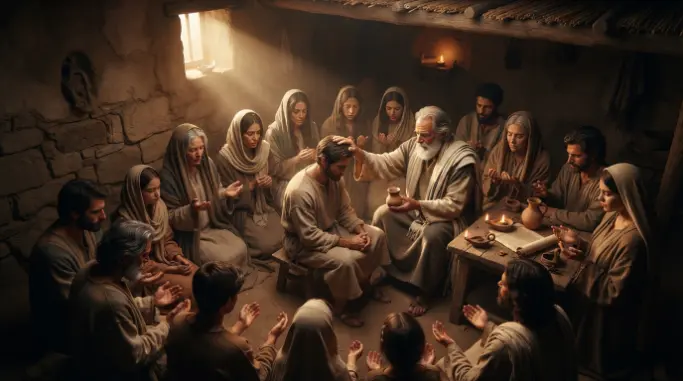
Anointing didn’t disappear after Jesus’s earthly ministry it took on new dimensions within the early church.
The anointing for Healing
James 5:14 instructs believers who are sick to call the elders of the church to pray over them and anoint them with oil in the name of the Lord. This practice connects physical healing with spiritual faith and communal prayer, and many churches still practice this today.
Anointing of All Believers
Perhaps most significantly, the New Testament expands anointing beyond a select few leaders to include every believer. 1 John 2:20 says:
“But you have an anointing from the Holy One, and all of you know the truth.”
And 2 Corinthians 1:21-22 adds that God anoints believers and puts His Spirit in their hearts as a guarantee of what is to come. This is a massive theological shift. Under the Old Covenant, anointing was reserved for specific leaders. Under the New Covenant, every follower of Jesus who receives the Holy Spirit carries a form of spiritual anointing.
What Does It Mean to Be “Anointed” Today?
So how does all this ancient history translate into modern Christian life? When people today talk about being “anointed,” they’re generally referring to a few overlapping ideas:
- Divine calling being chosen by God for a specific ministry, task, or season of life
- Spiritual empowerment having the Holy Spirit’s enabling power to accomplish something beyond natural ability
- Consecration living a life set apart, distinct from worldly patterns, dedicated to God’s purposes
- Spiritual authority carrying God-given influence in preaching, teaching, worship, or leadership
It’s worth noting that in modern usage, “anointing” is sometimes used loosely to describe natural talent or charisma. But in the biblical sense, anointing is never about human skill alone it’s about God’s Spirit working through a person to accomplish something they couldn’t do on their own strength.
Symbolism Behind the Anointing Oil
Understanding the symbolism helps deepen your grasp of the anointed meaning in the Bible. Here’s what the oil represented:
- The Holy Spirit Oil is one of the most consistent biblical symbols for God’s Spirit (Zechariah 4:6, Acts 10:38)
- Healing and restoration Oil was used medicinally in the ancient world (Luke 10:34, the Good Samaritan)
- Joy and blessing Psalm 45:7 speaks of being anointed “with the oil of joy”
- Protection and consecration Anointing set someone apart, marking them as untouchable for ordinary or profane use
These layers of meaning show why anointing wasn’t a throwaway ritual. Every application of oil communicated something rich about God’s character and intentions toward His people.
Real-Life Applications: What This Means for Believers

Understanding this concept isn’t just an academic exercise it has practical implications for everyday faith.
- You don’t have to earn God’s calling. David was anointed as a shepherd, long before he had royal credentials. If you feel God has placed a purpose on your life, you don’t need perfect qualifications to start walking toward it.
- Anointing comes with responsibility. Kings, priests, and prophets were held to high standards precisely because they were set apart. If you sense God’s hand on your life or ministry, humility and accountability should follow.
- The Holy Spirit empowers ordinary people. You don’t need to be a pastor or a public figure to carry spiritual anointing. According to 1 John 2:20, every believer who knows God has received this gift.
- Anointing isn’t about performance. It’s easy to confuse charisma, talent, or eloquence with spiritual anointing. True anointing produces fruit love, humility, and transformed lives not just impressive results.
Common Misunderstandings About Being “Anointed”
Because the term gets used so often in casual Christian culture, a few misconceptions tend to creep in:
- Misconception: Anointing guarantees success or fame. Reality: Many anointed biblical figures faced hardship, rejection, and suffering David included.
- Misconception: Only pastors or famous ministers are anointed. Reality: Scripture teaches that all believers carry the Holy Spirit’s anointing (1 John 2:27).
- Misconception: Anointing is primarily about a feeling or emotional experience. Reality: While anointing can be accompanied by powerful spiritual experiences, its biblical foundation is about calling, consecration, and empowerment not emotion alone.
FAQs About Anointed Meaning in the Bible
1. What is the literal meaning of “anointed” in the Bible?
The literal meaning comes from the Hebrew word mashach, meaning “to smear” or “rub with oil.” It refers to the physical act of applying oil to a person or object to set them apart for God’s purposes.
2. Why were kings anointed in the Old Testament?
Kings were anointed to show that their authority to rule came from God, not merely from human choice or political power. The anointing was a sign of divine appointment and empowerment for leadership.
3. What is the connection between “Christ” and “anointed”?
“Christ” comes from the Greek word christos, meaning “anointed one.” It’s the equivalent of the Hebrew title “Messiah.” Both titles identify Jesus as the one uniquely anointed by God to fulfill the roles of king, priest, and prophet.
4. Can ordinary Christians be anointed today?
Yes. According to 1 John 2:20 and 2 Corinthians 1:21-22, every believer who has received the Holy Spirit carries a form of spiritual anointing, not just church leaders or ministers.
5. What was anointing oil made of in biblical times?
The holy anointing oil described in Exodus 30:22-25 was made from olive oil combined with fragrant spices such as myrrh, cinnamon, and cassia. This specific blend was reserved for sacred use only.
6. Is anointing with oil still practiced in churches today?
Yes, many churches practice anointing with oil, particularly for prayer over the sick, as instructed in James 5:14, as well as during ordinations, baptisms, or dedications.
7. Does being anointed mean you’re guaranteed success or blessing?
No. Anointing represents God’s calling and empowerment, not a guarantee of ease or worldly success. Many anointed biblical figures, including David and the prophets, faced significant trials and opposition during their journeys.
Final Thoughts:
The concept of anointing runs like a golden thread through the entire biblical narrative from the holy oil poured over Aaron’s head, to Samuel anointing a young shepherd boy who would become king, to Jesus declaring Himself the fulfillment of Isaiah’s prophecy as the ultimate Anointed One.
At its heart, the anointed meaning in the Bible points to one central truth: God chooses, sets apart, and empowers people for purposes far greater than their natural ability. Whether it was ancient kings, priests, and prophets, or ordinary believers today carrying the Holy Spirit, anointing has always been about divine partnership God working through willing people to accomplish His purposes on earth.

James Wilson is a passionate writer who loves exploring meaningful ideas, biblical insights, and topics that inspire everyday life. Through TruthVarse.com, he shares simple, thoughtful, and easy-to-understand content to help readers discover truth, meaning, and inspiration.