
Have you ever wondered what eschatology means in the Bible and why Christians study this important subject? Eschatology is the study of last things, including biblical teachings about the end of the age, the return of Jesus Christ, resurrection, judgment, and the fulfillment of God’s purposes.
The word comes from the Greek eschatos, meaning “last” or “final.” Throughout the Bible, different passages discuss future events and offer hope about God’s ultimate victory and the establishment of His kingdom.
Understanding the eschatology meaning Bible helps readers explore what Scripture teaches about the future without treating every interpretation as certain.
What Is Eschatology? A Simple Definition

The word “eschatology” comes from two Greek words: eschatos, meaning “last” or “final,” and logos, meaning “study” or “word.” Put them together, and you get “the study of last things.”
In theological terms, eschatology is the branch of Christian doctrine that examines:
- The second coming of Jesus Christ
- The resurrection of the dead
- The final judgment
- Heaven, hell, and the eternal state
- The new heaven and new earth
- The end of the current age and the establishment of God’s eternal kingdom
So when someone asks about the eschatology meaning bible connection, they’re really asking: what does Scripture teach about how history will conclude and what comes after?
It’s important to note that eschatology isn’t just about predicting dates or decoding mysterious symbols. At its heart, it’s about hope the confident expectation that God is moving history toward a purposeful, redemptive conclusion.
Where Does Eschatology Appear in the Bible?

Unlike some theological terms that are confined to a single verse or book, eschatological themes run throughout the entire Bible from Genesis to Revelation. Here’s a quick overview of where these ideas show up most prominently.
Old Testament Foundations
The Old Testament lays the groundwork for biblical eschatology long before the word itself existed. Consider these examples:
- The Prophets Isaiah, Jeremiah, Ezekiel, and Daniel all speak of a coming “Day of the Lord,” a time of judgment and restoration.
- Daniel’s Visions The book of Daniel contains vivid, symbolic prophecies about future kingdoms, a coming Messiah, and a final resurrection (Daniel 12:2-3).
- The Minor Prophets Books like Joel, Zechariah, and Malachi describe cosmic upheaval, the outpouring of God’s Spirit, and the arrival of a Messianic age.
These passages set the stage for a fuller picture that unfolds in the New Testament.
New Testament Development
The New Testament expands and clarifies these themes significantly:
- The Olivet Discourse In Matthew 24-25, Mark 13, and Luke 21, Jesus himself teaches about signs of the end, the destruction of the temple, and his own return.
- Paul’s Letters Passages like 1 Thessalonians 4:13-18 and 1 Corinthians 15 describe the resurrection of believers and the “rapture” imagery many are familiar with.
- The Book of Revelation This is the crown jewel of biblical eschatology, packed with apocalyptic imagery describing cosmic conflict, judgment, and the ultimate victory of God.
Understanding eschatology means seeing how these threads scattered across sixty-six books written over roughly 1,500 years weave together into a coherent story about where history is headed.
Key Eschatological Terms You Should Know
If you’re diving deeper into this topic, you’ll quickly run into some specialized vocabulary. Here’s a breakdown of the most common terms, explained simply.
1. Parousia (The Second Coming)
This Greek term literally means “presence” or “arrival” and refers to the promised return of Jesus Christ. It’s mentioned repeatedly in passages like Matthew 24:3 and 1 Thessalonians 4:15.
2. The Millennium
Found in Revelation 20, the millennium refers to a thousand-year period often associated with Christ’s reign on earth. Christians hold different views on whether this is literal or symbolic more on that below.
3. The Rapture
This term describes believers being “caught up” to meet Christ, based primarily on 1 Thessalonians 4:17. Interestingly, the word “rapture” itself doesn’t appear in most English Bible translations it comes from the Latin word raptus, used in the Vulgate translation.
4. The Great Tribulation
Referenced in Matthew 24:21 and throughout Revelation, this describes a period of intense suffering and upheaval before the final consummation of God’s kingdom.
5. The Final Judgment
Also called the “Great White Throne Judgment” (Revelation 20:11-15), this refers to the moment when all people are judged according to their deeds.
6. The New Heaven and New Earth
Described beautifully in Revelation 21-22, this is the eternal, renewed creation where God dwells with his people forever free from death, pain, and sorrow.
Knowing these terms gives you a strong foundation for reading eschatological passages with more confidence and clarity.
The Major Views on Biblical Eschatology
Here’s something that surprises a lot of people: sincere, Bible-believing Christians don’t all agree on the details of eschatology. There are several major interpretive frameworks, each shaped by how scholars read symbolic language, timelines, and the relationship between prophecy and fulfillment.
Premillennialism
This view holds that Christ will return before establishing a literal thousand-year reign on earth. It’s especially popular in evangelical and Pentecostal circles, and it’s the framework behind many popular “end times” books and films.
Amillennialism
Amillennialists interpret the “thousand years” in Revelation 20 symbolically, representing the current church age between Christ’s first and second comings, rather than a literal future period.
Postmillennialism
This perspective suggests that the world will gradually be transformed by the spread of the gospel, leading to a golden age of righteousness, after which Christ will return.
Preterism
Preterists believe that many end-times prophecies particularly those in the Olivet Discourse were fulfilled in the first century, especially with the destruction of Jerusalem in AD 70.
A quick tip: If you’re studying eschatology for the first time, don’t feel pressured to pick a “side” right away. Read broadly, compare how each view handles key passages, and pay attention to the pastoral heart behind the doctrine hope, readiness, and faithfulness rather than getting stuck only on timelines.
Why Eschatology Matters: Practical Meaning for Believers
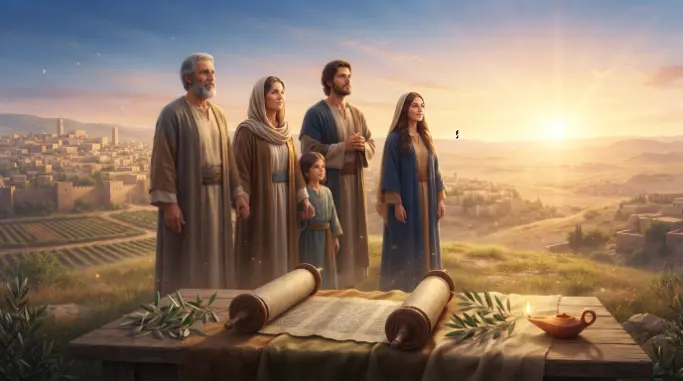
It’s easy to treat eschatology as an abstract academic subject, but the Bible presents it as deeply practical. Here’s why it matters in everyday faith and life.
1. It Provides Hope in Suffering
Many eschatological passages were written to persecuted, struggling communities. Revelation, for instance, was addressed to churches facing intense pressure. The promise of a future where “he will wipe every tear from their eyes” (Revelation 21:4) offers real comfort amid real pain.
2. It Encourages Ethical Living
Passages like 2 Peter 3:11-12 ask a pointed question: since everything will ultimately be revealed and judged, “what kind of people ought you to be?” Eschatology isn’t just about the future it shapes how people live in the present.
3. It Grounds Christian Identity
Understanding that history has a purposeful direction rather than being random or cyclical gives believers a sense of meaning and mission. Life isn’t just happening; it’s moving toward something.
4. It Fuels Mission and Evangelism
Many Christians view the spread of the gospel to “all nations” (Matthew 24:14) as connected to end-times fulfillment, motivating global mission work.
5. It Balances Urgency with Patience
Scripture consistently holds two things in tension: be ready, because the timing is unknown (Matthew 24:36, 44), and be patient, because God’s timing is perfect (2 Peter 3:8-9).
Common Misunderstandings About Biblical Eschatology
Because this topic is so widely discussed and sometimes sensationalized there are a few misconceptions worth clearing up.
- Misconception #1: The Bible gives an exact date for the end. Jesus explicitly says the opposite in Matthew 24:36 no one knows the day or hour.
- Misconception #2: Eschatology is only about fear and disaster. While judgment is part of the picture, the overwhelming emphasis of biblical eschatology is restoration, renewal, and hope.
- Misconception #3: All Christians interpret Revelation the same way. As shown above, there’s a wide range of thoughtful, faithful interpretations.
- Misconception #4: Eschatology is irrelevant to daily life. In reality, it’s tied directly to how the New Testament calls believers to live with integrity, hope, and readiness.
Real-Life Applications of Eschatological Hope
So how does this ancient theology connect to modern life? Here are a few tangible examples:
- Grief and loss Funerals often draw on eschatological texts (like 1 Corinthians 15 or John 11) to offer comfort about resurrection hope.
- Social justice The promise of a coming kingdom where “justice rolls down like waters” (echoing Amos 5:24) has historically motivated Christian involvement in fighting injustice.
- Personal perseverance Believers facing illness, hardship, or uncertainty often find strength in knowing that present struggles are not the final word.
- Worship and liturgy Many church calendars, especially during Advent, intentionally focus on themes of Christ’s return and future hope.
Tips for Studying Eschatology in the Bible
If you want to explore this topic more deeply on your own, here are some practical study tips:
- Start with the words of Jesus. The Olivet Discourse (Matthew 24-25) is a great entry point.
- Read Revelation alongside Old Testament prophecy. Revelation borrows heavily from Daniel, Ezekiel, and Isaiah understanding those roots helps decode the symbolism.
- Don’t isolate verses. Read whole chapters and books in context rather than picking out single “proof texts.”
- Use a study Bible or commentary. Eschatological language is often symbolic, and good study tools can help you understand genre and historical context.
- Focus on the “so what.” Ask how each passage is meant to shape hope, holiness, and hope-filled action not just curiosity about timelines.
FAQs About Eschatology Meaning in the Bible
1. What does eschatology mean in simple terms?
Eschatology is the study of “last things” the biblical teachings about the end of history, Christ’s return, judgment, and eternal life.
2. Is eschatology only found in the book of Revelation?
No. While Revelation is the most detailed eschatological text, themes of the end times appear throughout both the Old and New Testaments, including in Daniel, Isaiah, and the Gospels.
3. What is the difference between eschatology and apocalyptic literature?
Apocalyptic literature is a specific genre (using symbolic visions and imagery, like Daniel and Revelation), while eschatology is the broader theological subject those texts often address.
4. Does the Bible say when the world will end?
No. Scripture explicitly states that the timing is unknown, even to Jesus in his earthly ministry, and is known only to God the Father (Matthew 24:36).
5. What are the four main views of the millennium?
The major views are premillennialism, amillennialism, postmillennialism, and preterism, each offering a different interpretation of Revelation 20 and related prophecy.
6. Why is eschatology important for Christians today?
It shapes how believers understand hope, purpose, ethical living, and mission grounding daily faith in the bigger picture of God’s redemptive plan.
7. What is the ultimate hope described in biblical eschatology?
The ultimate hope is the renewal of all creation a “new heaven and new earth” where God dwells with his people, free from death, pain, and sorrow (Revelation 21-22).
Final Thoughts: The Meaning of Eschatology in the Bible
At its core, understanding the eschatology meaning bible connection isn’t about chasing headlines, decoding secret timelines, or predicting disaster. It’s about recognizing that Scripture presents history as a story with a purposeful direction one that ends not in despair, but in restoration, justice, and the presence of God with his people forever.
Whether you lean toward premillennialism, amillennialism, or another view entirely, the heart of biblical eschatology remains the same: hope.