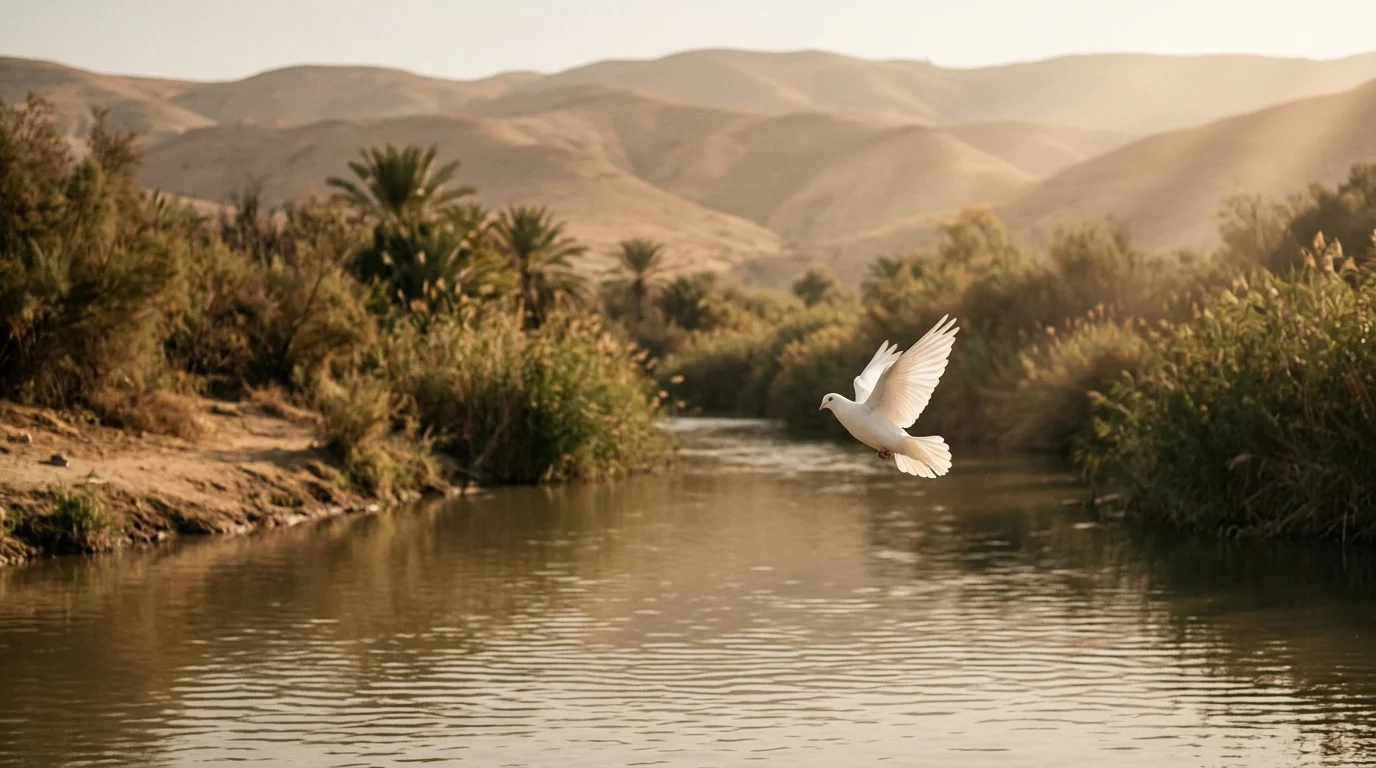
Have you ever wondered why the dove is mentioned in the Bible and what this gentle bird represents? The dove appears in several important biblical stories, often in connection with hope, peace, renewal, and God’s work.
In Genesis 8, Noah sent out a dove after the flood, and it returned with a freshly plucked olive leaf, showing that the floodwaters were receding and the earth was becoming habitable again.
In Matthew 3:16, the Holy Spirit descended upon Jesus like a dove when He was baptized. This moment connects the dove with the revelation of the Holy Spirit and the beginning of Jesus’ public ministry.
What Is the Dove Meaning in the Bible? A Quick Overview
At its core, the dove meaning in the Bible centers on three big ideas: peace, purity, and the presence of the Holy Spirit. This isn’t a coincidence or a later invention by artists and poets. The symbolism is baked directly into the biblical text itself, starting in Genesis and carrying all the way through to the New Testament.
Doves appear at some of the most pivotal moments in Scripture:
- Noah sends a dove out from the ark to check if the floodwaters have receded
- Doves and pigeons are used as acceptable offerings for the people with low-income in the sacrificial system
- The Holy Spirit descends “like a dove” at the baptism of Jesus
- Doves are referenced in poetic and romantic literature, like the Song of Solomon
Each of these moments adds a layer to the dove’s meaning, and together they form a rich, consistent picture.
The Dove in Genesis: A Symbol of Hope and New Beginnings

Let’s start where the Bible starts. One of the most famous appearances of a dove happens in Genesis 8, during the story of Noah’s ark.
After 40 days and nights of rain, Noah needed to know whether the earth was habitable again. He sent out a raven first, but it just flew back and forth without settling. Then he sent a dove.
The dove came back the first time with nothing. Noah waited seven more days and sent it out again this time, it returned with a freshly plucked olive leaf in its beak.
That single image a dove returning with an olive leaf has become one of the most enduring symbols in human history. It wasn’t just a bird finding a twig. It was proof that:
- The waters had receded enough for plant life to grow again
- God’s judgment had passed
- A new beginning was possible for Noah, his family, and all of creation
This is where the phrase “olive branch” as a symbol of peace actually comes from. When someone today says they’re “extending an olive branch,” they’re unknowingly quoting this ancient biblical moment. The dove became linked with peace precisely because it delivered proof that destruction had ended and restoration had begun.
Why a Dove and Not Another Bird?
It’s worth pausing here to ask: why did Noah send a dove specifically? Ravens are scavengers they can survive on carrion and debris, which is why the raven didn’t come back with useful information; it had plenty to eat even in a devastated landscape. Doves, on the other hand, are gentle and particular. They need clean, dry land and fresh vegetation to thrive.
This detail matters for understanding dove symbolism. The dove’s return with an olive leaf wasn’t just symbolic it was practical evidence, because doves genuinely can’t survive well in chaos and destruction. This natural behavior became a spiritual metaphor: the dove represents the kind of environment where peace, order, and life can flourish.
Dove Symbolism and the Holy Spirit
If you ask most Christians what the dove represents, the first thing they’ll mention is the Holy Spirit. This connection comes directly from one of the most significant events in the New Testament: the baptism of Jesus.
All four Gospels describe this moment, though Matthew’s account is often quoted:
After Jesus was baptized, the heavens opened, and He saw the Spirit of God descending like a dove and coming to rest on Him.
This is one of the clearest and most direct pieces of dove symbolism in the entire Bible. The Holy Spirit the third person of the Trinity is described as descending “like a dove.” Theologians and Bible scholars have spent centuries reflecting on why this particular image was used, and a few consistent themes emerge:
- Gentleness – Doves are not aggressive birds. They don’t attack or dominate. This reflects how the Holy Spirit works: not through force, but through gentle conviction and comfort.
- Purity – Doves were considered clean animals under Jewish law, fit for offerings. This ties the Spirit to holiness and purity.
- Peace – Just like in Noah’s story, the dove’s presence signals that judgment has passed and peace has arrived in this case, peace between God and humanity through Jesus.
- Descent and rest – The dove doesn’t just appear; it descends and rests. This imagery suggests the Holy Spirit’s desire to dwell with and remain close to believers, not just visit briefly.
Because of this moment, doves became a lasting symbol of the Holy Spirit in Christian art, church architecture, and worship.
Doves in the Sacrificial System
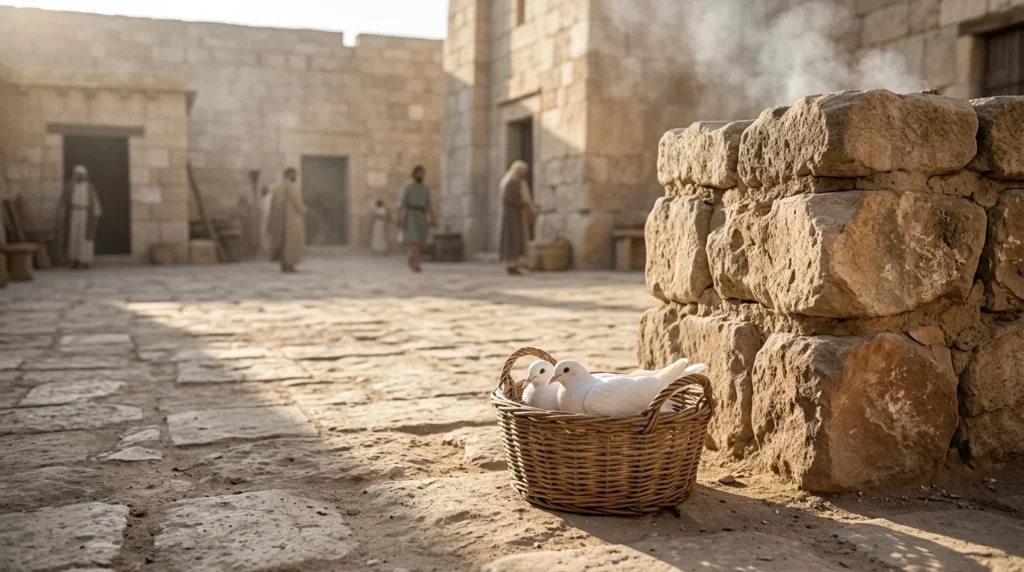
Here’s a detail many people miss when studying dove meaning in the Bible: doves and pigeons played a very practical, day-to-day role in Old Testament worship, particularly for people who couldn’t afford larger animals.
Under the Levitical law, certain offerings required animals like lambs, goats, or bulls. But God made provisions for the people with low-income. In Leviticus and Numbers, doves and young pigeons are repeatedly listed as acceptable substitutes for those who couldn’t afford a larger sacrifice.
A well-known example is found in the story of Jesus’ presentation at the temple in Luke 2. Mary and Joseph, following Jewish law after the birth of Jesus, brought “a pair of doves or two young pigeons” as their offering the option specifically reserved for families who couldn’t afford a lamb.
This detail is quietly powerful. It shows that:
- Jesus was born into a family of modest means
- Doves represented accessibility and grace even those with little to give could still approach God
- The sacrificial system had built-in compassion for the people with low-income, and the dove was central to that compassion
So beyond peace and the Holy Spirit, dove symbolism also touches on humility, accessibility, and God’s care for people regardless of their financial status.
The Dove as a Symbol of Purity and Innocence
Throughout Scripture, doves are consistently associated with purity, innocence, and gentleness. This isn’t just poetic language it reflects real characteristics of the bird itself. Doves are known for:
- Being monogamous and forming lifelong bonds with a mate
- Displaying gentle, non-aggressive behavior
- Producing a soft, mournful cooing sound often associated with grief or longing
- Being physically delicate and vulnerable compared to birds of prey
Jesus Himself references this purity directly. In Matthew 10:16, He tells His disciples:
“Be as shrewd as snakes and as innocent as doves.”
This instruction is fascinating because it pairs two very different qualities: the cunning wisdom of a snake with the gentle innocence of a dove. Jesus wasn’t telling His followers to be naive He was telling them to combine wisdom with a pure, non-manipulative heart. The dove here represents moral innocence, not foolishness.
This is a great example of how biblical symbolism often works in layers. The dove isn’t a one-dimensional symbol of “niceness” it represents a specific kind of strength: the strength of remaining pure and gentle even while navigating a complicated world.
Doves in the Song of Solomon: Love and Devotion
Another beautiful layer of dove symbolism appears in the Song of Solomon, a poetic book celebrating love and marriage. Here, the dove takes on a romantic and affectionate meaning.
The lovers in this book repeatedly refer to each other using dove imagery:
- “My dove, my perfect one” is used as a term of endearment
- Eyes are compared to doves for their gentleness and beauty
- The imagery evokes tenderness, faithfulness, and deep affection
Doves mate for life, which made them a natural symbol for marital faithfulness and romantic devotion in ancient literature. This is part of why doves remain popular in wedding symbolism today releasing doves at weddings, using dove imagery on invitations, or referencing “lovebirds” all trace back, at least indirectly, to this ancient association between doves and lasting love.
Key Themes Behind Dove Symbolism in Scripture
Let’s pull all of this together. When you study the dove meaning in the Bible across different books and contexts, a few consistent themes keep showing up:
1. Peace After Judgment
From Noah’s ark to the broader idea of “extending an olive branch,” doves consistently represent peace that comes after a period of judgment, hardship, or separation.
2. The Presence of the Holy Spirit
The baptism of Jesus permanently linked the dove with the Holy Spirit’s gentle, peaceful presence and work in believers’ lives.
3. Purity and Innocence
Doves symbolize a clean, sincere heart the kind of innocence Jesus encouraged His followers to maintain even while being wise.
4. Accessibility and Grace for the people with low-income
Through the sacrificial system, doves represented God’s provision for those who had little, showing that worship and relationship with God were never meant to be exclusive to the wealthy.
5. Faithful, Devoted Love
In poetic literature like the Song of Solomon, doves symbolize deep romantic faithfulness and tenderness between committed partners.
Real-Life Applications: What the Dove Means for Believers Today

Understanding dove symbolism isn’t just an academic exercise it has practical spiritual meaning for people today. Here’s how many believers apply this symbolism in real life:
- A reminder of peace during hard seasons – Just as the dove signaled the end of the flood, its symbolism can remind believers that difficult seasons eventually pass.
- An image to reflect on during prayer – Some Christians visualize the Holy Spirit’s dove-like descent as a way of inviting gentleness and peace into anxious moments.
- A call toward innocence, not naivety – Jesus’ words about being “innocent as doves” encourage believers to stay morally pure without becoming cynical or manipulative themselves.
- A symbol used in baptism and confirmation – Dove imagery is common in baptismal ceremonies, representing the Holy Spirit’s presence in that moment.
Dove Meaning in Bible Art, Tattoos, and Modern Culture
It’s worth noting how far this symbolism has traveled outside of Scripture itself. The dove meaning in the Bible has influenced:
- Church architecture – Stained glass windows and ceiling murals often feature a descending dove above baptismal fonts or altars.
- Christian tattoos – Doves are among the most popular religious tattoo choices, often combined with olive branches, crosses, or Scripture verses.
- Wedding traditions – White doves are released at weddings as a symbol of peace, purity, and lasting love.
This crossover between sacred symbolism and everyday culture shows just how deeply this imagery has embedded itself into how people express peace, purity, and hope even outside a strictly religious context.
Common Misconceptions About Dove Symbolism
Before wrapping up, it’s worth clearing up a few misunderstandings that often circulate:
- Myth: Doves and pigeons are different symbols in the Bible. Reality: Biblically, doves and pigeons were often used interchangeably in sacrificial contexts. The distinction we make today between “elegant dove” and “common pigeon” isn’t really present in the original texts.
- Myth: The dove is the only symbol of the Holy Spirit. Reality: While the dove is the most famous symbol, the Holy Spirit is also represented by fire (Pentecost), wind, water, and oil throughout Scripture.
- Myth: Dove symbolism is only about peace. Reality: As we’ve seen, dove symbolism spans peace, purity, the Holy Spirit, humility, and devoted love it’s a multi-layered symbol, not a single-note one.
Frequently Asked Questions About Dove Meaning in the Bible
What does a dove symbolize in the Bible?
A dove symbolizes peace, purity, and the presence of the Holy Spirit. It first appears prominently in the story of Noah’s ark and later represents the Holy Spirit descending on Jesus during His baptism.
Why did the Holy Spirit appear as a dove at Jesus’ baptism?
The dove represents gentleness, purity, and peace qualities that reflect the nature of the Holy Spirit’s work. Unlike more forceful or dramatic imagery, the dove shows the Spirit coming to rest gently rather than overpowering.
What is the significance of the dove and olive branch in Genesis?
The dove returning with an olive leaf showed Noah that the floodwaters had receded and life was beginning again. This moment is the origin of using an “olive branch” as a symbol of peace in modern language.
Are doves and pigeons the same in biblical symbolism?
Yes, in most biblical contexts, doves and pigeons were treated as equivalent, especially in the sacrificial system where either could be offered as a valid sacrifice, particularly for those who couldn’t afford larger animals.
What does it mean to be “innocent as doves” in Matthew 10:16?
This phrase, spoken by Jesus, encourages believers to maintain a pure, sincere heart while still being wise and discerning. It pairs the dove’s gentleness with the shrewdness of a snake, encouraging balanced wisdom rather than naivety.
Why are doves used in wedding ceremonies?
Doves are linked to devoted, lifelong love partly because of their appearance in the Song of Solomon, where lovers use dove imagery as terms of endearment. Doves also mate for life, reinforcing their symbolism of faithfulness.
Is the dove mentioned anywhere besides Noah’s story and Jesus’ baptism?
Yes. Doves appear in the sacrificial laws of Leviticus and Numbers, in the story of Jesus’ presentation at the temple in Luke 2, and throughout the Song of Solomon as a symbol of romantic devotion.
Final Thoughts on Dove Meaning in the Bible
So, what’s the real takeaway here? The dove meaning in the Bible is far richer than a single definition. It’s not just “peace” or just “the Holy Spirit” it’s a symbol that carries hope after judgment, purity of heart, humble accessibility to God, and faithful, lasting love, all wrapped into one gentle bird.
From Noah’s ark to Jesus’ baptism, from the sacrificial system to the poetry of the Song of Solomon, the dove shows up at moments that matter moments of transition, restoration, and deep relationship.

William Turner is a passionate writer who enjoys exploring meaningful ideas, biblical insights, and the stories behind words and traditions. His goal is to make every article simple, helpful, and engaging for readers around the world.