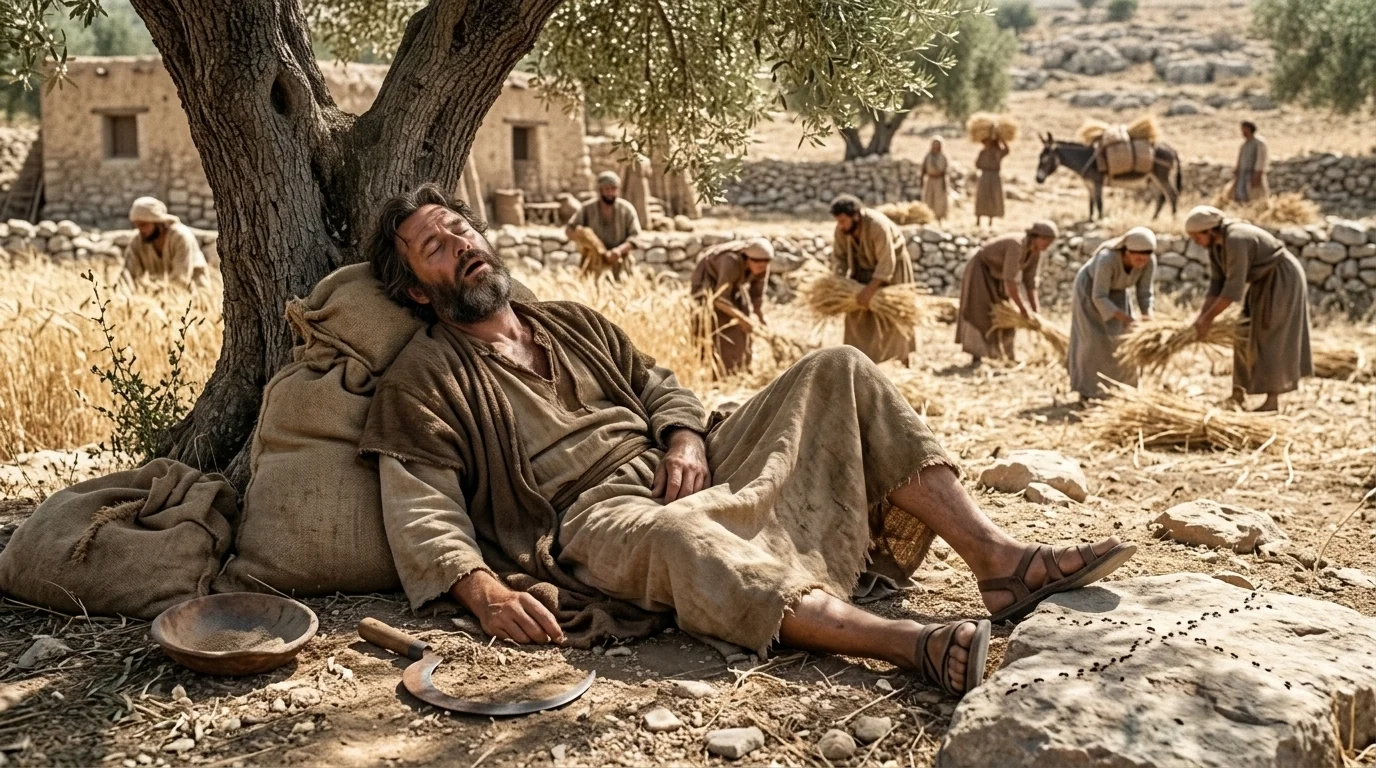
Have you ever wondered what sluggard means in the Bible and why Scripture warns against laziness? A sluggard is a person who is habitually lazy, avoids hard work, or delays important responsibilities.
The word appears especially in the Book of Proverbs, where it describes someone who lacks motivation, ignores opportunities, and often makes excuses instead of taking action. Proverbs 6:6 encourages the sluggard to observe the ant and learn the value of diligence, preparation, and hard work.
The Bible teaches that laziness can lead to wasted opportunities and unnecessary difficulties, while wisdom encourages discipline and responsibility. Understanding the sluggard meaning in the Bible helps readers recognize the importance of using their time wisely and fulfilling their duties faithfully.
What Does “Sluggard” Mean in the Bible?
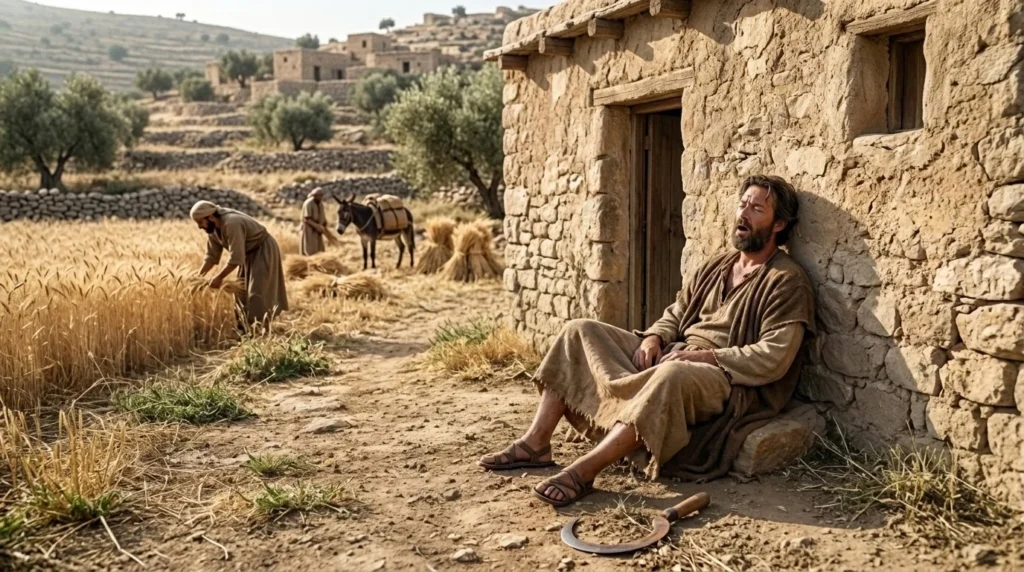
At its core, the sluggard meaning in the Bible refers to a person who is habitually lazy, idle, or unwilling to work. The word comes from the Hebrew term atsel (עָצֵל), which is most often translated as “sluggard,” “slothful,” or “lazy one” in English Bibles. It describes someone who avoids effort, delays responsibility, and would rather sleep, daydream, or make excuses than put in honest labor.
But here’s the thing the biblical sluggard isn’t just someone who takes a nap on a Saturday afternoon. The word paints a picture of a deeply ingrained character flaw. It’s someone whose default setting in life is avoidance. They dodge work, dodge decisions, dodge responsibility, and ultimately dodge the blessings that come from diligence.
The term shows up most prominently in the book of Proverbs, where it’s used as a kind of cautionary character almost a comic figure whom readers are meant to laugh at and learn from at the same time. Solomon, the traditional author of much of Proverbs, uses vivid, almost humorous imagery to describe the sluggard’s behavior, making the lessons memorable and relatable.
Where the Word “Sluggard” Appears in Scripture
The word “sluggard” appears numerous times throughout the Old Testament, with the vast majority of references found in Proverbs. Here are some of the key passages:
- Proverbs 6:6-11 perhaps the most famous sluggard passage, where readers are told to “consider the ant” and learn from its diligence.
- Proverbs 10:26 compares the sluggard to vinegar on the teeth and smoke in the eyes, a picture of irritation and discomfort.
- Proverbs 13:4 contrasts the sluggard’s unfulfilled cravings with the satisfaction of the diligent.
- Proverbs 15:19 describes the sluggard’s path as overgrown with thorns.
- Proverbs 19:24 and 26:15 humorously describe a sluggard who buries his hand in a dish but is too lazy to bring it back to his mouth.
- Proverbs 20:4 the sluggard who won’t plow because of the cold, and ends up with nothing at harvest.
- Proverbs 21:25-26 the sluggard’s own desires end up destroying him because he refuses to work for them.
- Proverbs 22:13 and 26:13 the sluggard’s absurd excuses, claiming a lion is in the streets to avoid going outside.
- Proverbs 24:30-34 a firsthand account of walking past the sluggard’s neglected field and vineyard.
- Proverbs 26:14 compares the sluggard turning in bed to a door swinging on its hinges motion without progress.
That’s a lot of verses dedicated to one character trait! This alone tells us how seriously the biblical writers took the issue of laziness and how much wisdom they wanted to pass down about avoiding it.
The Sluggard and the Ant: A Lesson in Diligence
One of the most memorable sluggard passages is found in Proverbs 6:6-11, where Solomon points his readers toward an unexpected teacher: the ant.
He essentially says, “Go to the ant, you lazy person. Watch what it does and become wise.” The ant, he points out, has no commander, no overseer, and no boss standing over it with a clipboard yet it still works hard, gathering food in the summer and storing up provisions for the future.
This passage isn’t just about bugs. It’s a powerful illustration of self-motivated diligence. The ant doesn’t need external pressure to do what’s right; it operates out of internal discipline and foresight. The sluggard, by contrast, needs constant external prodding (and even then, often doesn’t respond) because their motivation comes from nowhere within.
Solomon then paints a picture of what happens to the sluggard who ignores this lesson:
- A little sleep, a little slumber, a little folding of the hands to rest
- And poverty comes on like a bandit, and scarcity like an armed robber
The imagery here is striking. Poverty doesn’t gently knock on the sluggard’s door it ambushes them, catching them off guard because they were too comfortable, too passive, too unwilling to prepare for the future.
Key Characteristics of a Sluggard According to Proverbs
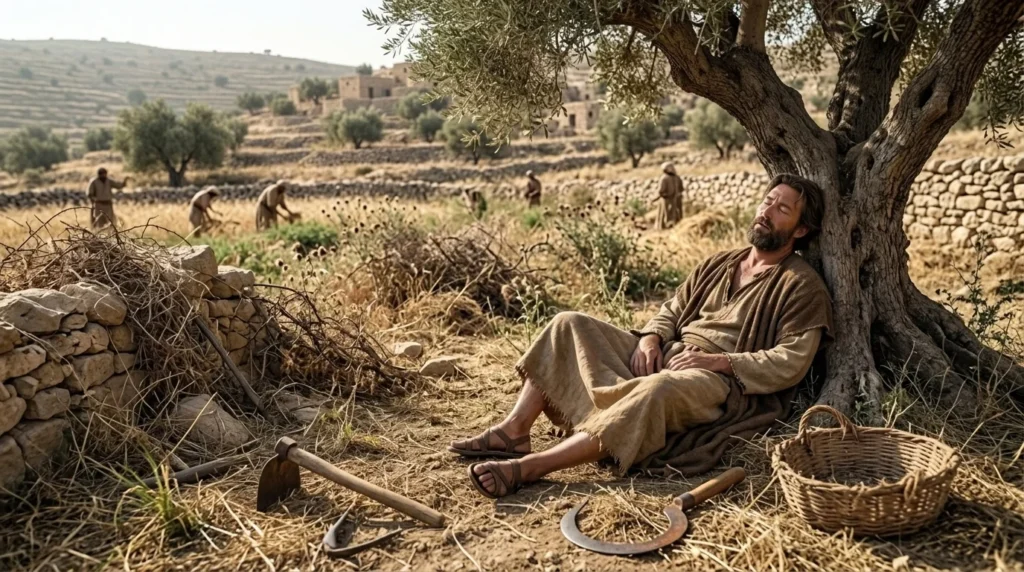
To really understand the sluggard meaning in the Bible, it helps to break down the specific traits Scripture assigns to this figure. Here are the defining characteristics:
1. Excessive Love of Sleep and Rest
The sluggard is closely associated with oversleeping and constant desire for comfort. Proverbs 6:9 asks, “How long will you lie there, sluggard? When will you get up from your sleep?” This isn’t condemning healthy rest the Bible values rest elsewhere but rather an unhealthy pattern of avoiding responsibility through excessive slumber.
2. Making Excuses to Avoid Work
Perhaps the funniest (and most relatable) sluggard trait shows up in Proverbs 22:13 and 26:13, where the sluggard claims there’s a lion outside, or a fierce lion roaming the streets, as an excuse to stay indoors and avoid work. It’s an absurd, exaggerated excuse and that’s the point. The sluggard will invent any reason, no matter how far-fetched, to justify inaction.
3. Starting Tasks but Never Finishing Them
Proverbs 12:27 mentions that “the lazy do not roast any game,” suggesting a person who begins a hunt but lacks the follow-through to complete the process and enjoy the reward. This speaks to a pattern many of us recognize starting projects with enthusiasm but abandoning them before completion.
4. Craving Without Working
Proverbs 13:4 offers one of the most quoted sluggard verses: the sluggard craves and gets nothing, while the diligent are fully satisfied. This highlights a painful irony the sluggard often wants the same things everyone else wants (success, comfort, provision), but isn’t willing to put in the effort required to obtain them.
5. Neglecting Responsibilities Until It’s Too Late
In Proverbs 24:30-34, the writer describes walking past the field and vineyard of a sluggard and finding it overrun with thorns, covered with weeds, and its walls broken down. This paints a vivid before-and-after picture: neglect compounds over time, turning small oversights into significant losses.
6. All Talk, No Progress
Proverbs 26:14 compares the sluggard to a door turning on its hinges. A door swings back and forth constantly, yet it never actually goes anywhere. This is a picture of a person who is always busy with motion restless, active, even anxious but never producing any real forward movement or accomplishment.
Why Does the Bible Take Laziness So Seriously?
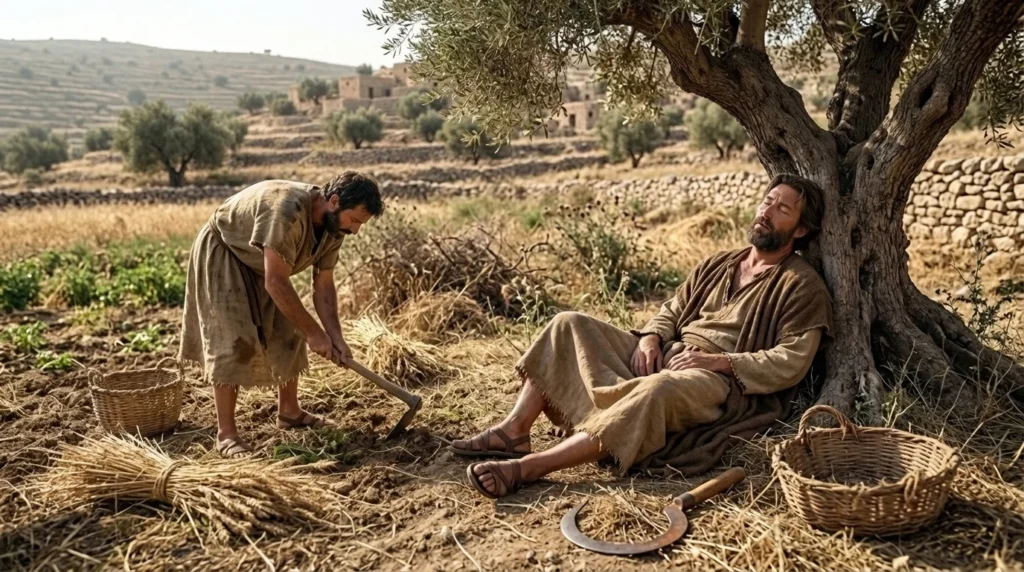
You might wonder why Scripture spends so much time warning against sluggishness. Isn’t rest a good thing? Isn’t it okay to take it easy sometimes? Of course the Bible absolutely values rest, Sabbath, and renewal. But the sluggard described in Proverbs isn’t someone who rests wisely; they’re someone who has made avoidance a lifestyle.
Here’s why the biblical writers considered this such a serious issue:
- Laziness leads to poverty and lack. Proverbs repeatedly ties the sluggard’s habits to material and relational poverty, not as punishment from God, but as the natural consequence of neglect.
- Laziness wastes God-given potential. Every person is created with gifts, skills, and purpose. The sluggard buries these gifts instead of using them productively.
- Laziness affects others, not just the individual. Proverbs 18:9 says that one who is slack in their work is a brother (or sister) to one who destroys. Neglect isn’t a private matter it has ripple effects on families, communities, and responsibilities others depend on.
- Laziness reflects a deeper heart issue. Ultimately, the sluggard’s problem isn’t just behavioral; it’s a lack of wisdom, discipline, and trust in God’s design for productive living.
The Sluggard vs. The Diligent: A Biblical Contrast
Proverbs frequently sets the sluggard against his opposite: the diligent, hardworking person. This contrast is meant to be instructive, showing readers two very different paths and where each one leads.
| Sluggard | Diligent |
| Loves sleep and comfort | Rises early, works with purpose |
| Makes excuses to avoid responsibility | Takes ownership and initiative |
| Craves without gaining | Works and is satisfied |
| Fields overrun with weeds | Fields well-tended and fruitful |
| Ends in poverty | Ends in provision and stability |
| Restless but unproductive | Purposeful and consistent |
This contrast isn’t meant to shame anyone who’s going through a hard season, dealing with burnout, or facing circumstances beyond their control. Scripture elsewhere shows compassion for the weary and the weak. Rather, this contrast targets a habitual mindset a chosen pattern of avoidance rather than a temporary struggle.
Real-Life Applications: What the Sluggard Teaches Us Today
So how does an ancient agricultural metaphor about fields, ants, and vineyards apply to life in the 21st century? More than you might think. Here are a few practical, modern applications of the sluggard warnings in Proverbs:
In the Workplace
Procrastination, missed deadlines, and half-finished projects are the modern equivalent of an overgrown vineyard. The wisdom of Proverbs encourages consistent effort, taking initiative without needing constant supervision (just like the ant), and following through on commitments.
In Personal Finances
The sluggard’s poverty wasn’t necessarily about bad luck it was often the result of failing to plan, save, or prepare in advance. Modern financial wisdom echoes this: budgeting, saving consistently, and avoiding the temptation to put off financial responsibility until “later.”
In Relationships and Family Life
Neglecting relationships works the same way neglecting a field does. Small acts of care, consistently applied, keep relationships healthy. Ignore them, and like the sluggard’s field, they become overgrown with distance, resentment, and missed opportunities for connection.
In Spiritual Growth
Spiritual sluggishness is a real and often overlooked application. Just as the sluggard neglects physical responsibilities, many believers neglect prayer, Scripture reading, and spiritual disciplines always intending to “start tomorrow.” Proverbs’ warning applies here too: small, consistent spiritual effort compounds into a fruitful life, while spiritual laziness leads to stagnation.
Overcoming a Sluggard Mindset: Practical Tips from Proverbs
If any of this hits a little close to home, don’t worry recognizing a pattern is the first step toward change. Here are some practical, Bible-inspired tips for breaking free from a sluggard mindset:
- Start small, like the ant. You don’t need a grand plan just consistent, small actions repeated over time.
- Remove the excuses. Identify your personal “lion in the street” the exaggerated fear or excuse you use to avoid responsibility and name it honestly.
- Set a “get up” moment. Proverbs challenges the sluggard with the question, “How long will you lie there?” Choose a specific time to start your day or task, and stick to it.
- Tend your field regularly. Whether it’s your health, your finances, your home, or your relationships, don’t wait for things to fall apart before addressing them.
- Finish what you start. Practice completing tasks fully, even small ones, to build the “muscle” of follow-through.
- Ask for accountability. Since the sluggard often lacks internal motivation, external accountability a friend, mentor, or community can help bridge the gap while discipline is being built.
What the Bible Says About the Rewards of Diligence
It’s worth ending on an encouraging note, because the book of Proverbs doesn’t just warn against laziness it also promises rich rewards for diligence. Proverbs 10:4 notes that lazy hands make for poverty, but diligent hands bring wealth. Proverbs 13:4 promises that the diligent will be richly satisfied.
This isn’t a prosperity formula guaranteeing riches to anyone who works hard life is more complicated than that, and Scripture elsewhere acknowledges suffering and hardship that isn’t tied to laziness at all. But as a general principle of wisdom, the Bible consistently affirms that a life marked by purposeful effort tends to produce stability, satisfaction, and provision, while a life marked by avoidance tends to produce lack and regret.
Final Thoughts
So, what’s the bottom line when it comes to the sluggard meaning in the Bible? At its heart, the sluggard represents a warning a mirror held up to show us the natural consequences of chronic avoidance, procrastination, and excuse-making. Through vivid imagery like the ant, the overgrown field, the door on its hinges, and the exaggerated fear of a lion in the street, Scripture paints an unforgettable picture of what happens when we choose comfort over diligence.
FAQs
1. What is the biblical definition of a sluggard?
A sluggard, in biblical terms, is a person characterized by habitual laziness, procrastination, and an unwillingness to work or take responsibility. The term comes primarily from the book of Proverbs and describes someone whose default behavior is avoidance rather than diligence.
2. Where in the Bible is the word “sluggard” used the most?
The word “sluggard” is used most frequently in the book of Proverbs, appearing in verses such as Proverbs 6:6-11, 10:26, 13:4, 15:19, 19:24, 20:4, 21:25, 22:13, 24:30-34, 26:13-16, and several others.
3. What does the Bible say about the sluggard and the ant?
In Proverbs 6:6-11, Solomon instructs the sluggard to observe the ant, which works diligently without needing a supervisor, storing up provisions during the summer. The passage uses the ant as an example of self-motivated diligence that the sluggard should imitate.
4. Is being tired the same as being a sluggard in the Bible?
No. The Bible values rest and acknowledges seasons of genuine weariness or exhaustion. A sluggard isn’t someone who is simply tired or going through a hard season it’s someone who habitually avoids responsibility, makes excuses, and chooses comfort over necessary effort as a lifestyle pattern.
5. What happens to a sluggard according to Proverbs?
According to Proverbs, a sluggard’s neglect leads to poverty, lack, an overgrown or ruined field, and unfulfilled desires. Poverty is described as coming upon the sluggard suddenly, like a robber, because of prolonged inattention and avoidance of work.
6. What is the opposite of a sluggard in the Bible?
The opposite of a sluggard in biblical wisdom literature is the diligent person someone who works consistently, takes initiative, follows through on responsibilities, and is ultimately described as being satisfied and well-provided for as a result.
7. How can I apply the sluggard warnings from Proverbs to modern life?
You can apply these warnings by identifying areas where you tend to procrastinate or make excuses whether at work, in finances, relationships, or spiritual habits and intentionally practicing small, consistent, diligent actions, much like the ant that prepares for the future without being told to.

Jack Harrison is a passionate writer and researcher at TruthVarse.com, dedicated to creating clear, helpful, and engaging content for curious readers. He enjoys exploring topics related to biblical meanings, spirituality, symbolism, and everyday questions, turning complex ideas into simple and easy-to-understand information.
Through careful research and a reader-first approach, Jack aims to provide content that is informative, practical, and enjoyable to read. His goal is simple: to help readers discover meaningful insights while making every article easy to understand and useful.