
Have you ever wondered what Easter means in the Bible and why Christians consider it one of the most important celebrations of their faith? Easter is commonly associated with the resurrection of Jesus Christ after His crucifixion.
The New Testament teaches that Jesus died, was buried, and rose again, with the resurrection serving as a central part of the Christian message. Although the Bible does not use the modern term “Easter” as the name of a Christian holiday in the way it is commonly celebrated today, it clearly records the events of Jesus’ death and resurrection.
For Christians, Easter represents hope, new life, victory over death, and the promise of resurrection. Understanding the meaning of Easter in the Bible helps readers explore the significance of Christ’s resurrection and why it remains central to Christian faith and worship.
What Is the Meaning of Easter in the Bible?

At its core, the meaning of Easter in the Bible centers on one central truth: Jesus Christ rose from the dead after being crucified. This event, known as the resurrection, is recorded in all four Gospels Matthew, Mark, Luke, and John and is considered the cornerstone of Christian belief.
Interestingly, the word “Easter” itself doesn’t actually appear in most modern Bible translations. Instead, Scripture refers to the events surrounding what we now call Easter as the death, burial, and resurrection of Jesus. The term “Easter” came into common English usage later, likely derived from old pagan spring festival names, and was eventually adopted by early English-speaking Christians to describe the celebration of Christ’s resurrection.
So while the word “Easter” has a somewhat murky linguistic history, the event it celebrates is unmistakably biblical, detailed, and central to the entire New Testament message.
The Short Version: Easter Is About Resurrection, Not Just Spring
Many people associate Easter with new beginnings, spring flowers, and renewal and there’s a beautiful symbolic connection there. But biblically speaking, Easter isn’t primarily about the season. It’s about a specific historical claim: that a man who was brutally executed on a Roman cross came back to life three days later, conquering death itself.
That claim is either the most important event in human history or an elaborate myth there’s not much middle ground, which is part of why this story has captivated and divided people for centuries.
The Biblical Story Behind Easter
To really grasp the meaning of Easter in the Bible, it helps to understand the sequence of events leading up to it. This isn’t just one moment it’s the climax of a story that begins days earlier during what Christians now call Holy Week.
Palm Sunday: The Triumphant Entry
The story often starts with Jesus entering Jerusalem, riding on a donkey, while crowds waved palm branches and shouted “Hosanna!” This event, described in Matthew 21 and John 12, fulfilled an Old Testament prophecy from Zechariah about a humble king coming to His people. It set the stage for a dramatic final week.
The Last Supper
Just before His arrest, Jesus shared a final meal with His twelve disciples an event known as the Last Supper. During this meal, He instituted what Christians now call Communion or the Eucharist, telling His followers to remember His body and blood, symbolized by bread and wine, in remembrance of Him (Luke 22:19-20).
Good Friday: The Crucifixion
After His arrest and Judas’s betrayal, Jesus faced a series of unjust trials. The Roman authorities then crucified Him by nailing Him to a wooden cross, a painful method of execution. Matthew 27, Mark 15, Luke 23, and John 19 record this event in detail.
For Christians, this moment isn’t just a tragedy it’s understood as an act of substitutionary sacrifice. According to biblical teaching, Jesus willingly took on the punishment for humanity’s sin, dying in the place of those who deserved judgment.
Holy Saturday: The Silence
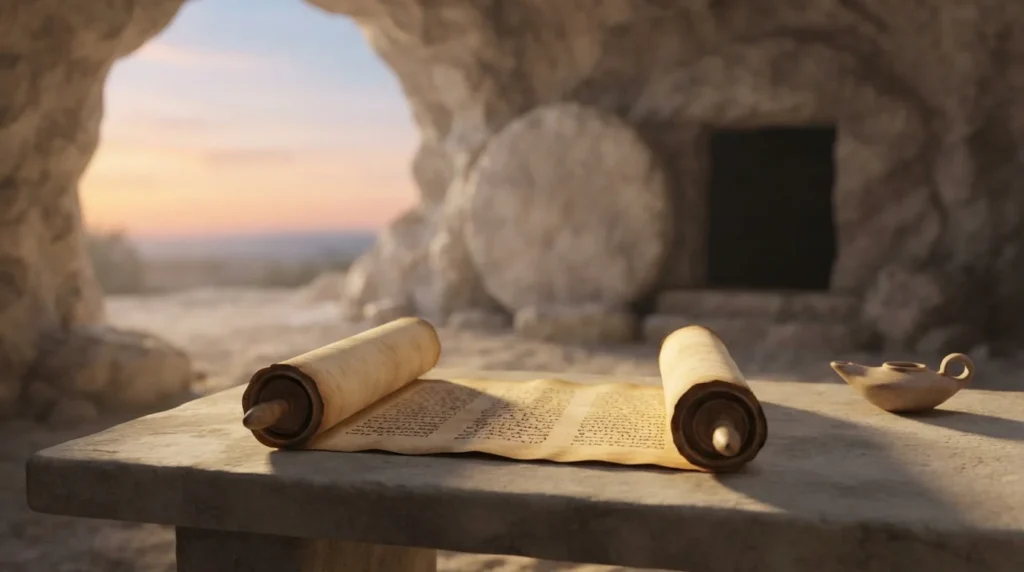
The day between the crucifixion and resurrection is often overlooked, but it carries weight. Jesus’s body lay in a tomb, sealed by a large stone, guarded by Roman soldiers. For His followers, this was a day of grief, confusion, and shattered hope. They didn’t yet know what was coming.
Easter Sunday: The Resurrection
And then the turning point. On the third day, several women went to the tomb to anoint Jesus’s body, only to find the stone rolled away and the tomb empty. An angel announced, “He is not here; he has risen, just as he said” (Matthew 28:6).
Over the following weeks, Jesus appeared to His disciples multiple times, ate with them, spoke with them, and allowed them to touch His wounds, proving He was physically alive again not a ghost, not a vision, but bodily resurrected.
Why the Resurrection Matters So Much
It’s easy to read the resurrection story as just another ancient tale, but understanding why it matters requires looking at what the Bible itself says about its significance.
1. It Validates Everything Jesus Taught
Throughout His ministry, Jesus made bold claims that He was the Son of God, that He had authority to forgive sins, and that He would rise again after His death. If He had died and remained dead, those claims would have been discredited. In the biblical narrative, the resurrection confirms that Jesus spoke the truth.
2. It Offers Victory Over Death
One of the most quoted New Testament passages about Easter comes from the Apostle Paul, who wrote extensively about the resurrection’s implications:
“Where, O death, is your victory? Where, O death, is your sting?” (1 Corinthians 15:55)
For believers, this isn’t poetic exaggeration. It reflects the conviction that physical death is no longer the final word that there is life beyond the grave because Jesus demonstrated it firsthand.
3. It Provides the Foundation for Forgiveness
The biblical meaning of Easter closely connects with atonement, meaning that Jesus’ death paid the penalty for human sin, while His resurrection demonstrated that God accepted His sacrifice. Romans 4:25 explains that Jesus was delivered to death for our sins and raised to life for our justification.
Key Bible Verses About the Meaning of Easter
If you want to explore this topic firsthand, here are some foundational passages that capture the biblical meaning of Easter:
- Matthew 28:1-10 The empty tomb and the angel’s announcement
- Mark 16:1-8 The women’s discovery and initial fear
- Luke 24:1-12 Detailed account of the resurrection morning
- John 20:1-18 Mary Magdalene’s encounter with the risen Jesus
- 1 Corinthians 15:3-8 Paul’s early summary of the resurrection and its witnesses
- Romans 6:4 The symbolic meaning of new life through resurrection
- Acts 2:24 Peter’s sermon declaring that death could not hold Jesus
Reading these passages side by side gives a fuller, richer picture than any single verse alone each Gospel writer includes slightly different details, which many scholars argue actually strengthens the credibility of the account, since real eyewitness testimonies often vary in small details while agreeing on the core event.
Easter Symbols and Their (Sometimes Surprising) Biblical Connections
Modern Easter celebrations include traditions that didn’t originate directly from Scripture but have taken on meaning over time.
Lent and Fasting
Many Christians observe Lent, a 40-day period of reflection and fasting before Easter, echoing Jesus’s 40 days of fasting in the wilderness (Matthew 4:1-11). This isn’t Easter itself but a spiritual preparation leading up to it.
Sunrise Services
The tradition of holding church services at dawn on Easter morning directly connects to the biblical account, where the women arrived at the tomb “while it was still dark” or “just after sunrise,” depending on the Gospel account (John 20:1, Mark 16:2).
The Cross
While Easter celebrates resurrection, the cross remains a central symbol because, biblically, you can’t separate the resurrection from the crucifixion. One event doesn’t carry its full meaning without the other.
Common Misconceptions About the Biblical Meaning of Easter

Because Easter has absorbed so many cultural traditions over the centuries, a few misunderstandings tend to stick around.
- Misconception: The Bible calls it “Easter.” Most translations use phrases describing the resurrection rather than the word “Easter” itself, though the King James Version does use the word once in Acts 12:4, generally understood by scholars to be a translation choice referring to Passover.
- Misconception: Easter is a pagan holiday with Christian branding. Some Easter traditions, such as eggs and rabbits, come from folk customs that do not appear in Scripture. However, Christians base the central event of Easter—the resurrection of Jesus—directly on the biblical accounts, which existed before later seasonal customs became associated with the celebration.
- Misconception: Easter and Passover are unrelated. In reality, the timing and symbolism are deeply connected. Jesus’s crucifixion occurred during the Jewish Passover, and many of the resurrection’s theological meanings deliverance, sacrifice, freedom echo Passover themes.
How the Meaning of Easter Applies to Everyday Life
It’s one thing to understand Easter historically or theologically. It’s another to consider what it might mean personally. Here are a few ways people find the message of Easter relevant beyond the church calendar:
- A reminder that setbacks aren’t always the end of the story. The disciples experienced their darkest moment on Good Friday, only to see it transformed days later.
- An invitation to reflect on forgiveness. The Easter narrative centers on grace extended even to those who didn’t deserve it a theme many find meaningful regardless of religious background.
- A source of hope during grief. For those who have lost loved ones, the resurrection story offers a framework for hope that goes beyond wishful thinking, rooted in a specific historical claim rather than vague sentiment.
- A call to renewal. Just as spring naturally brings new growth, Easter’s themes of new life resonate with anyone looking for a fresh start.
Final Thoughts
So, what is the meaning of Easter in the Bible? At its heart, it’s the celebration of Jesus Christ’s resurrection from the dead an event that Christians believe confirms His identity, secures forgiveness for humanity, and offers the promise of life beyond death. It’s not merely a springtime tradition dressed up with religious language; it’s the pivotal moment the entire New Testament builds toward.
Whether you’re approaching this topic out of curiosity, faith, or simple interest in history, understanding the biblical roots of Easter offers a much richer picture than chocolate eggs and spring décor ever could.
FAQs About the Meaning of Easter in the Bible
1. What does Easter mean according to the Bible?
Easter, according to the Bible, marks the resurrection of Jesus Christ three days after His crucifixion. It represents victory over death and is considered the foundation of the Christian faith.
2. Is the word “Easter” actually in the Bible?
The word “Easter” appears only once in the King James Version (Acts 12:4), and most scholars believe this was a translation choice referring to the Jewish Passover rather than the modern holiday name.
3. Why is Easter celebrated on a different date each year?
Easter’s date is calculated based on the lunar calendar, typically falling on the first Sunday after the first full moon following the spring equinox. This method ties back to the timing of the Jewish Passover, during which the crucifixion and resurrection occurred.
4. What is the connection between Easter and Passover?
Jesus was crucified during the Jewish Passover festival, and many theological themes of Easter such as deliverance and sacrifice draw directly from Passover symbolism, including Jesus being referred to as the “Lamb of God.”
5. What do Easter eggs have to do with the Bible?
Easter eggs aren’t mentioned in Scripture. They became associated with Easter as a symbolic representation of new life and rebirth, aligning loosely with the resurrection theme, though the tradition developed outside of biblical text.
6. Why is the resurrection considered so important in Christianity?
The resurrection is considered essential because it confirms Jesus’s identity and teachings, demonstrates victory over sin and death, and provides the basis for the Christian hope of eternal life, as emphasized throughout the New Testament, especially in 1 Corinthians 15.
7. What is Holy Week, and how does it relate to Easter?
Holy Week refers to the days leading up to Easter, including Palm Sunday, Maundy Thursday, Good Friday, and Holy Saturday, each commemorating specific events in the biblical narrative of Jesus’s final days before His resurrection on Easter Sunday.

James Wilson is a passionate writer who loves exploring meaningful ideas, biblical insights, and topics that inspire everyday life. Through TruthVarse.com, he shares simple, thoughtful, and easy-to-understand content to help readers discover truth, meaning, and inspiration.